5 Ways to Reduce the Stress You Didn’t Know You Have

Stress – it’s everywhere – in much of what we do, see, hear, and read.  Most of us think of stress as an external circumstance that affects us in a detrimental manner.  But we can have a lot of self-inflicted stress, as well, that can be just as harmful.

In a past post (Nature Interrupted), I addressed the idea of stressors that we don’t normally consider.  These include matters that deprive our body’s cells of what they need for normal functioning: inactivity, too little time in Nature, being a night owl, poor eating habits, dehydration, and time in unsuitable environments, whether at work or home.  And stress within a biological system, although it may go unrecognized, affects the entire human organism.

To reduce the stress you might be placing on your body, I’d like to offer a few suggestions.  I realize making change is not easy, so I’d recommend trying one of these once or twice a week.  In the words of the 70’s musician Robert Parker, A little bit of something is better than a whole lot of nothing.😊

  1. Take yourself on an active Nature date.  Research parks, trails, Nature preserves, and the like in your area and visit one to walk, run, cycle, do yoga, or practice Tai Chi.  This idea is borrowed from Julia Cameron’s book The Artist’s Way, in which she proposes Artists Dates for sparking imagination and playfulness. When deciding where to go, Cameron writes, ask yourself ‘what sounds fun?’  You already know how much better you feel when you exercise; it makes your cells happy.  And an article in Science Daily explains that even 5 minutes of outdoor exercise boosts mental health.
  2. Go to bed earlier.  Our biorhythms have been tied to earth cycles since humans first appeared on the planet.  Burning the midnight oil is a modern expression often used as praise for one who works late into the night in the name of achievement.  But getting your sleep and wake cycles more closely aligned with the movement of the sun can help you achieve cellular rejuvenation, preventing premature aging, disease, and early death.  I’d say that’s more important, wouldn’t you?  (For more on this idea, check out this post.)
  3. Cook or make a healthy smoothie.  On a regular basis, refrain from restaurants & processed foods to try a new, healthy, easy-to-prepare recipe. This not only loads your cells with nutrients & helps diversify your gut’s microbes, it also ensures your creations are infused with love.  I have read that food preparation can be a spiritual practice, and your love & attention instills home preparations with benefits for the eater’s body, mind, & spirit. This is probably not the case at your local restaurant, and certainly not with food manufacturers. 
  4. Drink fruity water while soaking in a tub with Epsom salt.  Slice up a lemon or lime and drop into a big glass of water for sipping as you soak your feet – or your entire body – in a bath with this magnesium compound.  The citrus minerals and the magnesium in the bath contribute to deeply hydrating your cells.  And since water is needed for each one of the billions of chemical reactions occurring in your body each second, this is an act of profound self-generosity.
  5. Visualize a more positive life.  If you’re not loving your job, home, the state of your health, or your relationship, take some time to visualize in great detail a better situation.  An article in Psychology Today refers to visualization as a mental rehearsal used by such sports greats as Jack Nicklaus, Muhammad Ali, and Tiger Woods.  Over the years, I’ve read about “miraculous” physical healings occurring using this method, as well. Seeing, even in our mind’s eye, is believing, and our biology responds accordingly.

Unlike much of the stress in our external world, we can control many of our internal biological stressors.  Becoming mindful of the ways in which we can avoid inflicting harm on our personal organism can help our cells, and therefore our bodies, reach a higher level of being.

Blessings for Less Stress,

Lisa

The content of this article is for educational and informational purposes only, and is not intended as medical advice. Please consult with a qualified health care professional before acting on any information presented herein. Any statements about the possible health benefits of any subject discussed have not been evaluated by medical professionals or the Food & Drug Administration and are not intended to diagnose, treat, cure or prevent any disease or illness.

Can the 6 Tastes Improve Your Health?

Smoothie, anyone?

This is my third post on Ayurveda, a health system that originated thousands of years ago and is still in use by over 75% of the populations of India and Nepal. This approach to wellness is holistic in its entirety; emphasis is placed on finding and maintaining balance of mind, body, spirit, & environment. My first post is a simple overview of doshas to help you determine your constitutional type (kind of like your energetic fingerprint.) My second post shares tips on Ayurvedic eating practices, including enjoying all 6 tastes of sweet, sour, salty, bitter, astringent, & pungent in each meal.  To some, this may sound woo-woo.  But the practicality of this balanced method can be profound, putting weight loss & better overall health within our reach.

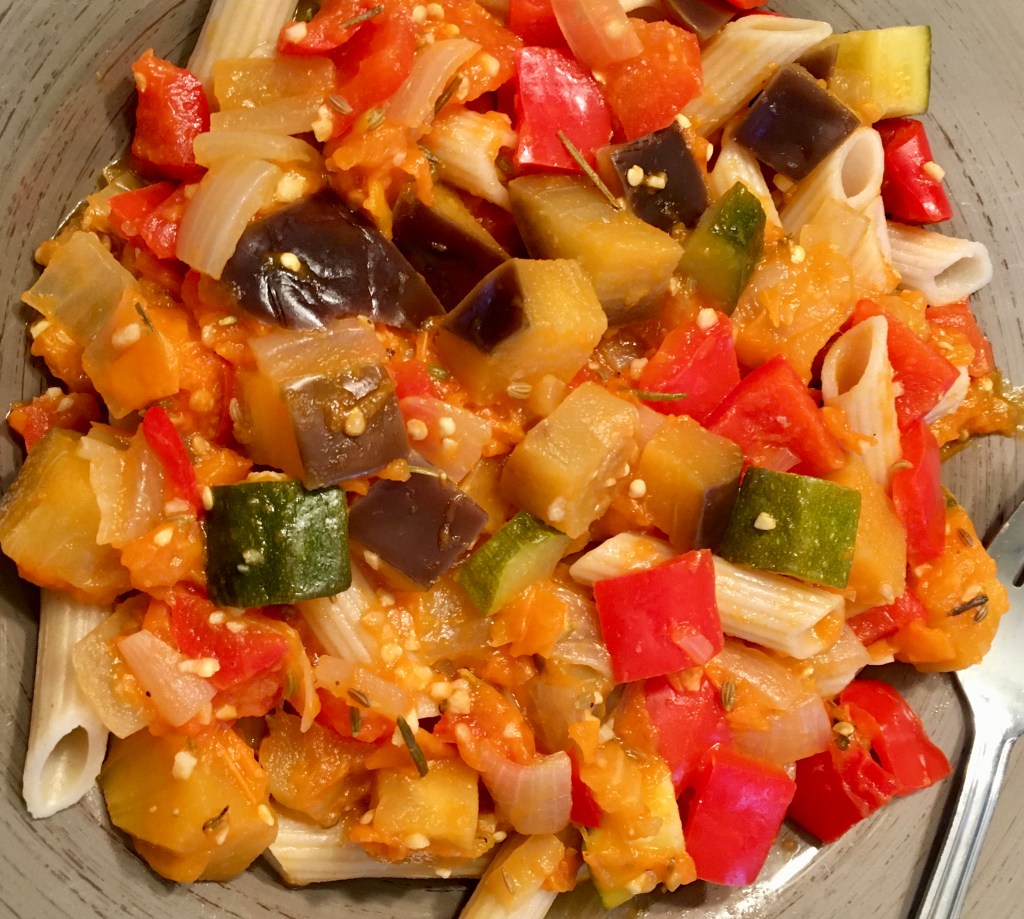
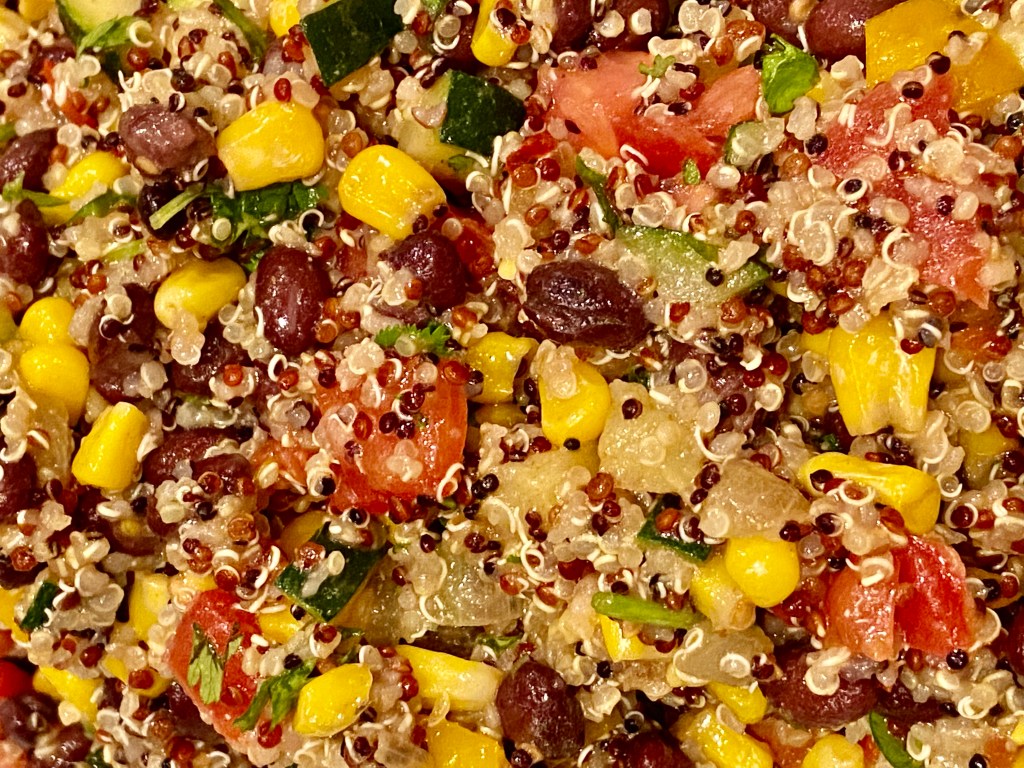
A delicious plant based meal including the 6 tastes

Incorporating all 6 tastes into meals is ideal because it provides satiation, so it helps you steer clear of snacking.  This is due to the balance of fundamental elements (space, air, fire, water, & earth) in that taste combination.  You will find below the composition of each taste:

Sweet = Earth and Water
Sour = Earth and Fire
Salty = Water and Fire
Bitter = Air and Space
Astringent = Air and Earth
Pungent = Air and Fire

Kate Siraj, an Ayurvedic Practitioner in London, writes, We, as human beings, are also formed of the 5 principle elements and we need to maintain our bodies and minds in equilibrium.  It is thus easy to see why we need the correct balance of each of these tastes to keep us healthy.  If we eat primarily with only a few of the tastes, this carefully maintained balance within our set-up will be lost and we will become unwell.

Your spice cabinet is a treasure trove for your 6 tastes experience

A Yoga International article tells us that the tastes of sweet, sour, & salty are considered building: they build tissues, and are said to have more soft, wet, and heavy qualities.  (This helps to explain why much of the US population is overweight: these 3 tastes predominate our diets.)  The article goes on to say that the tastes of bitter, astringent, and pungent are considered lighteningthey are cleansing, stimulating, and help us to remove wastes.

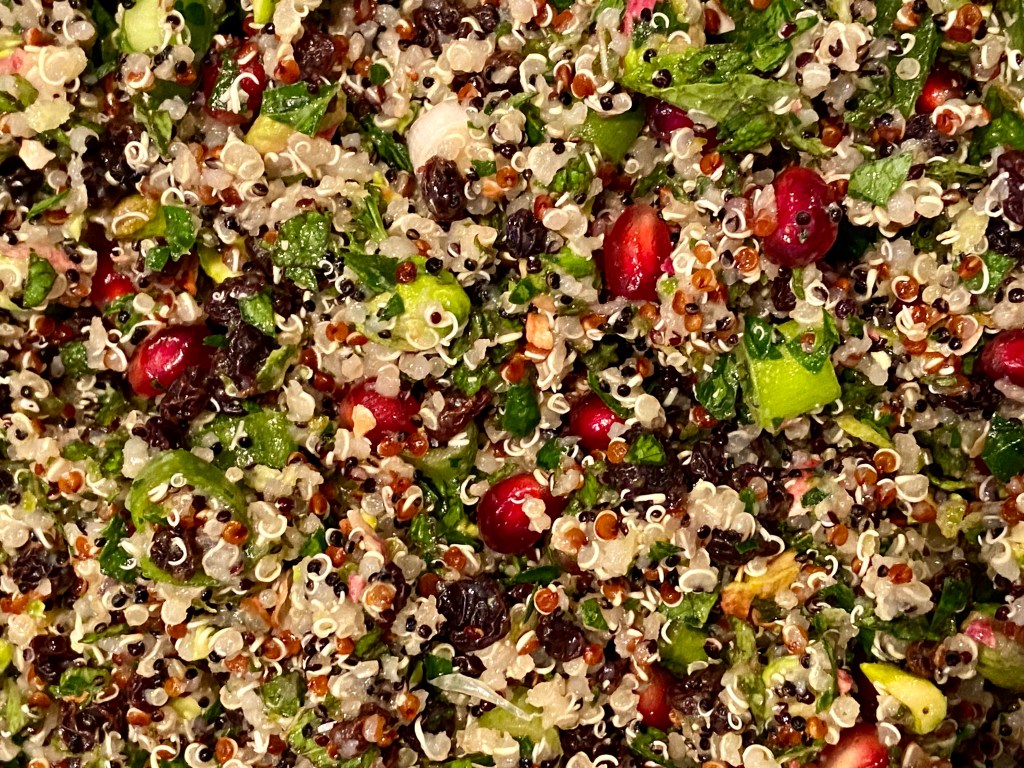
Tasty summer salad with all 6 tastes

Cate Stillman, in her fantastic book Body Thrive: Uplevel Your Body & Your Life with 10 Habits from Ayurveda and Yoga, shares the outer ecosystem becomes your inner ecosystem through your senses.  The role of taste is paramount in this process because food provides the majority of the gut’s microbes, your primary determinants in health or disease.  Balancing the 6 tastes helps keep your inner ecosystem happy.  It allows you to avoid unhealthy cravings, Stillman explains.

I believe it is important to emphasize the idea of whole foods here, not processed or fast foods. Your body cannot be properly nourished by the 6 tastes unless they come from whole foods.  So, for the sweet taste, consider sweet fruits, rice, oats, corn, sweet nuts, sweet potatoes, carrots, and local honey.  Sour fare includes lemons, limes, green apples, star fruit, berries, & fermented foods.  Seaweed is a good salt source in addition to mineral salts.  Bitter foods include cacao, green tea, spinach, kale, sprouts, and spices like turmeric. Quinoa, lentils, beans, chickpeas, cranberries, rosemary, and nutmeg are astringent. And horseradish, ginger, garlic, onions, basil, allspice, coriander, and cumin fall into the pungent category.

Creating soups, stews, salads, and curries with a veggie or spice from each taste category is simple and so satisfying.  No recipe is required.  I’ve made a number of “kitchen soups” where I chop up a bunch of veggies and throw them in a pot with a selection of fresh herbs, spices, & sometimes grains, and the final product is always delicious. A little spice adjustment may be required when taste testing, but that’s part of the fun!

Making a fruit and vegetable smoothie is another way to enjoy the yummy, nourishing, hydrating potential of the 6 tastes.  My smoothies include local honey, a bit of lemon, spirulina, cacao powder, cinnamon, basil, and a zing of ginger in addition to apples, oranges, celery, cucumber, parsley, fennel, and spinach.

Choosing to eat in a balanced manner according to Ayurveda is a choice for better overall health. The six tastes are the perfect guideline.  Maintaining equilibrium of the fundamental elements of our bodies is a simple lifestyle change that can help us reach our weight loss goals and flourish.

Balanced Blessings,

Lisa

The content of this article is for educational and informational purposes only, and is not intended as medical advice. Please consult with a qualified health care professional before acting on any information presented herein. Any statements about the possible health benefits of any subject discussed have not been evaluated by medical professionals or the Food & Drug Administration and are not intended to diagnose, treat, cure or prevent any disease or illness.
5 Reasons to Become a Master Gardener

Inside a local public garden

Back in the fall, I took an online Master Gardener class through the Cooperative Extension of the University of Arizona.  (I think I mentioned it to some of you.)  My goal was to learn to grow flowers and veggies here in Northern Arizona.  For years I’ve tried and failed in this lovely high desert environment where the climate is one of extremes.  On average, over 8 feet of snowfall, starting as early as October and ending as late as June, is followed by months of near single-digit humidity and frequent winds of 40 – 50 mph.  And then the monsoons arrive, providing the region with 40 – 50% of its total yearly precipitation in less than 3 months.  You might begin to understand the depths of my frustration!

During the class, I learned about the area’s many microclimates, the best ways to amend the soil, effective planting methods, organic weed & pest control, drought-resistant landscapes, composting, and much more, and now that I’m doing the required volunteer work, I’m gaining hands-on knowledge.  (To become certified, a minimum of 50 hours of volunteer work is required within 12 months after completing the course.)

My neighbor Andrew’s strawberry plant

According to the website of Washington State University where it all started in 1973, The Master Gardener program, which began as a response to a need for information on gardening and pest management, has evolved into a proactive partner with other agencies in addressing environmental and social issues covering such topics as integrated pest management, natural yard care, and low‐impact development, to name but a few.  Now, Master Gardener programs are available across the US, as well as in parts of Canada and South Korea.  As of 2018, there were over 86,000 Master Gardeners in this country alone, who volunteered over 5 million hours!

There are many advantages to becoming a Master Gardener (MG), and I’d like to share a few.

  1. Learn to grow your own food! – This is an obvious one, but it’s becoming more and more important, in my opinion. Each MG program is tailored to fit the region in which you live. (As you might imagine, gardening at lower elevations or in wetter environments is much different than tending plants in the high desert!) You know from my past posts that eating locally & seasonally is the best way to go and that working with the earth is healing. Plus, call me a weirdo, but I find it thrilling!
  2. Discover useful techniques – I have learned ways of working with plants that I’d never even considered! For example, walls of water are super-effective at absorbing and holding heat for keeping plants warm, whether outside or inside. You can buy small ones made from plastic for use around plants like tomatoes, or make your own to line the walls of your greenhouse by filling milk jugs with water.
  3. Gain a sense of accomplishment – I’m always in awe when a friend shares some of her/his tomatoes, peppers, or zucchini. Wow, you grew these? I am just waiting for the day I can proudly share my home-grown veggies.
  4. Meet new friends – I’ve noticed that as I get older, it’s not as easy as to make new friends. (And I’ve heard others say the same.) Since starting the MG program less than a year ago, I’m pleased to say I’ve already made happy connections with a few people that I believe will last.
  5. Become a part of a caring community – Again, in prior posts, I’ve shared how important it is to be a part of community. (Among other advantages, it improves mental health and increases longevity.) And, the MG community is not just any community; it is one whose members are passionate about working with the earth and sharing information for the benefit of everyone’s gardening efforts. Volunteering at plant sales, garden shows, and public gardens gives new MGs the opportunity to really feel like one of the gang.

My neighbor Andrew’s tomato plants

The act of becoming a Master Gardener has opened a beautiful new world to me.  I am super excited to be a part of this almost 50-year-old tradition. Hopefully, some of you will find its benefits appealing and you’ll want to join me.

Blessings from the Garden,

Lisa

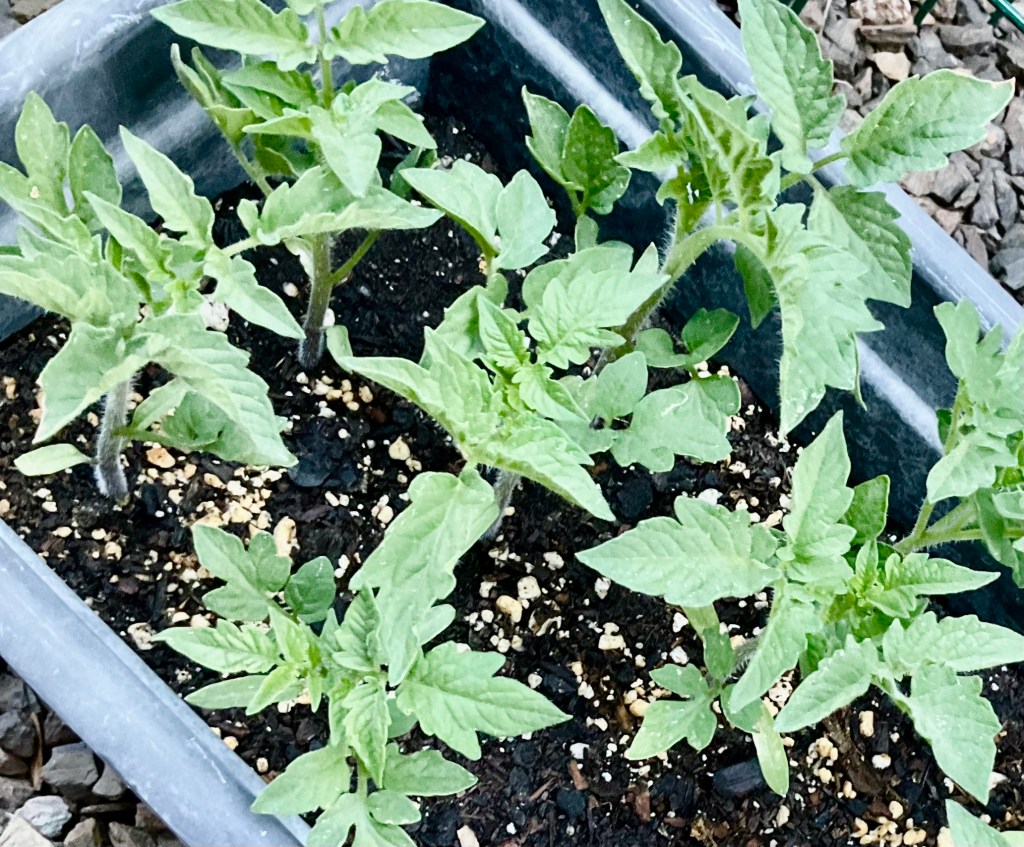
My garden has little sprouts right now

The content of this article is for educational and informational purposes only, and is not intended as medical advice. Please consult with a qualified health care professional before acting on any information presented herein. Any statements about the possible health benefits of any subject discussed have not been evaluated by medical professionals or the Food & Drug Administration and are not intended to diagnose, treat, cure or prevent any disease or illness.
Need a Reason to Get Away? Here You Go!

All photos in this post were snapped in California (I must do better at photographing the beach/ocean when in Florida!)

Do you remember vacations as a kid?  I can recall living for vacations.  My family would always go to the Gulf of Mexico and stay in a motel on Florida’s Panhandle.  We traveled to Flarda, as it’s pronounced in the South, to swim, lie in the sun, play in the surf, and deep sea fish.  My mom and grandma would prepare snacks and sandwiches when we went inside for a break from the heat.  Thinking back, I can still feel the crunch of sand under my feet as I walked barefoot inside the cool, dimly-lit room.  Anticipating those summer Nature escapes helped me through the humdrum of the school year.  Turns out, they were even better for me and my family than I could have imagined.

As I got older, things changed, and vacations became less frequent.  That seems to be the case for many of us.  The Center for Economic & Policy Research calls the US the No-Vacation Nation, referring to the fact that about 25% of American workers have no paid time off, and many who do are reluctant to take it due to workplace pressures.  I am well acquainted with that feeling from past positions – I even worked while eating lunch!

Not honoring our need to get away, however, can have dire consequences.  A study from the World Health Organization & the International Labour Organization reveals that working 55 or more hours per week is associated with an estimated 35% higher risk of stroke and a 17% higher risk of dying from ischemic heart disease, compared to working 35-40 hours a week.  In 2016, according to their estimates, 745,000 deaths were attributed to longer working hours.  Yikes!

A Pub Med meta-analysis states vacation has positive effects on health and well-being, but these effects soon fade after work resumption.  Therefore, frequent mini-breaks should be considered, like long weekends camping at a State Park or even a single day away to hike or bike a new area.  

Vacations can improve mood and reduce stress by removing people from the activities and environments that they associate with stress and anxiety, according to this article citing various studies.  Further, vacationing improves productivity and increases happiness; a win-win for employer and employee.

A write-up in the Journal of Positive Psychology asserts meditation and vacation may have overlapping effects, providing multiple pathways to boosts in mindfulness.  If you’ll recall my past post on mindfulness, I shared that this state of awareness is shown to bolster immune function, decrease chronic pain, and can help improve behavior in children due to enhanced emotional regulation.

Once we’ve returned from our glorious getaway, we feel more overall life satisfaction as a result of our detachment from work, relaxation, and mastery experience during vacation, a paper from the University of Massachusetts sets forth.  The last bit of that statement refers to our tendency to try something new while away – wind surfing, snow boarding, or simply exploring a new area to learn about its history or topography.  

Vacationing benefits your head, heart, life satisfaction, and longevity.  Making a regular plan to escape the everyday and enjoy the delights of Nature can have surprisingly positive impacts on you and your family.

Blessings for Time Away,

Lisa

The content of this article is for educational and informational purposes only, and is not intended as medical advice. Please consult with a qualified health care professional before acting on any information presented herein. Any statements about the possible health benefits of any subject discussed have not been evaluated by medical professionals or the Food & Drug Administration and are not intended to diagnose, treat, cure or prevent any disease or illness.
Healing Made Simple

I recently listened to a podcast in which Dr. Zach Bush, an MD specializing in internal medicine, endocrinology and hospice care, was interviewed.  The subject was healing the mind, body, & spirit, and Dr. Bush, who is also well-versed on the role of soil and water ecosystems in human genomics, addressed it with his typical wide and deep approach.  He began the discussion with the attention-grabbing statement we have made a decision in Western civilization to outsource life because we are lazy and seeking convenience. Rather than getting up early to work our crops, we’d rather purchase those that have been grown by someone else and shipped to our local market.  We find it easier to pop a pill than to go for a swim or a long walk.  And why should we cook with so many options for take-out and frozen pizza? 

In line with the philosophy of this blogsite, Dr. Bush sets forth we are the result of soil, water, air, and the sunlight that animates it.  Therefore, the importance of clean eating, proper hydration, and time outdoors cannot be overemphasized.  Choosing seasonal, local, organic (or at least non-GMO) food is the most healing way to eat.  (Preparing meals from the organic veggies you’ve gardened is the pinnacle!)  Staying on top of your hydration needs is crucial since our body composition is about 2/3 water and each one of our billions of cellular processes requires it.  And time outside with trees, birds, breezes, and other natural sights, sounds, & scents provides joy and healing in abundance.  

In this and other interviews, I’ve heard the good doctor talk about the human immune system.  He says it’s not the war machine that many of us have been taught to believe. On his website, he writes the innate immune system is not fighting against nature, it’s an intelligent, dynamic, living mechanism connecting us to nature and keeping us in a balanced relationship with nature by promoting biodiversity— not eliminating it.  This explains, at least in part, why the diversity of gut microbes is so important.  This diversification can be driven by consistently trying new, healthy foods and limiting or avoiding things like alcohol and antibiotics. Additionally, visiting differing ecosystems, from the beach to a rainforest, river, desert, or waterfall, helps. Simply breathing the air in these varied natural environments brings new, healthy microbes into the body.

When asked which diet he thought was most beneficial for healing, Dr. Bush made a general recommendation of eating lower on the food chain, not just for the benefit of human health but also the health of the planet.  This suggestion points us toward eating more plants.  Plants often contribute to healing existing problems in the body.  And they absorb carbon and usually require less water and energy to grow as compared to most animal products that have a large carbon footprint. (Even if you are carnivorous, his advice to eat lower on the food chain applies to meats and seafood, as well.)

The interview was quite lengthy and covered a lot of ground, but in my opinion, Dr. Bush summed it up with the following statement: We are only as healthy as our connection to Nature. Seeking ease and convenience by outsourcing life short-changes our earthly experience, leaving our health lacking.  Strengthening the ties to our Primal Mother can be healing on every level.

Blessings for Simple Healing,

Lisa

The content of this article is for educational and informational purposes only, and is not intended as medical advice. Please consult with a qualified health care professional before acting on any information presented herein. Any statements about the possible health benefits of any subject discussed have not been evaluated by medical professionals or the Food & Drug Administration and are not intended to diagnose, treat, cure or prevent any disease or illness.

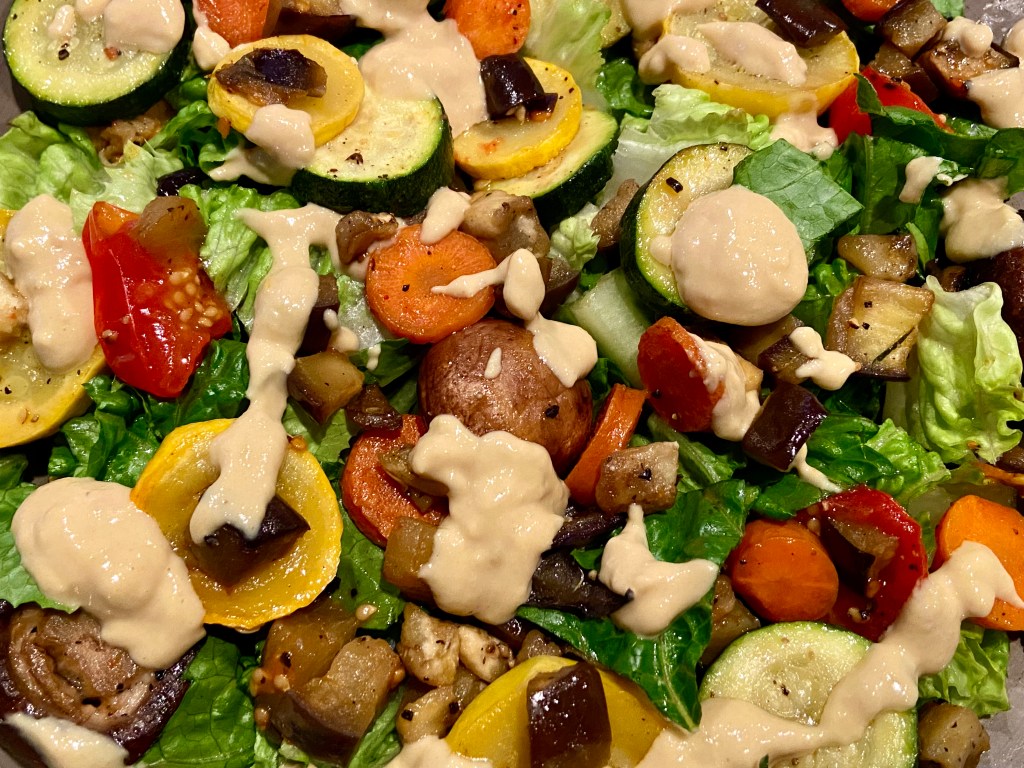
Spring Salad with Roasted Veggies and Tahini Sauce

One of the few restaurants that we frequent is Pita Jungle. The menu isn’t completely vegan, but includes a few delicious items that are. This recipe is inspired by their Wood-Fired Vegetable Salad, which is my go-to grab-and-go when my day is running long and I’m too tired to cook. My version is simple to make and incredibly yummy, just like the original!

But is it healthy, Lisa? I’m sure you’re asking. (Joking! I know that you know it must be healthy if I’m sharing it!)

But I will tell you in what ways it’s healthy. Its rainbow of colors provides for an abundance of whole body benefits. (See this post for more on that.) And although I started reading about the health advantages of mushrooms many years ago, research continues to reveal added value; they are anti-allergic, anti-cholesterol, and anti-cancer, according to a recent write-up from the National Library of Medicine. The raw garlic, lemon, and olive oil in the dressing are packed with immune-boosting nutrients and lots of digestive-friendly enzymes. And according to an article from Healthline, super-nourishing tahini, or sesame seed butter, is good for the health of the kidneys, liver, & brain; contains a load of healthy fats, antioxidants & anti-inflammatory compounds; and can help protect against chronic disease such as type 2 diabetes, heart disease, and cancer.

If the idea of warm vegetables on a bed of romaine doesn’t appeal to you, feel free to make a wrap instead. Either way, I believe you’ll enjoy this combination of textures and flavors as much as we do.

Yield: 4 servings

Salad Ingredientsuse organic and/or non-GMO whenever possible
1 head of romaine, chopped for salads
2 med carrots, cut into 1/8 inch thick rounds
1/2 med eggplant, diced small
2 med zucchini, sliced into 1/4 inch thick rounds
2 med yellow squash, sliced into 1/4 inch thick rounds
1/4 lb med baby bellas, stems removed & left whole
1/4 lb large cherry tomatoes, cut in half
Mineral salt & fresh-ground pepper to taste
2 – 4 tbsp avocado oil
Dressing as desired (recipe below)
1 – 2 Lemons, halved (in addition to those needed for dressing)

Dressing Ingredients (Makes just over 1 cup)
2 cloves minced garlic
1/3 cup tahini (sesame seed butter)
1 tsp lemon zest
2 tbsp fresh lemon juice
3 tbsp olive oil
2-3 tbsp warm water
1 tsp mineral salt

Directions
Prepare plates with beds of romaine.

Place cut veggies on a large, oiled baking sheet, adding more oil on top. (No need to get them all on a single layer.) Sprinkle with salt and pepper. Roast in a preheated 400 degree oven for about 20 minutes, turning halfway through, adding more salt & pepper after turning.

Meanwhile, whisk all ingredients for the dressing together, adding just enough water for your desired consistency. Taste for salt, adding more if needed.

Arrange veggies on top of romaine leaves, adding generous amounts of dressing & hefty squeezes of fresh lemon. Enjoy!

The content of this article is for educational and informational purposes only, and is not intended as medical advice. Please consult with a qualified health care professional before acting on any information presented herein. Any statements about the possible health benefits of any subject discussed have not been evaluated by medical professionals or the Food & Drug Administration and are not intended to diagnose, treat, cure or prevent any disease or illness.

8 Quick Morning Practices to Supercharge You for the Day Ahead

I remember well the morning rituals of my days working in an office. Jump out of bed, no time for breakfast, shower & dress, and rush to work, often arriving flustered & grumpy, feelings which could linger for hours.  At the time, it felt as though there was nothing I could do about it, as if my morning routine was running me.

Now I know better.  Through the years, I’ve learned lots of little methods that help me prepare myself for a day in which I feel enthusiastically in control.  Getting up a little earlier is required, but the gains outweigh the pain.

Northern Nevada

Working with Nature, both inside & outside us, is key.  Remembering to connect with the foundational aspects of our being each morning supercharges us.  I want to share with you some quick, easy ways to accomplish this.

  1. Meditate.  Or if you’re not a meditator, take 2 or more minutes to sit or lie quietly and breathe deeply.  Try this technique I learned & honed through yoga classes and books through the years: Begin your inhale by filling your belly, then expanding your ribs, and finally lifting your collar bones.  Exhale, using your abdominal muscles to squeeze every last bit of air from your lower lungs.  Breathing deeply in this manner works to keep lung function healthy, calm the nervous system, alkalize the blood, massage organs, and eliminate gunk from the lymphatic system.  
  2. Close your eyes & visualize your day, as detailed as possible, going swimmingly.  Visualization, a process I initially came to understand thanks to Shakti Gawain’s book Creative Visualization, is widely used by athletes and others looking to accomplish specific goals.  As I wrote about in this beach post, imagining that we are performing a task “tricks” the brain into providing us benefits as though we were actually executing the task.
  3. Express gratitude: for this miracle within which you live, for your family, friends, and other blessings.  An article from Greater Good Magazine shares, by making gratitude a habit, we can begin to change the emotional tone of our lives, creating more space for joy and connection with others. The article also offers great ideas for various gratitude practices.
  4. Observe natural beauty.  Let the first thing you really focus your eyes on each morning be part of Nature’s beauty, like the sunrise, a flower, a tree outside your window, a bird, a stream, or a mountain.  And wonder about its aspects: was the sunrise this lovely hours ago on the other side of the country?  I wonder how far this bird flies each day?  
  5. Take 5 minutes to stretch, and don’t forget the side body, lower back, hips, and forearms.  Because stretching elongates fascia, it helps keep our physical bodies from becoming chronically stiff and painful.   And due to fascia acting as our inner irrigation system, stretching helps with the deep hydration of cells, making us more energetic.  
  6. Foam roll your back, shoulders, and any areas that feel tight or sore.  For me, this takes the place of regular chiropractic visits.  It’s like an addendum to stretching, and brings new blood (and therefore increased oxygen & other nutrients) to the areas that need it most.  For specific foam rolling exercises that improve alignment, check out this article from SELF.
  7. Hydrate to eliminate.  Before consuming anything else, drink enough room-temperature water (mineralized with fresh lemon, cucumber, or Himalayan salt) to empty your bowels.  Unless you’re constipated, in which case you’ll need more, you’ll find it takes about a quart, according to Cate Stillman, author of Body Thrive: Uplevel Your Body & Your Life with 10 Habits from Ayurveda and Yoga.  This practice allows you to enter your day fluid, light, and clear.  You’ll experience more energy, clarity, and flexibility, she explains.
  8. Consume raw plant foods.  When I’m not drinking a breakfast smoothie with fruits, veggies, nuts, & seeds, I enjoy fresh fruits and raw nuts or peanut butter (made only of crushed organic peanuts.)  If you opt for oatmeal, toss plenty of fruit & nuts on top, and if you eat eggs, maybe add half an avocado & other fruit on the side.  Raw foods, with their high nutrient load including enzymes, are the perfect way to rev your body’s engine for a busy day.
View from Bear Mountain in Sedona, Arizona

Of course, I’m not suggesting you try to incorporate all of these methods into your mornings.  (Not at first, anyway!)  Just try one or two to see if they help you feel clearer, livelier, and more in control.

Healthy early morning rituals can have far-reaching effects, starting with a positive sense that we’re at the helm of our actions, which sets the tone for the whole day. Taking time to connect with Nature on a daily basis can truly be a game changer.

Montana

Supercharged Blessings,

Lisa

The content of this article is for educational and informational purposes only, and is not intended as medical advice. Please consult with a qualified health care professional before acting on any information presented herein. Any statements about the possible health benefits of any subject discussed have not been evaluated by medical professionals or the Food & Drug Administration and are not intended to diagnose, treat, cure or prevent any disease or illness.

5 Merits of Wonder

Mystery creates wonder and wonder is the basis of man’s desire to understand. ~Neil Armstrong

Earlier this week, I was watching Dr. Gay Hendricks, psychologist, body-mind therapist, & author of over 40 books, in an interview, and the concept of wonder came up.  Human beings thrive on wonder, he said, and gave examples of his clients utilizing wonder with outstanding results. 

Psychology Today shared an article with a delightful definition of the term: Wonder is a complex emotion involving elements of surprise, curiosity, contemplation, and joy. It is perhaps best defined as a heightened state of consciousness and emotion brought about by something singularly beautiful, rare, or unexpected—that is, by a marvel.  

After exploring further these last few days, I’ve read several times that it is an emotion that is ever-present in us as small children, but by the time we get to high school, it’s all but gone.  Due to its profound advantages, many of which I’ve experienced first-hand, I’d like to share some reasons to reintroduce wonder to yourself and your older children.

The happiness of the bee and the dolphin is to exist. For man it is to know that and to wonder at it. ~Jacques Cousteau

  1. It can help with relationship issues.  After Dr. Hendricks’ interview mentioned above, I searched the internet for more from him on the subject, and found these statements addressing relationships: Wonder is the opposite of blame. Wonder opens all your brain and body intelligence powers to make new connections.  Wonder takes you out of the state in which a problem gets generated, an Einsteinian move.  
  2. It fosters environmental protection.  Rachel Carson, author of The Sense of Wonder, among other books promoting environmental ethics,  writes of the ways in which we have insulated ourselves within the artificial world we have created, yet we are quietly and desperately eager to believe we (including the natural world) have a future.  The more clearly we can focus our attention on the wonders of the Universe about us, the less taste we shall have for destruction, she urges. 
  3. It prompts learningWikipedia shares that historically, wonder has been seen as an important aspect of human nature, specifically being linked with curiosity and the drive behind intellectual exploration.  And the Greek philosopher Socrates set forth the idea wisdom begins in wonder.  It must be the reason little ones ask so many questions.
  4. It promotes prosocial behaviors.  A study published in the Journal of Personality & Social Psychology reports that the experience of wonder we feel in the presence of something vast that transcends our understanding of the world encourages lovingkindness, altruism, and generosity.  It’s like falling in love with all of life.
  5. It improves mood & mindset.  This point comes from my experience of being on hiking trails and witnessing amazing sites like wildlife, larger-than-life trees, and landscapes so bedazzling that I am stopped in my tracks. A sudden childlike feeling sweeps over me, bringing me into to the present moment, replacing concerns with a sunny disposition.

Cultivating wonder opens a world of possibilities.  Marveling at the mysteries in which our lives are immersed can make us smarter, more loving toward all of life, and happier.  What could be a better way to live?

If this is the way the world is: extraordinary, surprising, beautiful, singular, mysterious and meaningful; then this is how I ought to act in that world: with respect and celebration, with care, and with full acceptance of the responsibilities that come with my role as a human being privileged to be a part of that community of living things. Wonder is the missing premise that can transform what is into a moral conviction about how one should act in that world. ~Kathleen Dean Moore, Writer & Professor of Philosophy, Oregon State University

Blessings for Wonder,

Lisa

The content of this article is for educational and informational purposes only, and is not intended as medical advice. Please consult with a qualified health care professional before acting on any information presented herein. Any statements about the possible health benefits of any subject discussed have not been evaluated by medical professionals or the Food & Drug Administration and are not intended to diagnose, treat, cure or prevent any disease or illness.

Kinship in the Wild West

Taos Mountain

I’ve recently read Kinship: Belonging in a World of Relations, Volume 1, Planet, edited by Robin Wall Kimmerer, Gavin Van Horn, and John Hausdoerffer.  It’s a beautiful little collection of short essays by ecologists, philosophers, professors, and others sharing information and stories from different viewpoints on our kinship with all of Nature.  There are 4 other volumes in the series that I can hardly wait to read!

The ideas set forth in the book stirred so many personal memories, and caused me to realize that there are numerous others who believe not only that we are a part of Nature, but also that other forms of life are just as important as ours.  We didn’t evolve to decide the fate of those often considered lesser lives such as animals, trees, soils, rivers, and oceans by our short-sighted endeavors.  We are here to protect them as much as they protect and provide for us. Our forgotten ties with Nature are addressed in a particularly touching essay by Robin Wall Kimmerer, botanist & professor at the SUNY College of Environmental Science & Forestry.  She writes that we have always been fed, provided for in every way, sung awake in the morning, sung to sleep at night, and taught by Nature. Since the beginning, she explains, Nature has loved us, but we’ve failed to recognize it.  (For a bit more on this, check out my post Does the Earth Love You? based on Kimmerer’s delightful book Braiding Sweetgrass.)

Ojo Caliente Mineral Springs & Spa clinging to the warm high desert cliffs

Another of Kinship’s essays that really spoke to me is by Bron Taylor, professor of religion & environmental ethics at the University of Florida.  He writes about the ways in which we establish feelings of kinship with Nature. Direct, visceral, sensory experiences in Nature – including experiences of awe and wonder at the beauties, mysteries, and sometimes terrors – are a common pathway to kinship sentiments, he explains. 

The Rio Chama alongside the road from Taos to Santa Fe

Spending time in Nature, encountering majestic landscapes & wildlife, was certainly the catalyst for me.  And it all started in the wilds of Northern New Mexico.  The Sangre de Cristo Mountains, in the southernmost part of the Rockies, are found in this region that stole my heart.  Its highest peak is found in Taos Ski Valley, which reaches an elevation of just over 13,000 feet.  Hiking in the ski valley during the warmer months is a visual treat.  Dense aspen trees and conifers hug the trails, and the aspen leaves change from a gentle green in Spring to brilliant reds and golds in Fall.  

My favorite little village in the region, Arroyo Seco

Much of the northern part of the state is either lightly developed or not at all.  Taos Pueblo, a multi-level adobe complex about a mile north of Taos proper, is the longest continuously-inhabited community in the US.  It is said to have been built between the years 1000 and 1500.  Like the Great Pyramids and the Grand Canyon, it is a World Heritage Society site, one of our planet’s most significant historical cultural landmarks. The few Native Americans who still live within its walls have no running water or electricity.  Currently, the Pueblo is used primarily for sacred ceremonies and is open for tours on non-ceremonial days. During my visit, I purchased sage and cedar smudge sticks that had been freshly rolled by an elder. This divine scent is quintessential Northern New Mexico to me.  

Pan, Greek god of the wild, as portrayed by a local artist

There are other aspects of the area that take my breath away.  Unforgettable sunsets over its sliver of Rio Grande and skies with double rainbows. Rivers and streams flanked by mountains, cottonwood trees, and vibrant wildflowers.  Piñon trees growing close enough to the roads that you can pull over and fill your pockets.  And if you’d rather view the loveliness from inside your car, a plethora of scenic drives, including the Enchanted Circle and the High Road to Taos, await you.

Heading north

It’s an area replete with adobe houses, earth ships, and other unconventional set-ups that its residents call home.  It has a long history for being artsy, and there are loads of musicians, writers, painters, sculptors, and artisans to keep that history alive.  Downtown Taos, and the tiny villages in its proximity, have a great many galleries, from the fancy to the simple.  I believe the beauty of the area works to inspire its artists, in the same way it inspires me.

The iconic Taos Cow, serving coffee, lunch, and all-natural ice cream

As a result of experiencing this and other exquisite natural beauty, I know in my heart that we are one, neither superior nor inferior, with all other life.  Like the first Kinship volume sets forth, protecting Nature and allowing all other forms of life to flourish reciprocates the love and care She’s always provided for us.

Kinship Blessings,

Lisa

The content of this article is for educational and informational purposes only, and is not intended as medical advice. Please consult with a qualified health care professional before acting on any information presented herein. Any statements about the possible health benefits of any subject discussed have not been evaluated by medical professionals or the Food & Drug Administration and are not intended to diagnose, treat, cure or prevent any disease or illness.

The Science Behind Eating the Rainbow

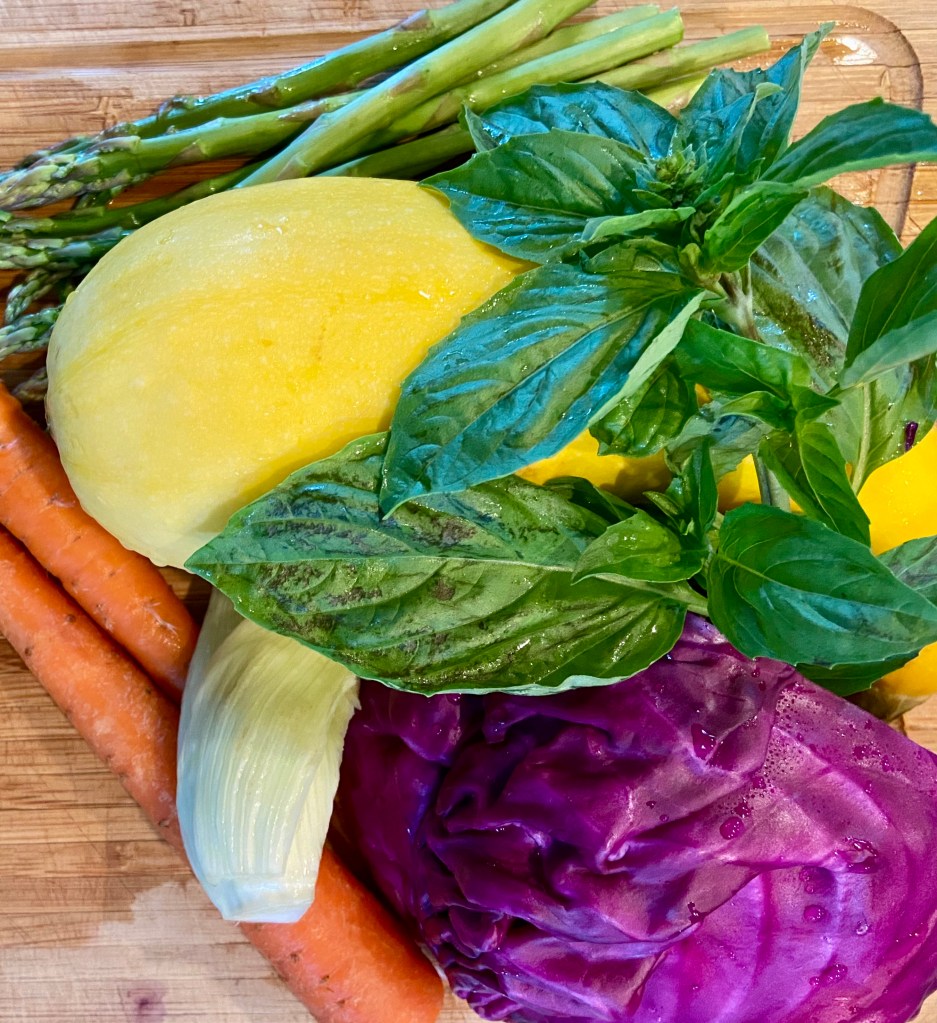
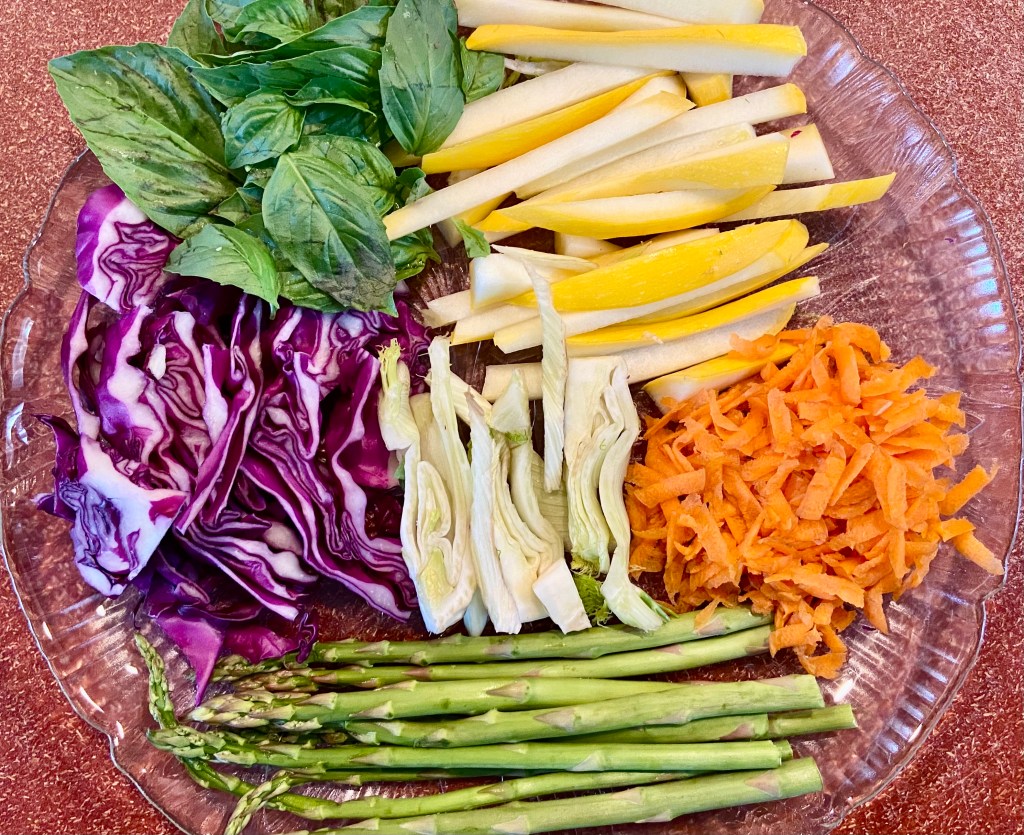
The makings of a smoothie

You may have heard the phrase eat the rainbow many times.  And you might have realized that it’s referring to the varied colors of fresh fruits & vegetables.  But have you heard an explanation of why it’s beneficial to adopt this strategy?  

In his book Conscious Eating, Dr. Gabriel Cousens writes the color of foods is a silent communication from Nature about the characteristics of Her gifts to us.  Each of the rainbow colors relates to a specific subtle energy center (or chakra) in the body and its associated glands, organs, and nervous system plexus.  He gives the example that green foods are high in nutrients, like vitamin K, folate, and magnesium, that protect the (green) heart chakra. (For a deep dive into the connection of food & chakras, I encourage you to check out another of Dr. Cousens’ books, Spiritual Nutrition and the Rainbow Diet.)


In addition to their individual specialties, plant foods of all colors are good for boosting immunity and reducing risks for diabetes & cancer. But according to this report by the Nutrilite Health Institute in Buena Park, California, approximately 80% of Americans don’t get enough of any plant pigment.

While eating more vegetables and fruit is always a good idea, focusing on eating a variety of colors will increase your intake of different nutrients to benefit various areas of your health, an article from Healthline reports.  In an effort to encourage this in some small fashion, I’d like to share an abbreviated description of each color category, including the ways in which they go above and beyond.

Red – Tomatoes, strawberries, cherries, pomegranates, red grapes, red bell peppers, and other reds help destroy harmful free radicals and reduce cholesterol and blood pressure. A write-up from Food Revolution Network explains that lycopene and ellagic acid are two of the powerful phytochemicals at work here. 

Orange – Foods like sweet potatoes, carrots, oranges, pumpkin, and apricots assist with healthy joints & skin as well as eye function.  A wealth of beta carotene is found in these foods.

Yellow – The phytonutrients in lemons, yellow bell peppers, corn, butternut squash, papaya, & other yellows reduce inflammation and help our bodies detox.  Flavonoids and vitamin C are responsible for these benefits, according to The Physicians Committee for Responsible Medicine.

Green – Chlorophyl, the green pigment found in abundance in foods like broccoli, Brussel sprouts, avocados, kale, limes, spinach, and asparagus, signals us to the potential for increased vitality, healthier blood, and stronger muscles & bones.  Chlorophyl and human blood are similar in chemical composition and both carry oxygen, so it’s no wonder that eating green things makes us feel clearer and stronger!

Blue/Purple – The health-giving functions of blue and purple foods like blueberries, plums, prunes, figs, eggplant, and purple cabbage include reducing free radicals, fighting inflammation, and helping with our anti-aging efforts.  An article from the British Heart Foundation notes that the pigments in these foods, anthocyanins, are powerful antioxidants, which have a role in protecting cells from damage

White/Brown – Veggies in this category, like mushrooms, cauliflower, daikons, onions, and garlic, assist the body by removing excess hormones and carcinogens.  Even though they aren’t as brightly colored as the others, these crucifers, alliums, and fungi offer a host of health-promoting advantages.

Increasing your color intake is easier than you might imagine.  You can toss lots of color into a smoothie, create a beautiful new soup, or chop up a fun salad.  Trying new fruits and veggies is a great way to expand your palate and boost the health of your microbiome & overall body function.  And if you don’t like a new vegetable raw or stir-fried, try roasting it.  Or sauté it in a good olive oil with plenty of garlic.  That makes everything tasty! 

The color-coding of plant foods broadcasts Nature’s goodness.  Choosing to include a wide assortment of these colors in your daily intake can be most beneficial.  Even when you don’t know their specific merits, eating a variety of colored fruits and veggies helps you achieve your best possible health.

Rainbow Blessings,

Lisa

The content of this article is for educational and informational purposes only, and is not intended as medical advice. Please consult with a qualified health care professional before acting on any information presented herein. Any statements about the possible health benefits of any subject discussed have not been evaluated by medical professionals or the Food & Drug Administration and are not intended to diagnose, treat, cure or prevent any disease or illness.