About once a week, I make what I call a kitchen soup (shortened from kitchen sink soup because it just sounds better!) Fresh farmer’s market finds, veggies that have gone unused from earlier in the week, extra cooked grains, leftover fresh herbs, and sometimes beans go into the mix. Spices are chosen that will accentuate the ingredients, and, voila, a new concoction is born! I don’t make note of the ingredients unless the soup is over-the-top tasty. This recipe is the result of a super tasty one.

I love black beans and rice, and I love soup, but none of the recipes I’ve seen (or tried) for combining the two have appealed to me. So, I am grateful to the recipe developers, who shall go unnamed, that inspired me with the idea of creating my own!
Not only is this soup delicious, it has many health-giving properties as well. According to a write-up on Web MD, black beans are loaded with fiber, antioxidants, iron, folate, and magnesium. Eating them regularly may help in preventing various cancers, protecting eye health, reducing heart attack risk, and even controlling weight and cholesterol. Further, a Healthline article reveals studies have shown that if people eat black beans with rice, the beans can reduce the rise in blood sugar compared to when people eat rice alone.

According to an article from Medical News Today, oregano has been used as an herbal remedy for centuries for treating many ailments, including colds, indigestion, asthma, and diarrhea. Studies show that the herb contains a host of antioxidants, and has anti-bacterial and anti-cancer properties. The article goes on to say that oregano may also be helpful for depression, cramping, allergies, diabetes, and arthritis. It’s a powerful little plant!
Sweet potatoes, I’ve found after years of reading many different sources, are one of the most beneficial foods around. From the informational page on sweet potatoes at The World’s Healthiest Foods website, one difficulty in describing the health benefits of sweet potatoes is knowing where to begin. I eat them regularly due to their rich content of fiber, Vitamin C, many B vitamins, potassium, and beta carotene. I also appreciate the fact that they’re anti-inflammatory and good for my gut in various ways. Not to mention, they are sooooo flavorful! If you’ve been buying the same type of sweet potato for a while and they don’t seem as sweet as before, try a different kind. After sampling a few varieties, I’ve landed on a new favorite: the Japanese sweet. Biting into a morsel of sweetness while eating this spicy soup is sure to make you say mmmmmmmmmm!
I’d love to hear if you give the recipe a try!

Yield: 6 Servings
Ingredients (use organic and/or non-GMO when possible)
2 tbsp avocado or olive oil
5 med cloves garlic, minced
1 med yellow onion, diced
3 stalks celery, sliced
1 large carrot, sliced
1 med-large Japanese sweet potato, peeled & med diced
1 jalapeño, seeds removed & minced
2 cups home-cooked or one 15 oz can black beans, partially drained
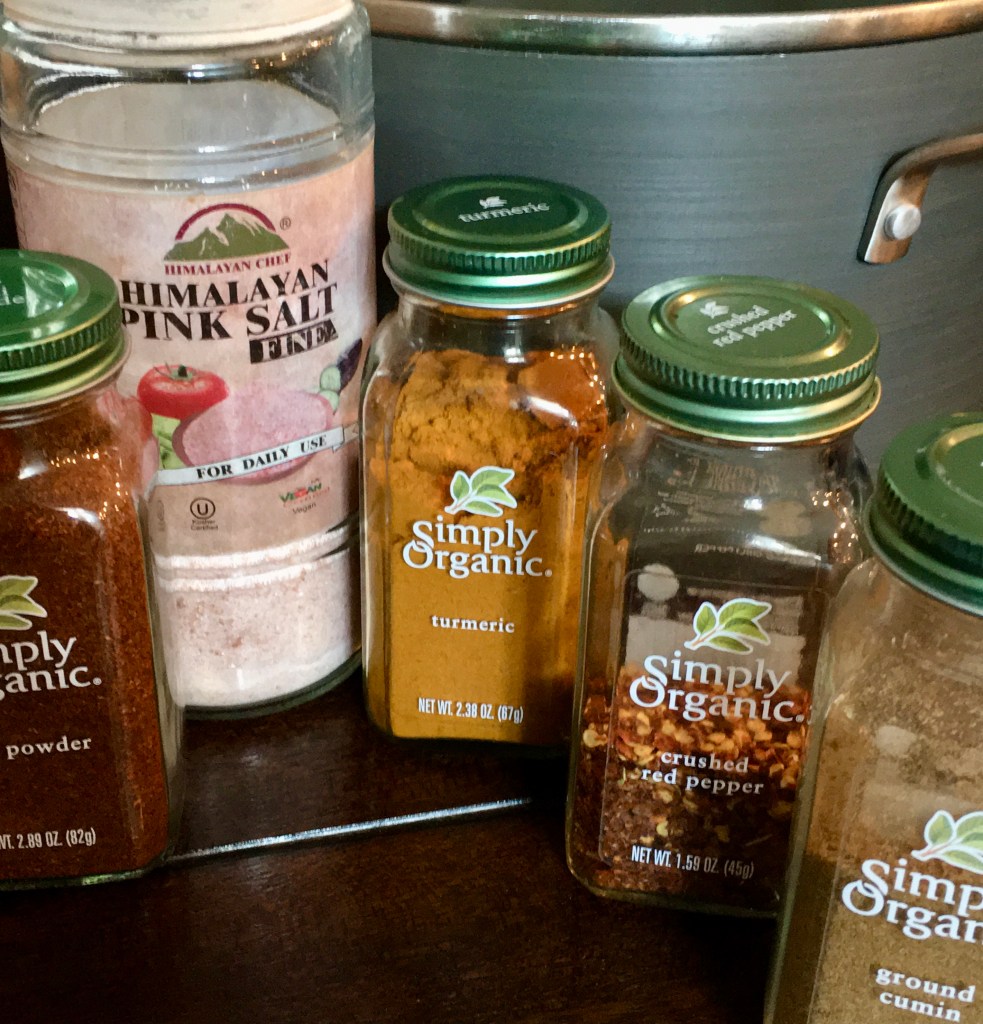
1/4 tsp turmeric
1 tsp cumin
1 tsp chili powder
1/4 tsp crushed red pepper
*3 bouillon cubes
*6 cups water
1 med zucchini, med diced
2 tbsp fresh oregano leaves
1 heaping cup cooked brown rice
salt to taste
*You may sub 6 cups broth for the bouillon & water, if you’d like.
Directions
Warm the oil over medium-low heat in a heavy-bottomed soup pot. Add the next 6 ingredients (garlic – jalapeño.) Stir regularly to prevent garlic from burning and cook for 10 minutes. Add beans and seasonings (turmeric – crushed red pepper) and stir while cooking for 3 minutes. Break up the bouillon cubes over the veggies & add the water, increasing heat to a quick boil. Bring down to a simmer for about 7 minutes, until veggies are firm-tender. Add zucchini & fresh oregano to simmer for 5 minutes. Finally, stir in the cooked brown rice and salt to taste. Allow to warm through, about 3 minutes more.
Serve alongside a green salad with avocado cubes & diced red onion seasoned with salt and fresh lime juice. Enjoy!

The content of this article is for educational and informational purposes only, and is not intended as medical advice. Please consult with a qualified health care professional before acting on any information presented herein. Any statements about the possible health benefits of any subject discussed have not been evaluated by medical professionals or the Food & Drug Administration and are not intended to diagnose, treat, cure or prevent any disease or illness.