Where Have All Our Bird Friends Gone?

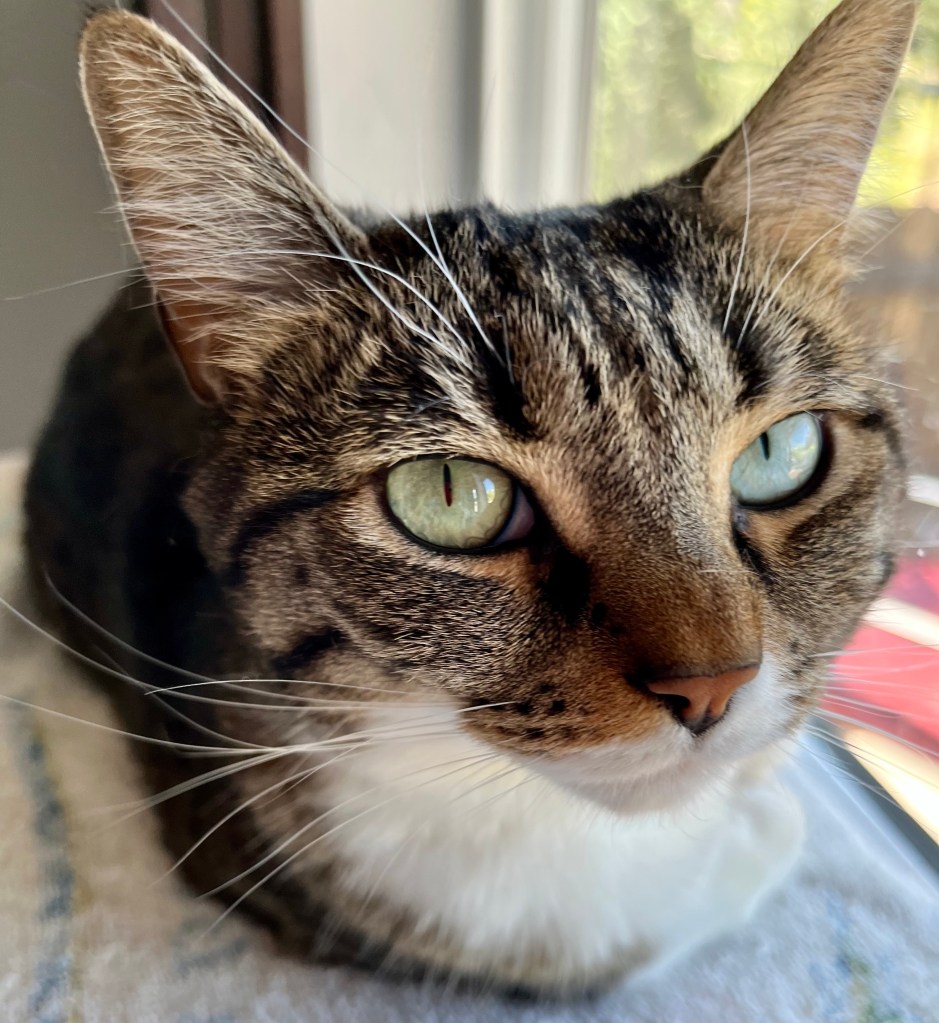
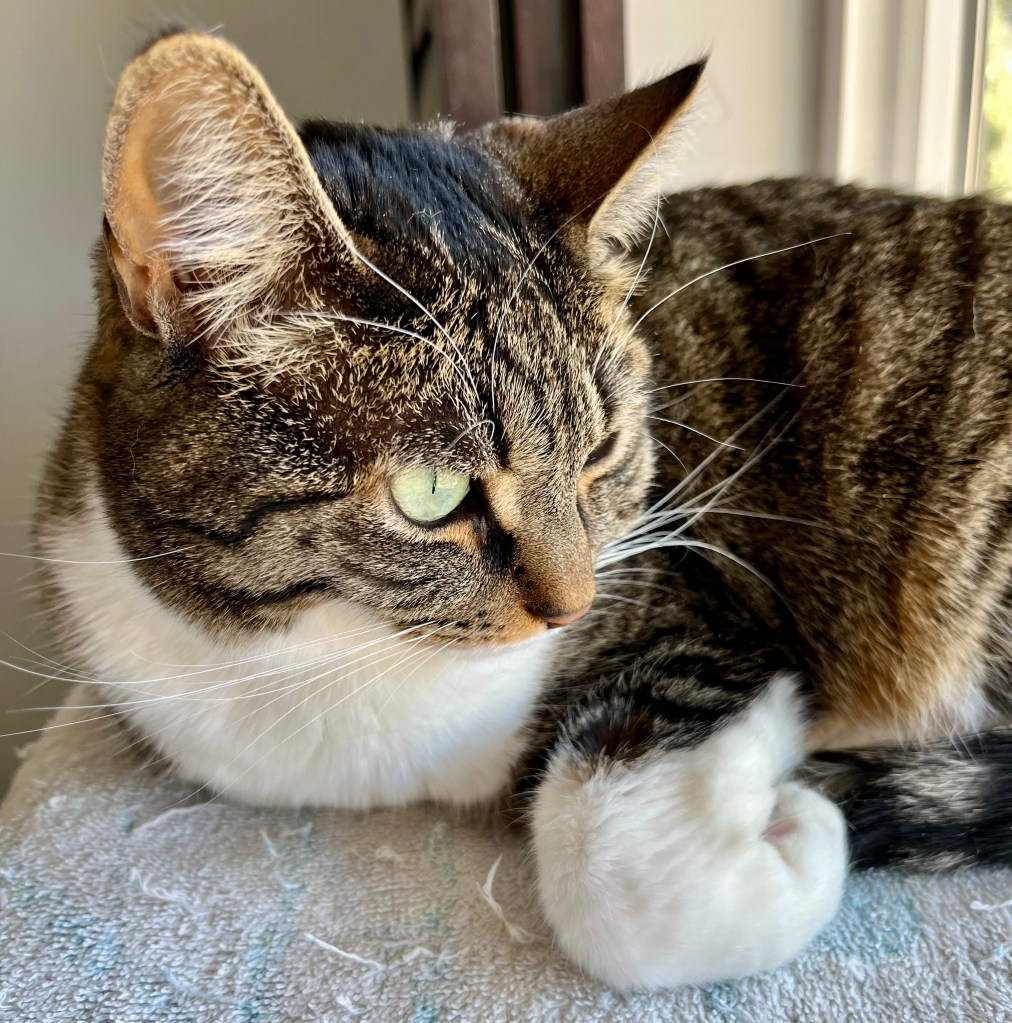
With no birds at the feeder, Izzy watches dogs walking their owners

We were away for the majority of last month, and although I filled the bird feeder before leaving, I was surprised to find it half-full upon my return.  (Normally, between the birds and squirrels, the feeder is emptied within 3-4 days’ time.)  Even more surprisingly, I’ve seen a total of only 5 birds in our front yard during the 4 weeks I’ve been back.  

During the pandemic, I read an article about hundreds of thousands of birds, including warblers, bluebirds, sparrows, blackbirds, and flycatchers, that were found dead in New Mexico.  It is thought these birds were forced to flee areas further West that were burning with widespread wildfires before they had enough fat on their bodies to complete their regular migrations.  This sad & frightening result of global warming still haunts me.

Steller’s Jays usually frequent our yard

And after weeks without birdsong outside my Northern Arizona home, my thoughts have returned to the planet’s ongoing destruction.  I find the absence of that auditory delight both sad and terrifying.  And my precious kitty Izzy is now starting her daily naps by 10:00 am, two to three hours earlier than usual, because she has no friends to interact with at the front window. 😦

A Hummingbird visitor from last year

At first I thought the birds abandoned us because they didn’t like the new feed I had purchased, so I ordered another bag of seeds I’d used in the past.  Still no birds.  Then I decided the cat next door had “hunted” and killed one of them near the feeder & word had gotten out through the all-bird network to avoid the area.  After a couple weeks of silently cursing the neighbor cat each time I saw the vacant feeder, I overheard a couple ladies at a gardening presentation discussing the disappearance of their birds.

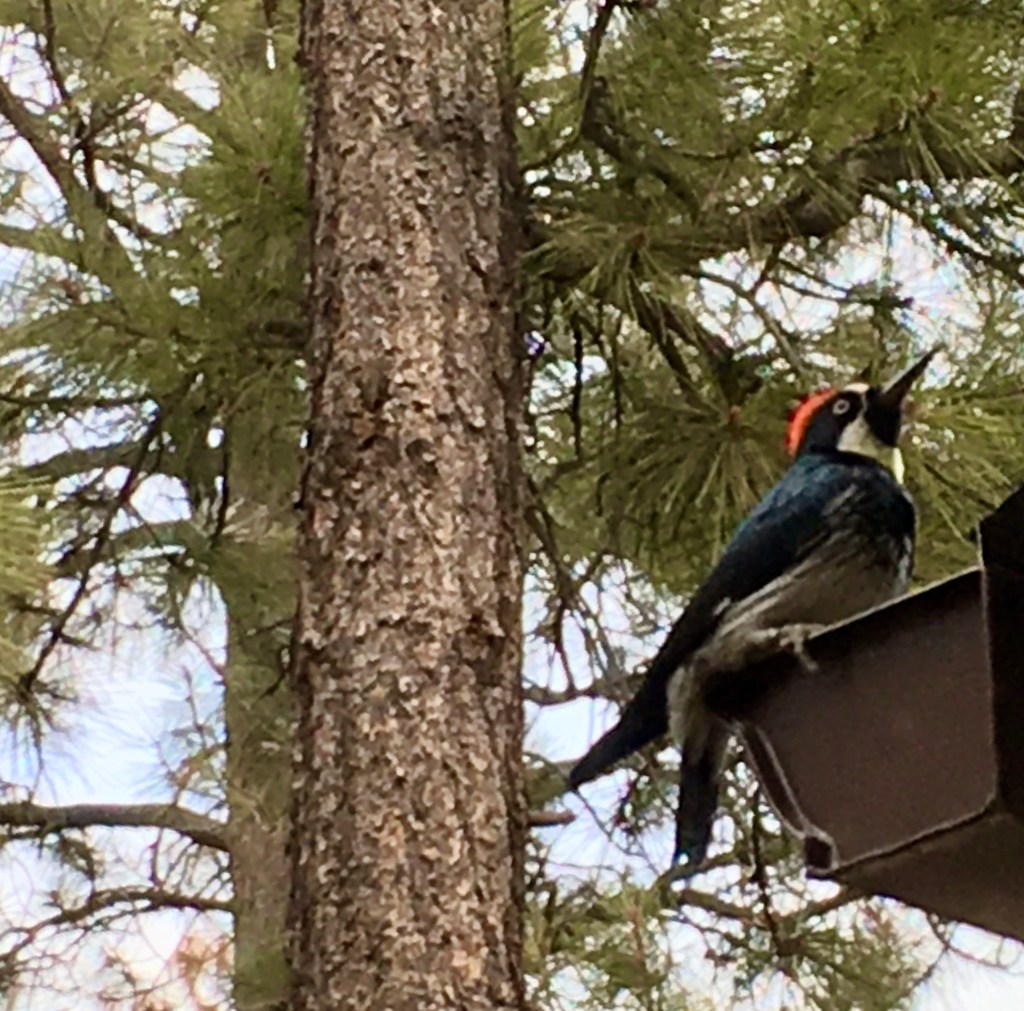
Acorn Woodpeckers are typically a common sight here

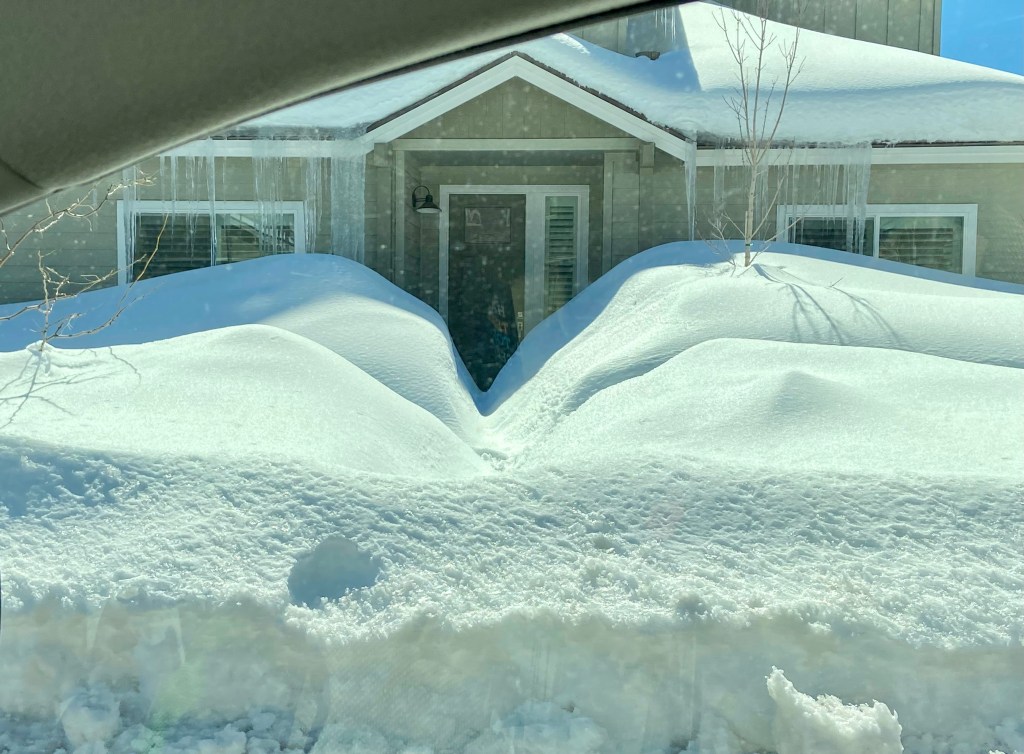
Since then, I’ve learned from a local Nature expert that birds can still be found in large numbers in surrounding forest lands.  Maybe the combination of almost 14 feet of snow over the winter and the untimely monsoon-like rains that fell last month created watering holes that they find irresistible.  I did see many large areas covered with water on my return flight from Phoenix, a sight I can’t remember ever having seen.

I am grateful for the abundance of moisture we’ve had this year, and I’m thrilled to know our forests are still teeming with the little feathered guys.  But Izzy and I continue to hope for the return of our bird friends to the feeder & woods around our house.  Our world seems eerie without the sweet sights and sounds of them.

Tired of doing nothing

Winged Blessings,

Lisa

The content of this article is for educational and informational purposes only, and is not intended as medical advice. Please consult with a qualified health care professional before acting on any information presented herein. Any statements about the possible health benefits of any subject discussed have not been evaluated by medical professionals or the Food & Drug Administration and are not intended to diagnose, treat, cure or prevent any disease or illness.

The Consequences of Choice

Our lives are a sum total of the choices we have made. ~Wayne Dyer

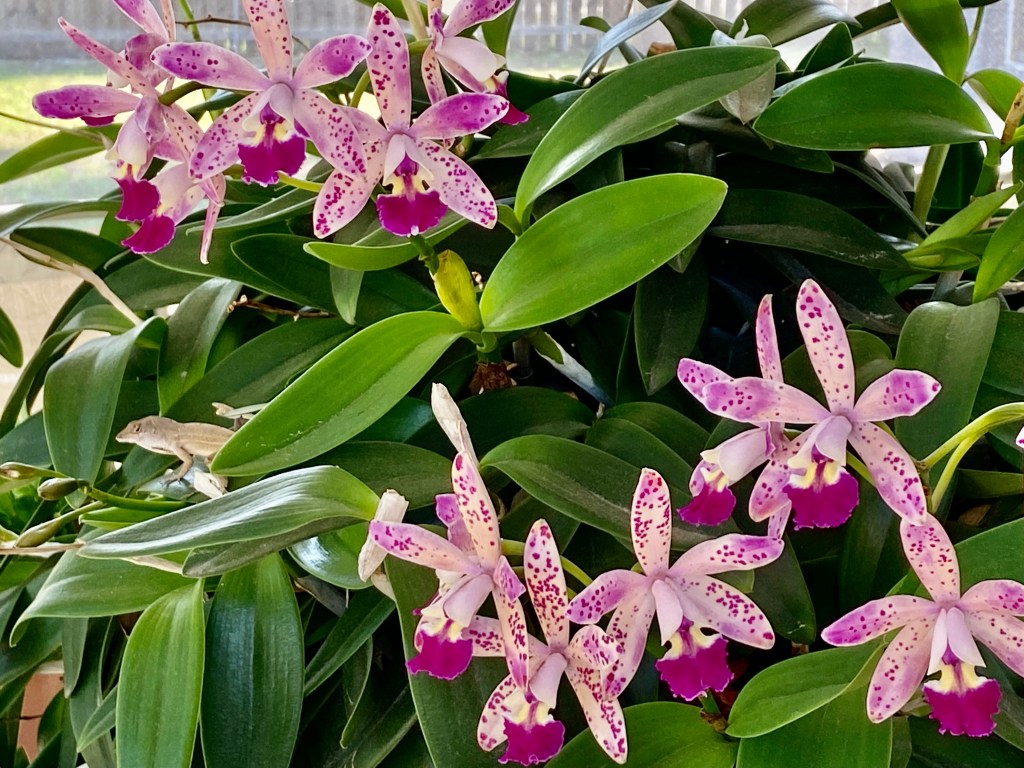
Florida has orchids (and lizards!) in abundance. This giant beauty belongs to my mom.

Hello, friend.  How are you?  What’s new for you over these past few weeks?  My experiences this month have been unusually deep, so my post today will be a heavy one. If you’re looking for some light reading today, you might want to pass this one up.

My primary focus this month has been life and death and the choices we make that structure our existence.  Like I said, heavy.  Sitting by the deathbed of a loved one can give rise to that. 

While working with hospice, I learned that a component of the dying process for each of us is a life review: the process of recalling past events and memories in an effort to find meaning in and achieve resolution of one’s life (a description from a paper out of the University of Utah.)  I was curious:  Where in this process is my loved one?  Is the life review detailed at times or one quick summary?  Does he have unresolved conflicts that sadden him even now?  If he never recognized the meaning of his life before, (too many of us don’t, in my opinion) will finding it now feel like being wrapped in a warm blanket or create a sense of having missed out?

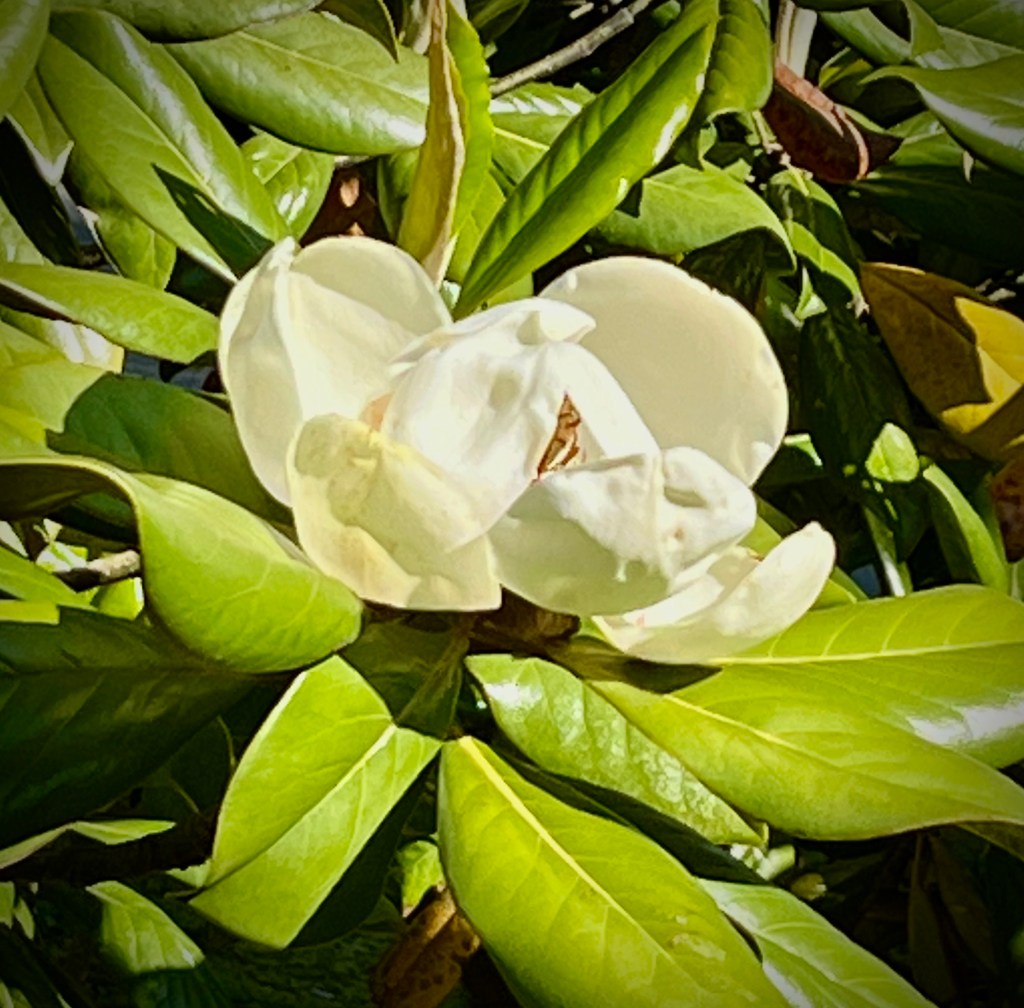
Magnolia trees were blooming everywhere. This shot was shared with me by a friend in Michigan who had just visited the South.

After days of pondering, I began to think of how my life review might go.  Will I have regrets?  Will I wish I had reconciled relationships, or at least attempted reconciliations? Thoughts of two individuals popped into my head.  Each of them was a huge part of my life for many years, and I still feel great love for them.  But now, we no longer communicate.  Not even Christmas card exchanges.  I’ve decided to work at bridging the chasms between us.

I’ve also given a lot of thought to lifestyle choices: the environments in which we work and live, the water we drink, the foods we eat, and the activities we pursue.  Each of these is important in its own right, and if you’ve read my past posts, you got loads of info on the reasons why.  But considering all of them together at the end of someone’s life, after witnessing intense prolonged suffering, creates a lump in my throat and brings tears to my eyes.  What if . . .

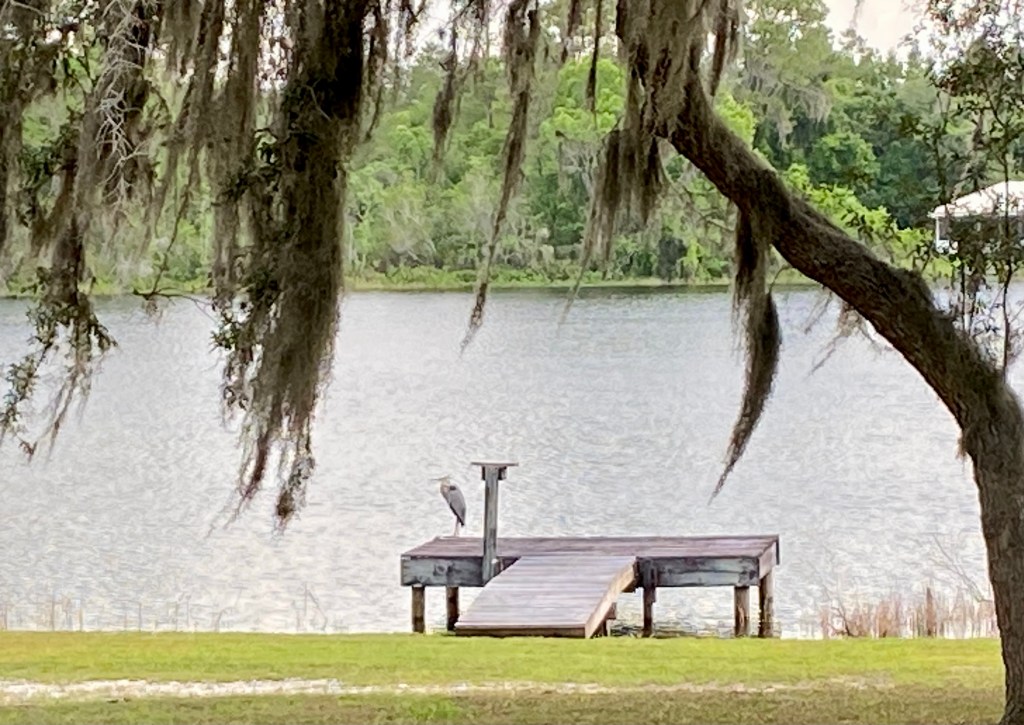
Moss hangs from many trees in rural Florida. The water bird on the dock is scanning for breakfast.

The profundity of life viewed from this angle inspires me to be more grateful, act with more generosity, and love more deeply.  It’s as though a reset button has been pushed.

Every choice we make, big or small, has far-reaching consequences.  Each one builds on the other and affects us down to the cellular level over our entire lifetime.  I strongly agree with the words of French Existential Philosopher Jean-Paul Sartre: We are our choices.

Blessings,

Lisa

The content of this article is for educational and informational purposes only, and is not intended as medical advice. Please consult with a qualified health care professional before acting on any information presented herein. Any statements about the possible health benefits of any subject discussed have not been evaluated by medical professionals or the Food & Drug Administration and are not intended to diagnose, treat, cure or prevent any disease or illness.

A Change in Course (For Now)

Hello, my friend.  I appreciate your visit today.  I’m sad to report that my family concerns continue, and I just don’t have the oomph for a regular post.  Do you know what I mean? But I miss you.  So for now, I am changing course.

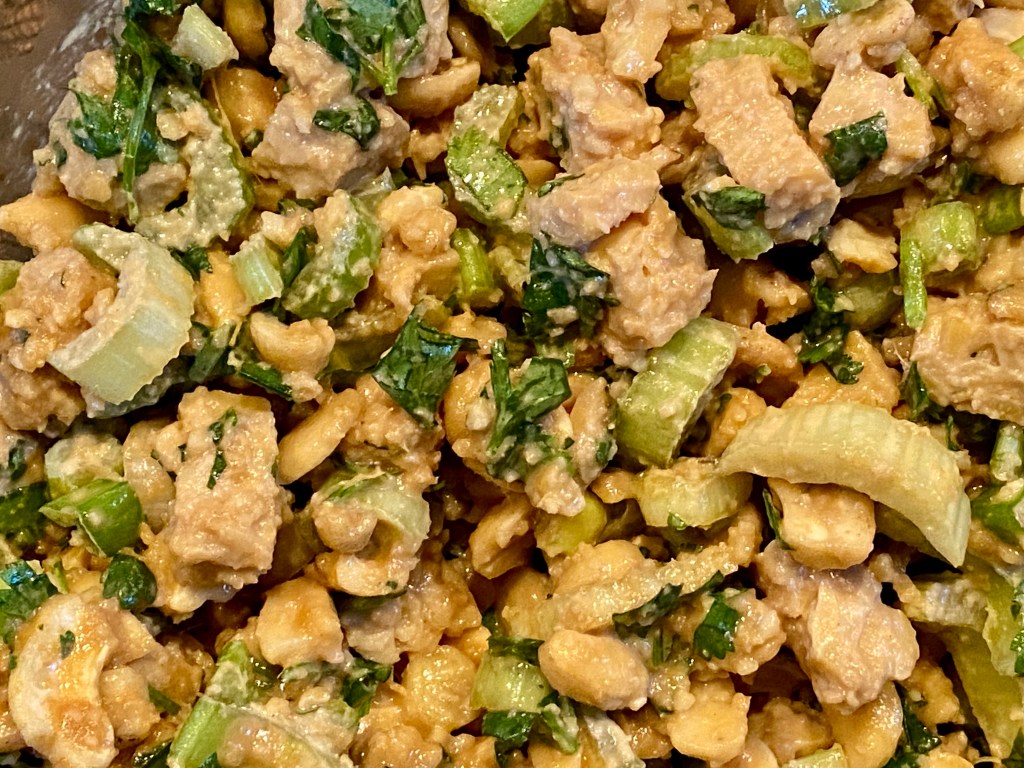
My version of cashew tempeh, which was sold in the deli of New Frontiers Marketplace before Whole Foods replaced them.

Tell me, what’s going on with you this month?  What are you reading or watching?  Are you taking a class?  Joining a club?  Learning to play an instrument?  Planning a journey? Volunteering?  Building/creating something?  Planting a garden? Making a lifestyle change for health reasons?

As for me, frequent travels over the past few months have allowed for a good bit of reading and online classes, and I would like to tell you briefly about what I’m learning.  At some point, I’ll probably flesh out these ideas into full posts.  But for now, I will enjoy reading anything you might want to share about them.

Izzy popping in to say hello. (She’s not big on eye contact.)

  • Transcendental Meditation (TM) – I have recently completed TM training, and am presently reading about different aspects of it, including its fascinating history and health benefits.  
  • Master Gardener (MG) Continuing Education – I’ve attended online classes to maintain my MG Certification, and I’m hoping to plant in early June.  (That’s the normal planting time for my area due to the regularity of May frosts.)
  • Pollution’s role in disease & early death – Pollution is a much bigger problem than we are being told.  Not only is it a strong contributor to debilitating diseases, but in many countries, it is sending 10% – 18% of the population to an early grave.  
We had almost 14 feet of snowfall here this winter season.

This is my new format for now.  What do you think?  Fun?  Boring?  Let’s chat.  (And please know that my response times may lag a bit.)

Many Blessings,

Lisa

The content of this article is for educational and informational purposes only, and is not intended as medical advice. Please consult with a qualified health care professional before acting on any information presented herein. Any statements about the possible health benefits of any subject discussed have not been evaluated by medical professionals or the Food & Drug Administration and are not intended to diagnose, treat, cure or prevent any disease or illness.

5 Ways to Nudge Your Body Toward Optimal Function

Family challenges have me busy physically & mentally this month, so I hope you’ll enjoy this repost from April of 2021. You won’t be able to comment below – let’s be sure to catch up next month.

The human body is a marvel.  Its ultra-intelligent design allows it to function in large part without your attention.  The billions and billions of chemical reactions occurring each second are nothing short of symphonic.  The habits that become your lifestyle radically influence that symphony, for better or worse.  By providing your cells with the support they need to function at their highest levels, you make it possible to prevent or reverse disease, increase energy, and lengthen your time on the planet.  

In his book The Healer Within, Roger Jahnke, Doctor of Classical Chinese Medicine, explains, “Dozens of spontaneous self-healing mechanisms are programmed to sustain or restore our health and vitality automatically.” And further, “The foundation of all self-healing, health enhancement, stress mastery, and personal empowerment is deep relaxation.” Below, you will find some of the best techniques I know to help you develop that foundational sweet spot. 

  1. Yoga – It took me many years to understand the statements get out of your head and drop into your body, bits of advice often dispensed by well-meaning yoga teachers.  But finally, it hit me: by placing attention on my breath and body alignment during poses, I put aside the process of jumping from one distracting thought to another for the duration of the class.  Dropping into my body calms my mind, and this calm stays with me.  According to an article in Psychology Today, regular yoga results in the central nervous system’s release of GABA, a chemical which works to suppress anxiety for hours after the practice ends. 
  1. Massage – According to an article from Mayo Clinic, massage is good not only for stress release, sore muscles, and circulation, but also insomnia, nerve pain, fibromyalgia and digestive disorders.  I have been a huge fan of massage as long as I can remember, primarily because it feels so good on tight fascia and sore muscles.  My twice-monthly massages are a prerequisite to my ability to continue being active.  No massage therapist? No problem. Even self-massage can yield benefits.
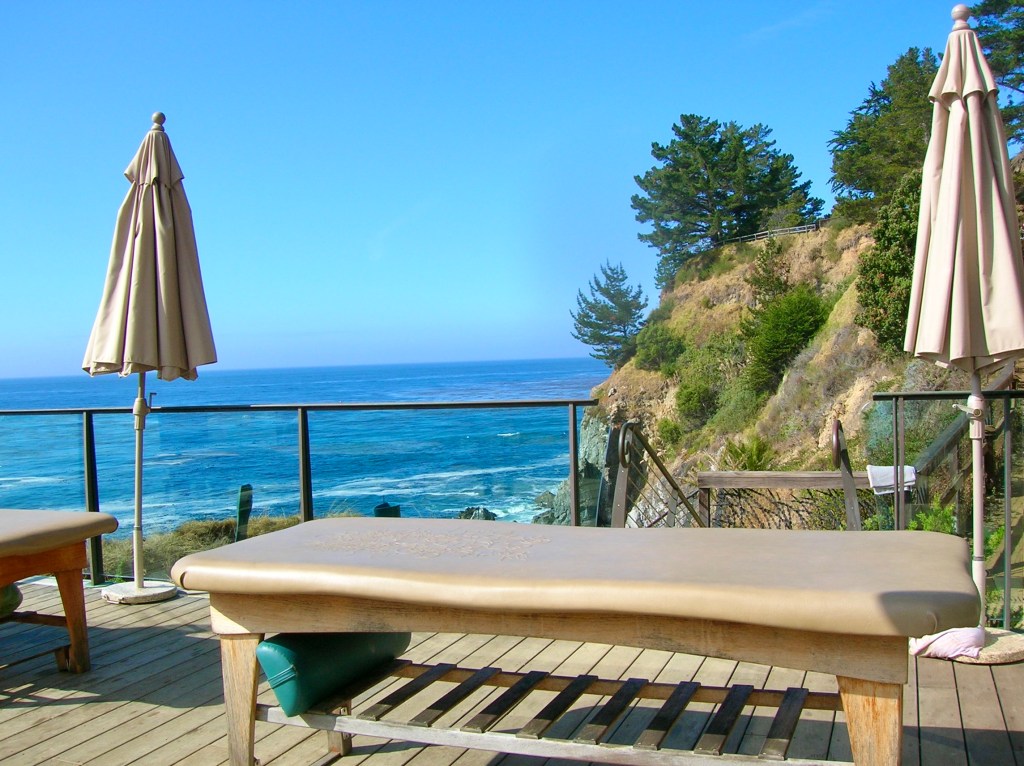
Massage tables on the cliffs of Big Sur, CA

  1. Meditation – This practice dates back for thousands of years, and I believe the reason it’s still around is because it is so advantageous.  U.C. Berkeley’s Greater Good Magazine published an article stating that in addition to meditation boosting emotions, decreasing anxiety, and helping with depression, it also improves heart function, slows age-related cognitive decline, and strengthens the immune system.  What’s more, I’ve read from other sources that it increases creativity.  Years ago, when living and working at a Buddhist Retreat Center in Northern California, I began my first regular meditation practice.  I have recently renewed that commitment.
  1. Music – Research shows that Celtic music, jazz, classical, and Native American music are great for reducing stress, says an article on Chopra.com.  In addition, playing an instrument or singing causes endorphins (happy chemicals) to be released in the body.  The article goes on to say this is especially beneficial for children and cancer patients.  Personally, I can’t imagine getting through a single day without listening to music, humming, and singing. Can you?
Golden Gate Park

  1. Nature – I’ll bet you knew this was coming, didn’t you?!  As I wrote this post, I was sitting outside in the warm Arizona sunshine listening to birdsong and wind blowing through the trees.  According to the article Why Nature Sounds Help You Relax, According to Science on Health.com, sounds such as rustling leaves and a babbling brook can help reduce stressful fight or flight feelings and increase the body’s capacity for relaxation.  

As you can see, these techniques not only help you achieve the foundation of relaxation needed by your body for optimal function; they have beneficial side effects as well. Combining one or more of them with other healthy habits can be the key to unlocking your best possible life. What could be better?

Blessings for Healthy Foundations,

Lisa

The content of this article is for educational and informational purposes only, and is not intended as medical advice. Please consult with a qualified health care professional before acting on any information presented herein. Any statements about the possible health benefits of any subject discussed have not been evaluated by medical professionals or the Food & Drug Administration and are not intended to diagnose, treat, cure or prevent any disease or illness.

Understanding the Pleasure Trap

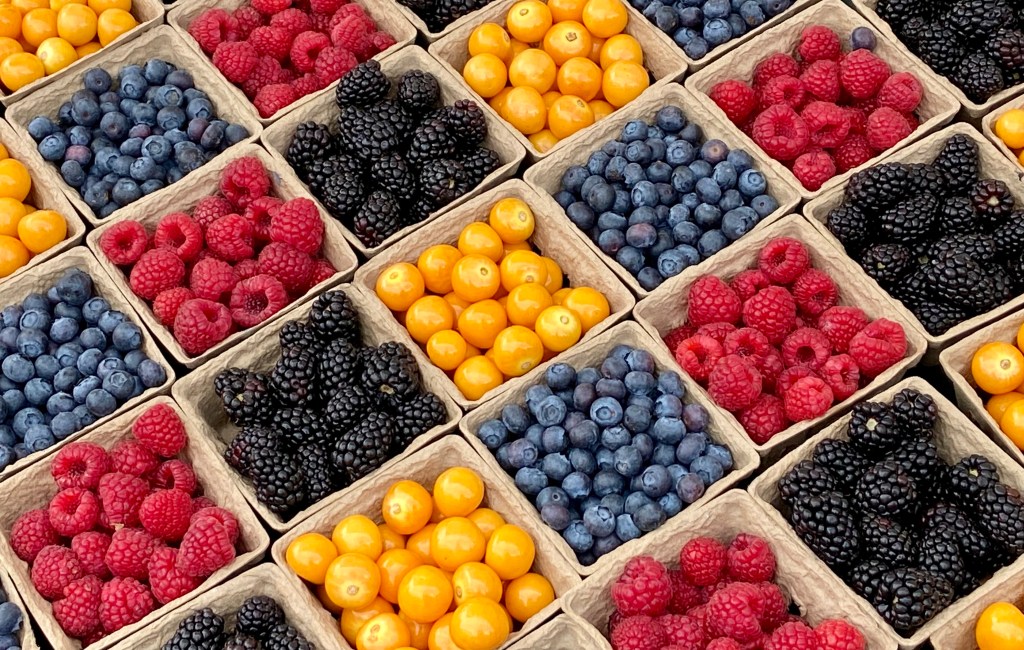
Brightly colored goodies at San Diego’s farmers market

Last year, I came across a TEDx talk by psychologist Douglas Lisle on what he calls the pleasure trap.  It is a hidden force in today’s world, he says, that can hijack your inborn satiation circuitry and undermine your pursuit of health and happiness.  After a little more exploration, I discovered that he co-authored a book by the same name with Alan Goldhamer, DC, that goes into much greater detail.

The ideas presented in this work answer the question When it comes to eating, why do we make choices that harm us?  In the book, the doctors review evolutionary history, throughout which our ancestors ate only amounts needed to sustain health. Any more or less, they write, would have resulted in an unsuccessful perpetuation of our species.  What happened over the course of the centuries to change that so dramatically?  Why is much of the current population (in industrialized countries) afflicted with obesity and disease?

Yummy veggie burger salad

The doctors explain that humans, like other complex animals, are innately motivated to survive and reproduce.  The mental tools for this motivation include neural feedback by means of good and bad feelings.  We are wired to seek pleasure, avoid pain, and conserve energy.  In the short TEDx mentioned above, Dr. Lisle gives a clear (and entertaining) talk on how this motivational triad works – and can malfunction – in the life of a desert bird called the gray shrike.

Veggies ready for roasting

The shrike goes about its business day to day, happily doing the things needed to stay alive and produce offspring as long as it’s in a natural environment.  But if that environment is disturbed by the introduction of unnatural substances or situations, the gray shrike, via this system of seeking pleasure, avoiding pain, and conserving energy, can begin making bad decisions.  This can lead to poor health and early death.

The same applies to humans.  For example, cocaine prevents dopamine from its normal process of reabsorption, resulting in an extended sense of pleasure. Processed foods, loaded with calories, unhealthy fats, refined sugar, and salt, act on our brains in a similar manner.  Like cocaine, these magic foods, as they’re called in the book, cause neuroadaptation, a gradual decrease in sensory responsiveness.  That causes us to need more and more of a substance to make us feel as good as before.  This can result in habitual overeating, leading us down a perilous path.

My Southern roots are showing: beans, mustard greens, cornbread & onion

It is possible to change poor eating habits, lose weight, and halt or reverse disease.  By eating only whole, healthy foods from the earth for several weeks, Dr. Lisle points out, dopamine receptors can normalize, leaving us feeling better without a desire for the bad stuff.  But those weeks are tough, he says.  A better way to downregulate neural signals and cause taste buds to become more sensitive is a 24-hour water fast (with physician approval.)  However it’s accomplished, making the change to healthy eating habits is one of the best decisions you’ll ever make.

Homemade muesli soaked overnight served with fresh orange & banana

In the modern world, we are subject to a great many unnatural foods and other substances that can quietly steal our health, leaving us with chronic disease and a shorter life span. The Pleasure Trap elucidates why and how easily it can happen, but also how we might recover proper brain response and health. Cheers to eating well and avoiding disease! 

Blessings for Healthy Pleasures,

Lisa

The content of this article is for educational and informational purposes only, and is not intended as medical advice. Please consult with a qualified health care professional before acting on any information presented herein. Any statements about the possible health benefits of any subject discussed have not been evaluated by medical professionals or the Food & Drug Administration and are not intended to diagnose, treat, cure or prevent any disease or illness.

Winter Vaca and a Change of Schedule

I’m back!  My month-long break was superb.  I visited family on the East Coast, and vacationed with my life partner on the West Coast.  I had never before seen an ocean generate such huge waves or roar so loudly!  If you were unaware, a series of storms out of the Pacific pummeled California & points north for weeks.  Thankfully, our vaca weather was not all bad.  We soaked up lots of yummy sunshine.

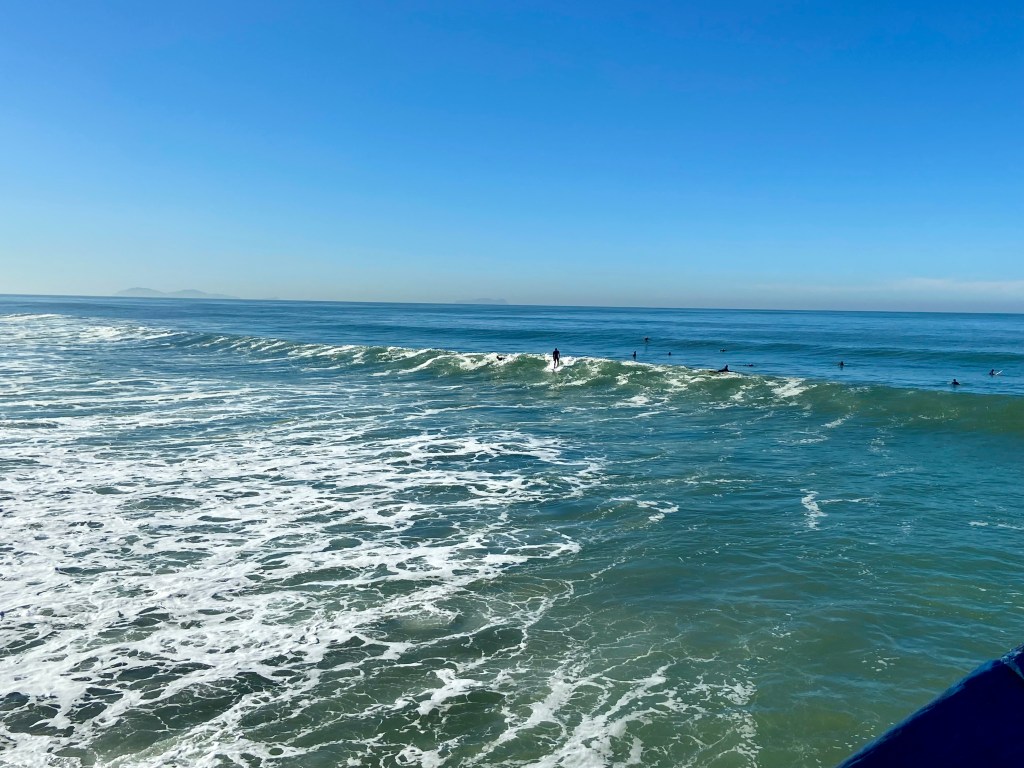
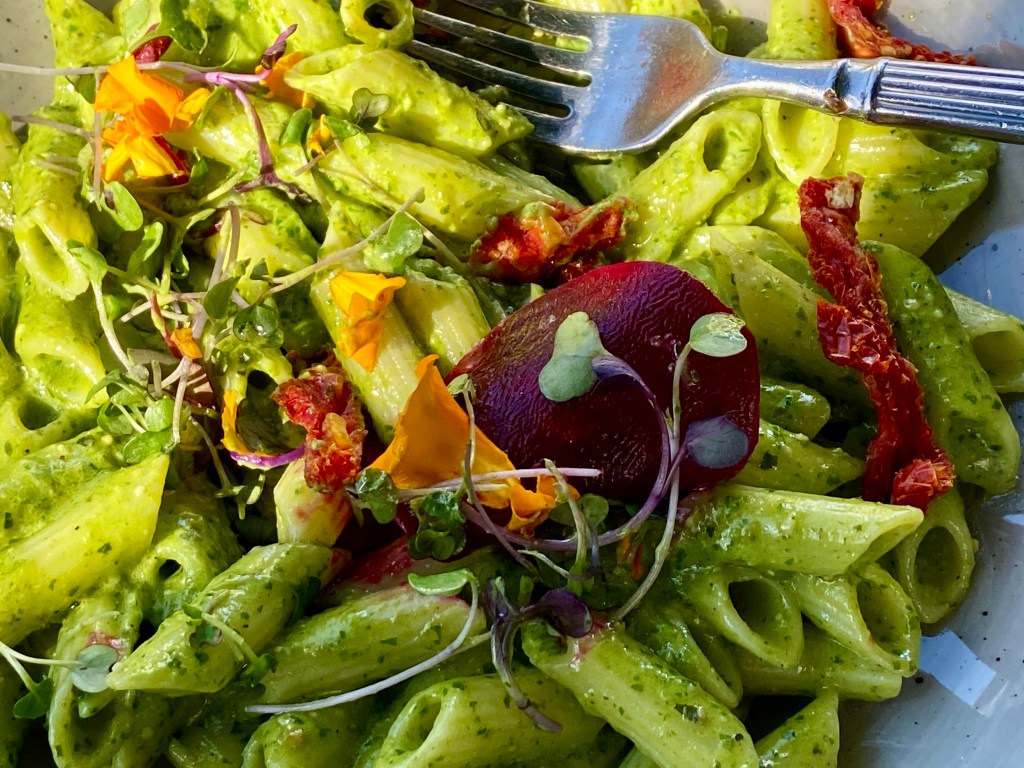
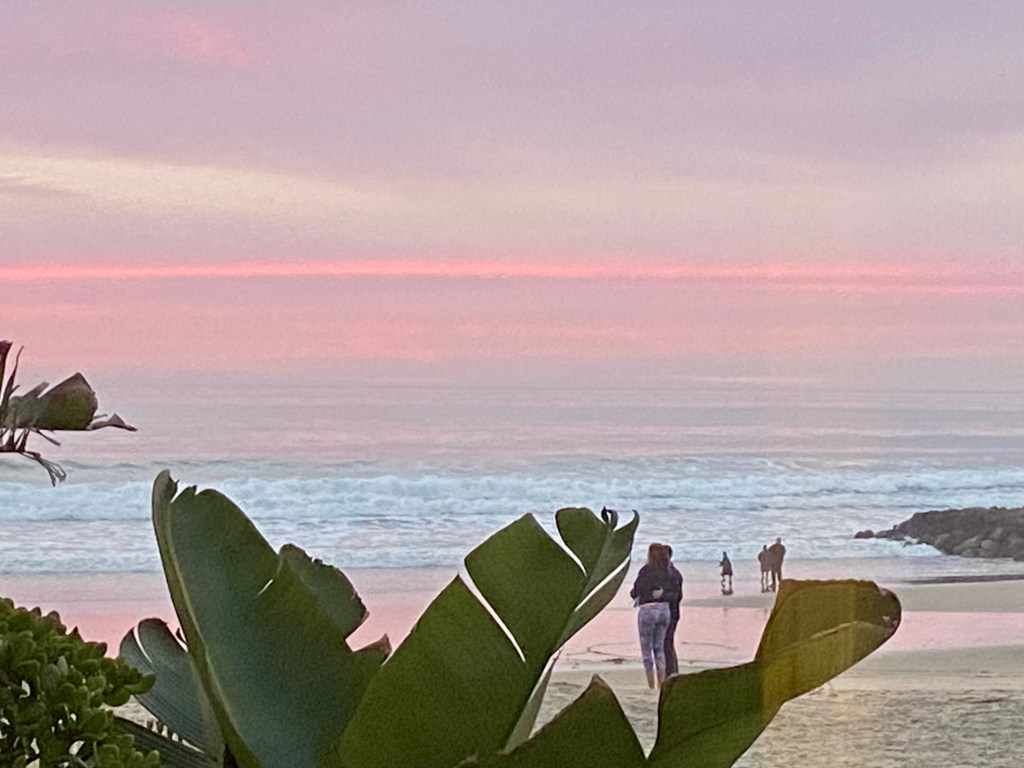
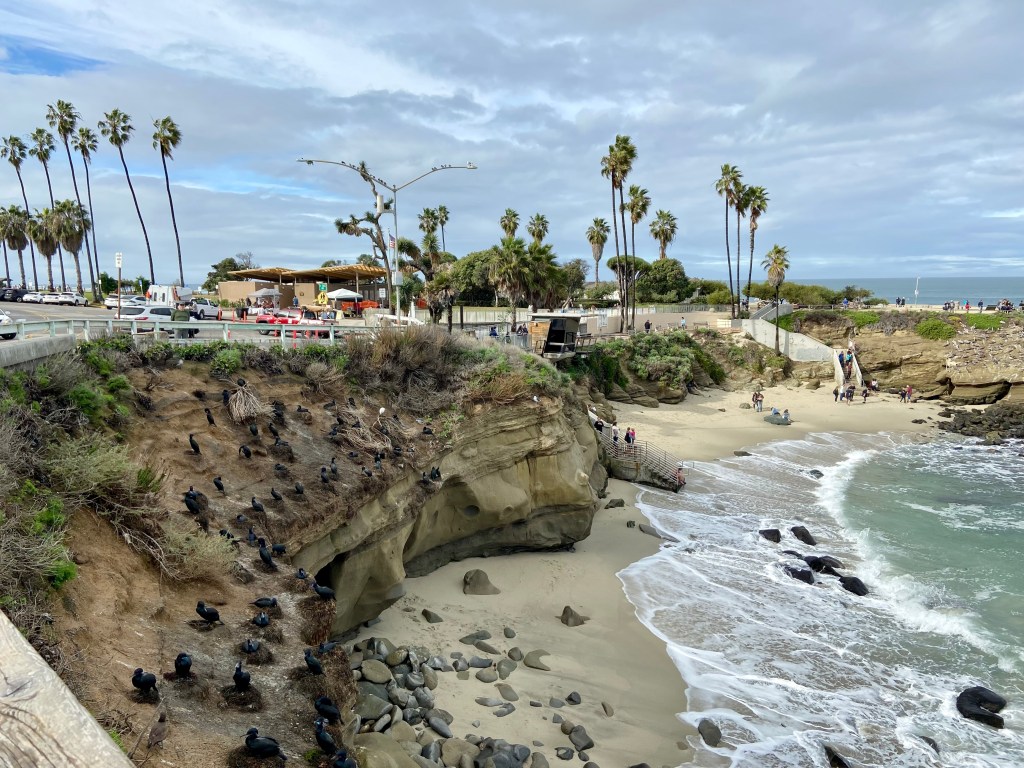
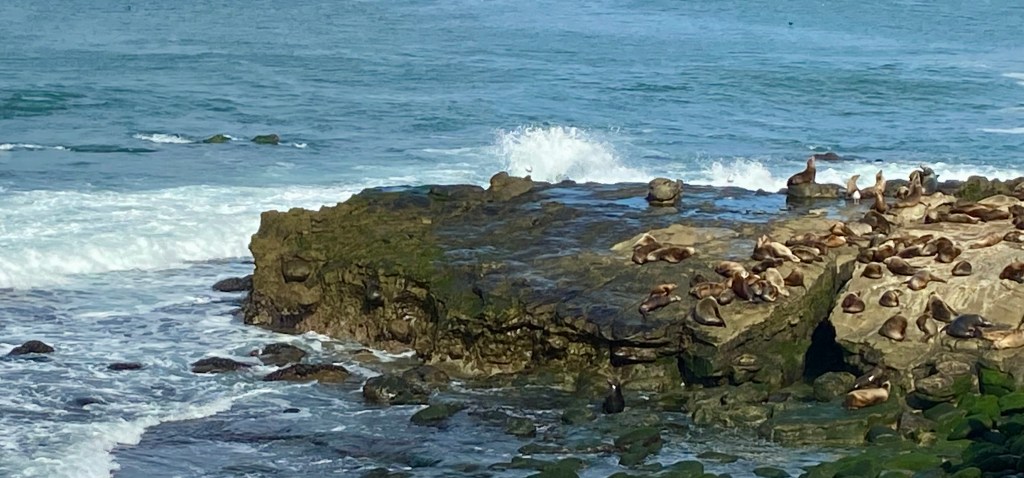
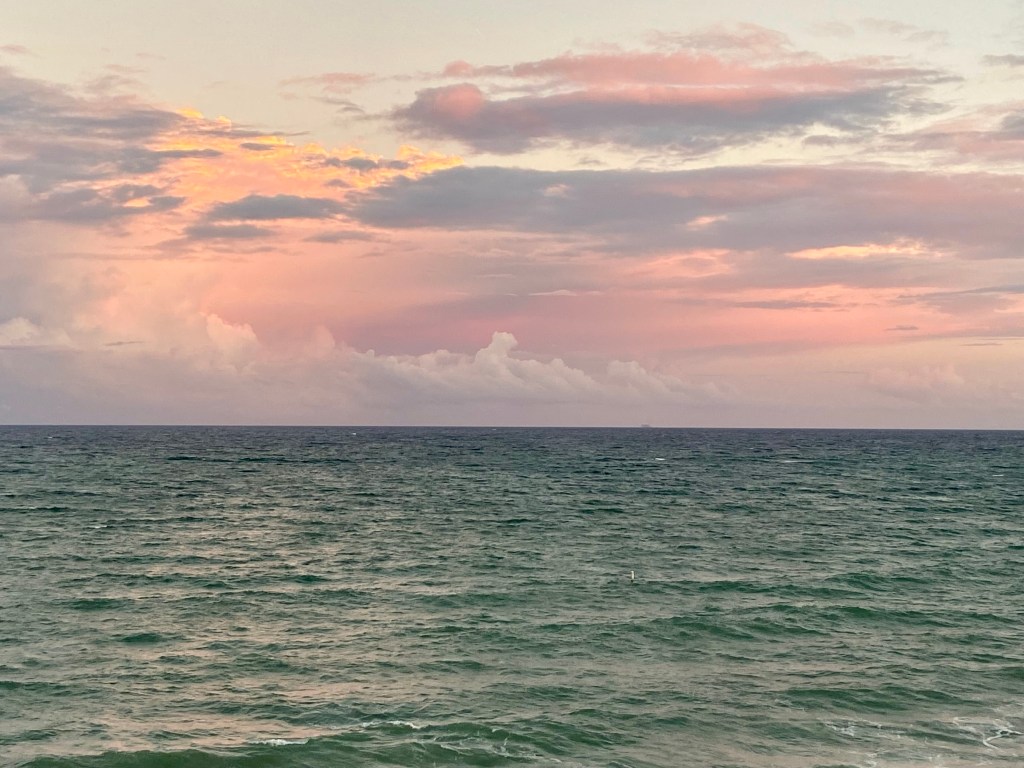
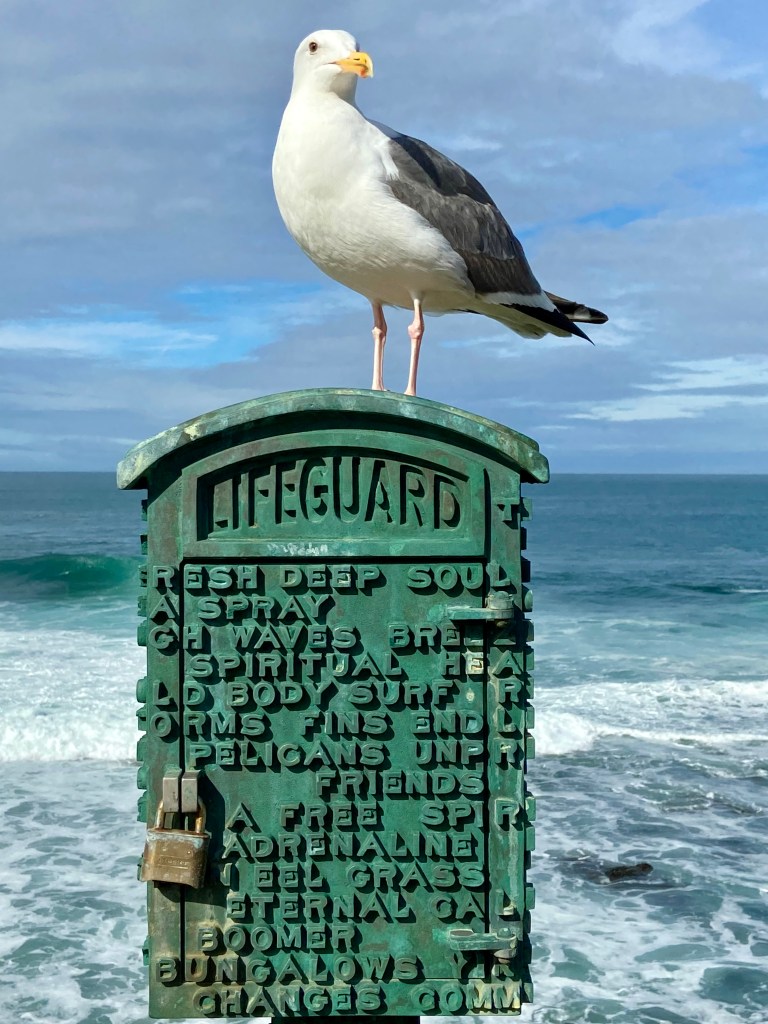
We also immersed ourselves in plenty of culture and other delights in the San Diego area.  In Little Italy, after watching a few bocci matches, we sat outside at an Italian restaurant and had an incredible vegan meal.  In La Jolla, seals, sea lions, sea birds, squirrels and a solitary lobster on the sand were most entertaining.  We discovered a rooftop vegan cafe there, as well, with drool-worthy food.  In Ocean Beach, we found the world’s best espresso in a truck on a corner a couple blocks from the beach.  A sizable Saturday morning farmer’s market in downtown San Diego presented lots of new-to-us goodies, including delicious cherimoyas, accurately described by the seller as exotic pears with flavors of banana & pineapple.  We visited museums, walked on beaches, and ventured out onto a long pier where we watched surfers young & old riding the enormous waves.  Point Loma, at 300 feet in elevation, offered us panoramic views of the city and the bay, although we didn’t catch sight of any highly anticipated migrating whales.  Back at our Airbnb, we witnessed an incredible pink sunset that reflected in a pool of water deposited by high tides.

I want to express my sincerest gratitude for your reading, liking, commenting, following, and sharing my posts over the years.  You have taught me that being a good blogger comes with responsibilities requiring commitment.  I have enjoyed getting to know you through your comments and posts.  And although this paragraph sounds as though I’m ending my blogging career, I’m not.  I’m just changing things up.

I will continue posting, but only about once a month.  I want to spend more time in Nature than I spend writing about Nature this year.  And less time sitting.  It’s funny how, in the process of doing what we feel called to do, we sometimes lose sight of what’s most important.  Have you experienced that?

I wish you a 2023 filled with unexpected goodness.  I hope to maintain your special friendship, and I’ll look forward to your visit each month.

Blessings of Friendship,

Lisa

The content of this article is for educational and informational purposes only, and is not intended as medical advice. Please consult with a qualified health care professional before acting on any information presented herein. Any statements about the possible health benefits of any subject discussed have not been evaluated by medical professionals or the Food & Drug Administration and are not intended to diagnose, treat, cure or prevent any disease or illness.

Peanut-Cinnamon Christmas Stir-Fry and A Holiday Note

Ok, it’s not your normal Christmas dish, but who wants normal all the time?!  We’ve prepared many Italian dishes for holiday eating through the years – so why not Asian?

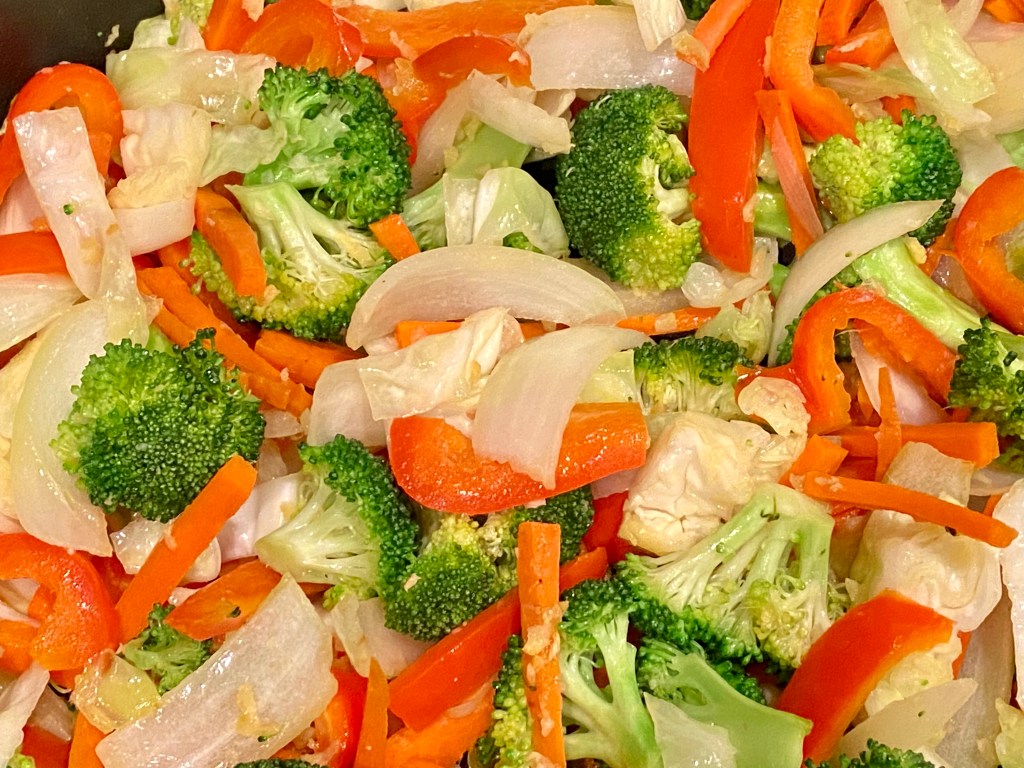
Stir-fries are much easier than traditional ham and sides, and take a lot less time than lasagna.  And they are super healthy, with a wide range of colored veggies (see this post for more on that) and a higher total nutrient count due to being cooked only to a firm-tender consistency.  (Prolonged cooking kills much of the health-enhancing potential of foods.)

This recipe includes the alliums of garlic & onion, which are antibacterial, antiviral, anti-inflammatory and immune boosting.  The crucifers, broccoli and cabbage, assist our bodies in producing more glutathione (a high-powered antioxidant that our bodies typically produce less of as we age) to help us continue looking & feeling younger.  The ginger rhizome has  chemical compounds that help with nausea, pain relief, and blood sugar regulation.  And as I shared in my Kitchen-Crafted Broth recipe, studies show that mushrooms help protect the brain from cognitive impairment, boost gut health, and reduce cancer risk.

If you’ve never had cinnamon and peanut butter together, you will be surprised how tasty the combination is.  So don’t be afraid to try it! 

Now that you can feel really good about serving this dish to your family, let’s get on to the yummy recipe!

Peanut-Cinnamon Christmas Stir-Fry

Yield: 3 – 4 servings (when eaten with rice)

Ingredients (use all organic or non-GMO if possible)

For the sauce:
2 tbsp tamari
2 1/2 tbsp maple syrup
1 tbsp freshly grated ginger
2 tsp freshly grated or minced garlic
1 1/2 tbsp toasted sesame oil
1/4 tsp cayenne (optional)
6 tbsp peanut butter
1/3 cup warm water
mineral salt to taste, if needed

For the stir-fried veggies:
2 tbsp coconut oil
3 cloves garlic, minced or grated
1 inch ginger, minced or grated
1 med onion, sliced into 1/2 inch thick pieces
2 med carrots, julienned
1 med red bell pepper, sliced into 1/4 inch thick pieces
1/4 med head green cabbage, sliced into 1/4 inch thick pieces
1 large head broccoli, cut into medium florets
1/4 lb mushrooms, thickly sliced
mineral salt to taste

For the top:
ground cinnamon

Directions

Place the first 7 ingredients (tamari through peanut butter) in a small blender cup & spin until creamy and well combined. Add the water & spin again. Taste for salt, adding a dash if needed.

Heat the oil over medium heat in a wok or large sauté pan.  (When using coconut oil, high heat should be avoided, as it has a low smoke point.)  Add garlic & ginger and stir for a minute.  Toss in the next 5 ingredients (onion through broccoli.)  Stir-fry on medium heat for about 8 minutes, or until the veggies start getting soft.  Add the mushroom slices and stir-fry for another 3 minutes, until the mushrooms are medium-soft.  Add salt to taste.

Turn the heat down to low and pour the sauce over the veggies & mix well.  If you find that your sauce is not thin enough, add more water in very small amounts, stirring until the sauce covers everything well.  Once the sauce has warmed, remove from heat.

Divide into individual bowls over your choice of rice, adding a sprinkle of cinnamon to each.  Enjoy & happy Christmas! 

For the first time in 3 years, I am taking a blogging break, so this will be my last post until mid-January.  I hope the specific holidays you celebrate find you surrounded by love and taking time to recognize more of life’s simple, sublime blessings.  I am grateful for your continued support, and I look forward to reading your stories and poetry after the start of the new year! 

The content of this article is for educational and informational purposes only, and is not intended as medical advice. Please consult with a qualified health care professional before acting on any information presented herein. Any statements about the possible health benefits of any subject discussed have not been evaluated by medical professionals or the Food & Drug Administration and are not intended to diagnose, treat, cure or prevent any disease or illness.

For the Love of Mountains: A Photo Odyssey

Yosemite National Park, California

We are now in the mountains and they are in us, kindling enthusiasm, making every nerve quiver, filling every pore and cell of us. Our flesh-and-bone tabernacle seems transparent as glass to the beauty about us, as if truly an inseparable part of it, thrilling with the air and trees, streams and rocks, in the waves of the sun,—a part of all nature, neither old nor young, sick nor well, but immortal. ~John Muir

Yosemite’s High Country

I’ve been thinking a lot about mountains.  It’s been too long since I last visited some of the ranges I’m especially fond of.  With their lovely snow caps, exquisite waterfalls, clear-running streams, crystal alpine lakes, rugged terrain, variety of trees & wildlife, and incredible vistas, what’s not to miss?  John Muir, the Scottish-American who dedicated the latter part of his life to exploring the mountains of the Western US, was also enamored of them.  It is said that Muir exemplified our oneness with the earth, and biographer Donald Worster wrote that Muir believed his mission was saving the American soul from total surrender to materialism.” 

Alpine lake in Great Basin National Park, Nevada

You must ascend a mountain to learn your relation to matter, and so to your own body, for it is at home there. ~Henry David Thoreau

Rocky Mountain National Park, Colorado

I suppose my love of mountains was forged at an early age. As a child, I lived in the foothills of the Smoky Mountains, and my family would sometimes drive north to see the more majestic areas of the range.  You might imagine how, years later, my infatuation grew as I began exploring areas with higher and higher elevations.

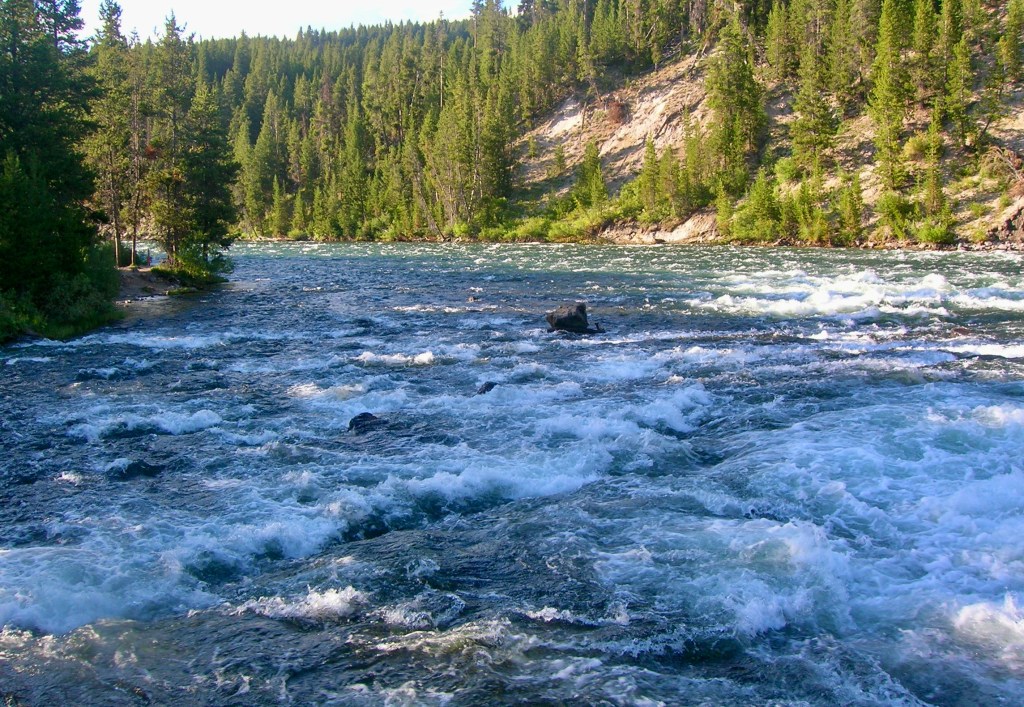
Rocky Mountain stream, Colorado

Every inch of the mountains is scarred by unimaginable convulsions, yet the new day is purple with the bloom of youth and love. ~Ralph Waldo Emerson

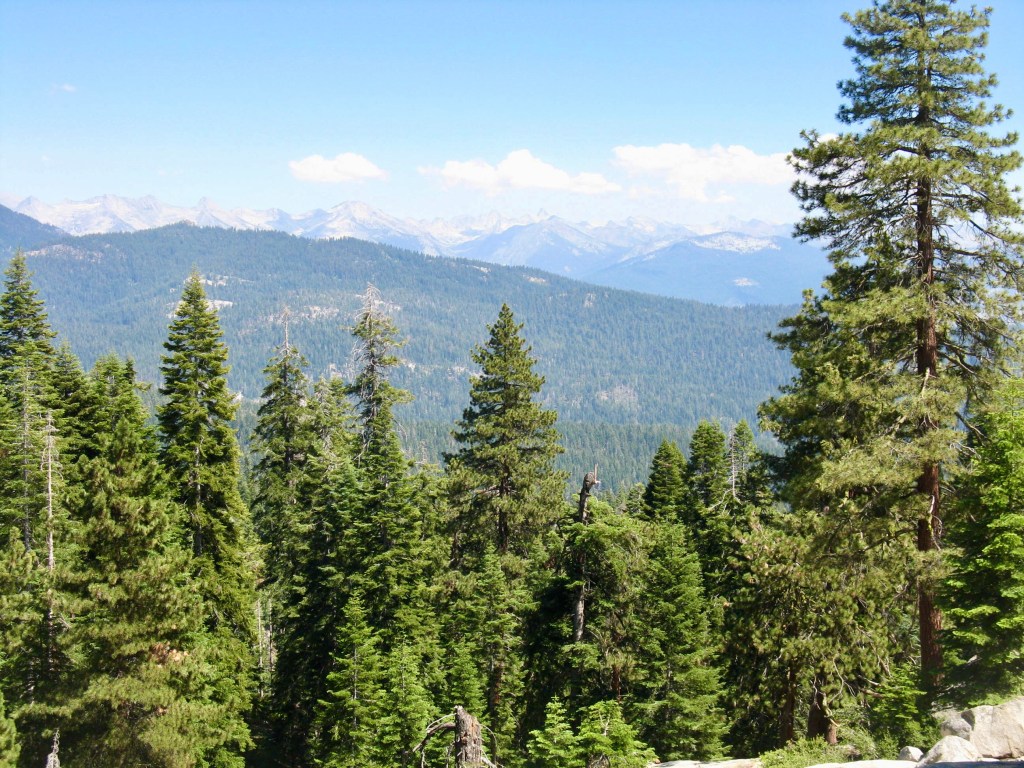
Sequoia National Park, California

I have visited a lot of little mountain towns in this country.  Oftentimes, I hear that the indigenous people of the area consider their mountains sacred and go to great measures to protect them.  That’s not hard for me to understand, as mountains evoke a sense of reverent connection within me.  I believe that’s what Muir must have experienced, as well.  He wrote letters, articles, & books, and shared conversations with scientists, artists, celebrities, and statesmen in his preservation efforts.  Perhaps the pinnacle of his life’s work was co-founding the Sierra Club, thereby helping establish a number of National Parks in this country, which serve to protect his beloved peaks.

King’s Canyon National Park, California

The mountains are calling and I must go.  ~John Muir

King’s Canyon

I am grateful for the hard work and dedication of John Muir. Thanks to him, much of the mountains of the American West can still be enjoyed in their pristine glory. And if we’re really lucky, that will never change.

Grand Tetons, Wyoming

Oh, these vast, calm, measureless mountain days, days in whose light everything seems equally divine, opening a thousand windows to show us God. ~John Muir

Grand Teton National Park

Blessings for Mountain Love,

Lisa

This was one of my most popular posts of 2020. Thank you for reading! I won’t be available for comments this week, but let’s catch up next week!

The content of this article is for educational and informational purposes only, and is not intended as medical advice. Please consult with a qualified health care professional before acting on any information presented herein. Any statements about the possible health benefits of any subject discussed have not been evaluated by medical professionals or the Food & Drug Administration and are not intended to diagnose, treat, cure or prevent any disease or illness.

Primal Connection: A Need for Credence

All photos in this post were taken in Southern Utah

Whether or not we acknowledge it, each of us is a part of Nature.  In past posts, I’ve written about the importance of staying cognizant of and nurturing this connection.  That is in fact the theme of Micro of the Macro.  But it’s always a delight to explore further and better understand this all-encompassing blessing.

In Healing Made Simple, I shared the work of triple board certified physician & international microbiome educator Zach Bush, who states we are only as healthy as our connection to Nature.  That connection includes the Nature we take inside our bodies as well as the natural environments in which we immerse ourselves externally.

Nature Interrupted is a write-up in which I pointed to a study showing climate change causing lower birth rates in newborns, which can affect health and development throughout life.  In the same post, I mentioned other research showing that when young children play on screens rather than playing outdoors, aggressive behavior, depression, lack of motivation, and obesity can result.

petrified wood

Shortly after the Civil War in late 19th Century America, an illness called neurasthenia was widely recognized, characterized by depression, ennui, anxiety, migraines, and insomnia.  The diagnosis was so common that it was often referred to as Americanitis. It was considered the consequence of moving into a mode of living too fast resulting from a rapid population explosion, urbanization, and modernization due to cars, air travel, and telephones.  For the men afflicted, including President Theodore Roosevelt & poet Walt Whitman, a Nature cure was prescribed: working with horses on ranches in the West. 

Similar to neurasthenia, although not a clinical diagnosis, nature deficit disorder is a concept proposed by Richard Louv, author of Last Child in the Wood.  Louv explains that elements of modern life, including fewer natural spaces, a car-focused culture, more screen time, changes in the perception of risk (e.g., stranger danger), less leisure time, and increased time pressures from work or school, combine to decrease or even eliminate contact with nature for both adults and children.  Direct exposure to Nature is vital for health on all levels, he says.  Scores of research studies support his theory.

In an essay from Wild Earth Journal, David Abram, Distinguished Fellow of Schumacher College in England and founder & creative director of the Alliance for Wild Ethics writes our bodily senses bring us into relation with the breathing earth at every moment.  If humankind seems to have forgotten its thorough dependence upon the earthly community of beings, it can only be because we’ve forgotten (or dismissed as irrelevant) the sensory dimension of our lives. The senses are what is most wild in us — capacities that we share, in some manner, not only with other primates but with most other entities in the living landscape. 

By objectifying other animals, plants, wild running waters, and mountains, which we are often taught to do from an early age, we learn to see humans as superior, causing an unfortunate disconnect.  (To explore this idea a bit further, check out my post Does the Earth Love You?)  Resuming Abram’s essay: If we continue to speak of other animals as less mysterious than ourselves, if we speak of the forests as insentient systems, and of rivers and winds as basically passive elements, then we deny our direct, visceral experience of those forces.  We become spectators of other life, limiting our sensual experiences and living more in our heads, he writes.

E.O. Wilson, who was an American biologist, naturalist and writer, proposed the biophilia hypothesis in the mid 80’s, suggesting humans have an innate desire to connect with Nature.  By deepening this connection, he explains, we can foster loving attitudes and behaviors toward all of life.  Shouldn’t we be nurturing this inborn tendency in ourselves and our children, rather than allowing it to be buried by the insane thinking that has led us to the environmental and human crises in which we presently find ourselves?

Being a part of this miracle known as Nature is a blessing – one that should be not only acknowledged but embraced.  History and science continue to validate the importance of our Nature connection.  Nurturing this relationship has the potential to improve everything.

Blessings for Primal Connection,

Lisa

The content of this article is for educational and informational purposes only, and is not intended as medical advice. Please consult with a qualified health care professional before acting on any information presented herein. Any statements about the possible health benefits of any subject discussed have not been evaluated by medical professionals or the Food & Drug Administration and are not intended to diagnose, treat, cure or prevent any disease or illness.

pH Balance Explained (And Why It Matters)

Plant foods help keep your blood healthy

I have mentioned pH balance and acidic foods in past posts, but never taken the time to explain them.  Various parts of the human body have different pH balances, but it’s the blood’s pH that this write-up addresses.  

First off, the abbreviation pH indicates the potential of hydrogen.  Hydrogen is an important element in our bodies, playing roles in functions such as immunity, hydration, energy production, toxin elimination, joint lubrication, and transportation of nutrients, to name a few.  The pH scale ranges from 0 to 14, with 0 being most acidic and 14 being most alkaline.  The pH balance of healthy blood serum is around 7.4.  
Normally, the lungs and kidneys are able to maintain this homeostasis.  However, when those processes become overwhelmed, balance is lost, and the blood can leach minerals from the bones to restore it.

There are several reasons why imbalance occurs in the blood’s pH.  Various diseases, medications, stress, and diet (now widely known to be one of the most important factors) can cause the body to work harder to sustain balance, often with poor outcomes. The constant pressure on the body’s physiology to compensate for acid-inducing challenges is known to contribute to a wide range of diseases, such as metabolic syndrome, cancer, osteoporosis, kidney stones, and increased susceptibility to environmental toxins—and new research is adding to the list, according to this article from PubMed.  

This scientific review explains that the diet of most people in the US is acid-promoting due to heavy consumption of meats, eggs, dairy, and the processed stuff.  This chart (near the end of the article) from Doctor’s Health Press gives the pH levels of various foods and drinks.  You’ll see that sodas and energy drinks are in the most acidic category, followed closely by  processed and animal foods.  At the most alkaline end of the range, spinach, carrots, cucumbers, olive oil, and other plant foods can be found.

Chances are, your PCP will never mention your blood’s pH.  You can, however, request a lab test.  (Be aware that insurance probably will not pay for it.)  Chronic pain, difficulty breathing, or ongoing fatigue could be signs that your body is no longer doing a good job of ridding itself of excess acid, and you need to make some changes.

The National Kidney Foundation advocates for a diet that includes more plant-based proteins than animal-based proteins, along with a high intake of fruits and vegetables, (to) help keep acid levels from rising in the blood.  A recommendation from this source carries a lot of weight, wouldn’t you agree?

The importance of maintaining a normal blood pH cannot be overstated.  Regardless of your age, making changes to the way you eat may help you achieve that balance so that you feel better, avoid disease, and live longer.  And who doesn’t want those things?!

Blessings for Balance,

Lisa

Comments are turned off for this post, but I look forward to seeing you next week!

The content of this article is for educational and informational purposes only, and is not intended as medical advice. Please consult with a qualified health care professional before acting on any information presented herein. Any statements about the possible health benefits of any subject discussed have not been evaluated by medical professionals or the Food & Drug Administration and are not intended to diagnose, treat, cure or prevent any disease or illness.