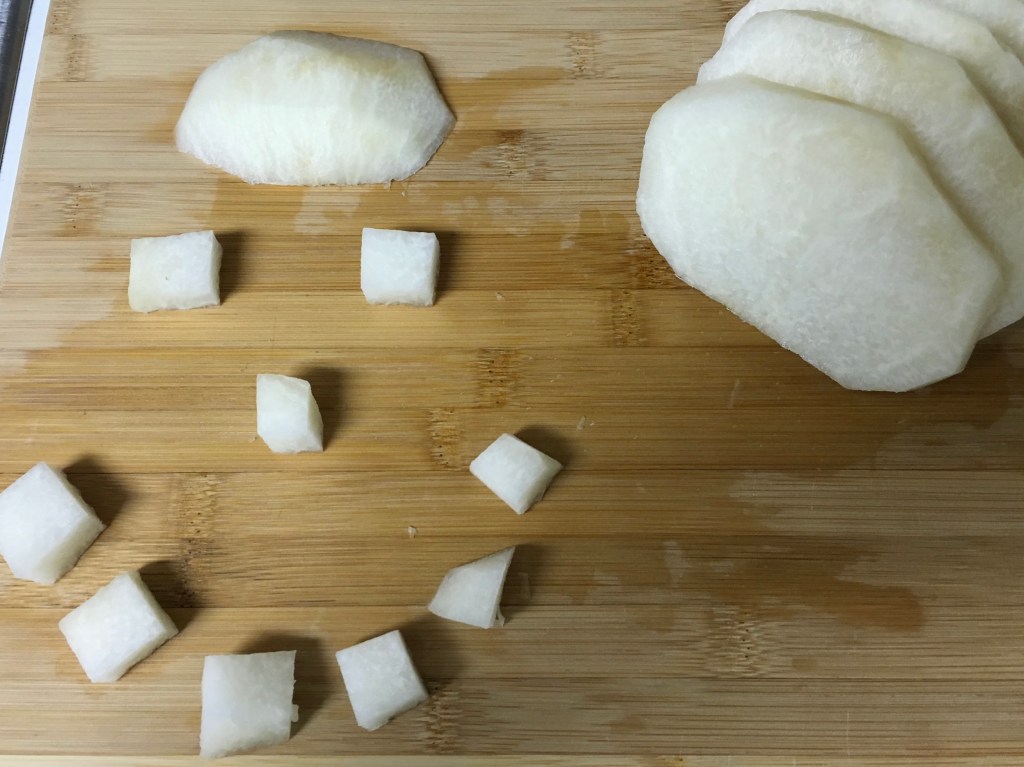
A Secret to Happiness

Beach day at St. Maarten

If I were to tell you about a new medication that relieves pain, reduces stress & anxiety, lessens your risk for type 2 diabetes, helps improve memory, increases longevity, and enhances overall life satisfaction, would you drop your to-do list and rush to phone your doctor’s office for a prescription?  According to an article on Medical News Today, social interactions can result in all those benefits and more.

Exploring the Victorian Charm of Cape May, New Jersey

According to Dean Ornish, MD, whose Program for Reversing Heart Disease has been covered by Medicare since 2011, no other lifestyle factor has a greater impact on our quality of life, incidence of illness and premature death from all causes than loneliness and isolation. The real epidemic in our culture is not only physical heart disease, but also what I call emotional and spiritual heart disease, Dr. Ornish explains.  

Enjoying the adobe architecture in Taos Plaza, New Mexico

A write-up from Harvard Health informs us that scientists are finding social connections not only give us pleasure, they also influence our long-term health in ways every bit as powerful as adequate sleep, a good diet, and not smoking.  The article goes on to say that caring involvement with others may be one of the easiest health strategies to access. It’s inexpensive, it requires no special equipment or regimen, and we can engage in it in many ways.

A Psychology Today article says that engaging socially not only lessens feelings of depression, but also helps you fight off colds, the flu, and even some types of cancer.  I’d say that’s some pretty strong medicine!

Independence Day Parade, Flagstaff, Arizona

Dan Buettner, in writing The Blue Zones of Happiness, reviewed various polls and surveys from countries around the world to discover the factors that contribute to making the happiest populations.  Costa Rica, he found, is one of the countries whose citizens reported being the most content. He attributes this to their focus on spending a great deal of time with others.  Costa Ricans are socially interacting five to six hours a day, face to face, he writes, including barbecues with friends, church services, family meals, and soccer games. The U.S., with its rigorous work philosophy, did not make the top 12 in Buettner’s tally.  

Recent concert at the original Woodstock venue, upstate New York

Being outside is the easiest way for me to feel part of a physical community.  I find open-air concerts absolutely exhilarating. And time outdoors with friends, food, and drink is one of my favorite ways to spend an afternoon.  But even strangers who are hiking, biking, fishing, or sitting in a park are often cheerfully willing to engage in conversation. According to an Evidence Note from Forest Research in the UK, green infrastructure can help bring people together, . . . increasing social activity, improving community cohesion, & developing local attachment. These benefits, the research says, reduce domestic violence and overall crime rates.  It’s no surprise that spending time in the embrace of our Primal Mother brings us together in a way that makes us more tolerant, loving, and supportive.

Strolling around a German village

Social interactions can contribute immeasurably to our lives, helping us feel better about ourselves, enhancing immune function, and prolonging our lives.  Focusing less on life’s never-ending to-do list and more on sharing time with others is a sure way to increase happiness.  How often are you willing to become happier?

The need for connection and community is primal, as fundamental as the need for air, water, and food. ~Dean Ornish, MD

Blessings for Community,

Lisa

The content of this article is for educational and informational purposes only, and is not intended as medical advice. Please consult with a qualified health care professional before acting on any information presented herein. Any statements about the possible health benefits of any subject discussed have not been evaluated by medical professionals or the Food & Drug Administration and are not intended to diagnose, treat, cure or prevent any disease or illness.

Working Toward Oneness: 6 Favorite Asanas

According to a write-up on India’s Ministry of External Affairs website, the term yoga is derived from the Sanskrit root yuj, meaning to control, yoke, or unite.  The philosophy was developed thousands of years ago as a way of bringing together individual consciousness with that of the Universal consciousness, indicating a perfect harmony between the mind and body, Man and Nature, the article explains.  Although the physical branch of yoga that many of us practice does not encapsulate the whole of the original discipline, it does offer a wide array of benefits which can contribute to our sense of oneness and a happier, healthier life. 

Arizona

You may have read my article on how yoga can contribute optimal function of the entire body, reason enough to do some sort of regular practice. One of the best physical benefits, in my opinion, is keeping our fascia stretched and pliable.  The many ways we don’t move our bodies daily can lead to the fascia becoming tight, restricting flexibility, which compounds as we age and can lead to limited movement.  Differing poses offer particular benefits, as well.  I want to share with you the 6 types of asanas, or poses, that I practice daily, along with the specific reasons.

  1. Forward FoldsI think my love for forward folds started because as a young adult, I developed tight hamstrings, and I wanted to be able to touch my toes.  In an article describing the benefits of forward folds, American-Australian Yoga Teacher Jacqueline Buchanan says that, in addition to opening the backside of the body from the heels to the head, these postures also increase circulation and soothe the nervous system.
  2. Backbends – As a youngster, I couldn’t get enough of gymnastics on the mat and on the grass.  Dropping into a backbend from an upright position was a regular part of that.  I don’t do those anymore 😊, but decades of yoga have taught me that bending the front of the spine is just as important as bending the back of the spine.  These days, I find bridge pose, cobra, and pigeon pose get the job done.  In a Yoga Basics article, backbends are said to enhance posture, boost mood, and improve breathing.
  3. Side Bends – Yup, more spine bending!  This time, from side to side, because how often do we do those types of movements each day?  According to Roger Jahnke, author of The Healer Within: Using Traditional Chinese Techniques to Release Your Body’s Own Medicine, regularly stretching the spine in all directions can help us avoid lung problems.  So simple, huh?

  1. Twists – According to an article on Total Yoga, twisting poses stimulate the liver and lymph system, release tension, and can even help with back pain.  From years of learning from yoga teachers, I’ve also gleaned that twists are good for digestion.  I enjoy seated twists and twisted lunges, which also challenge my balance.
  2. Balancing Poses – Speaking of balance, I shared in a post several months ago about how I committed to doing half moon pose every day for a couple years to improve my once horrendous sense of balance.  It worked, and to this day, I still do it along with other balancing poses such as tree pose, side plank, and extended hand to toe pose regularly to keep my abs taut and my balance in check.  As we age, we tend to lose the skill of balance unless efforts are made to maintain it.
  3. Inversions – A few years ago, I attended a weekly arm balancing yoga class, and it was the most fun I’ve ever had with a group of yogis.  Handstands, shoulder stands, crow poses, and their many variations were always part of the merrymaking. Unfortunately, the teacher moved to another state, but even today inversions are an enjoyable part of my routine.  They boost blood flow to the brain and improve immune function, according to Yogapedia.com.  If you have only a few minutes a day for legs up the wall, it can be beneficial.
Colorado

Even on days that I don’t do a full yoga practice, I incorporate at least one of each of the above into stretching prior to and after other exercises. Every little thing we do, or don’t do, works together either for our benefit or to our detriment, and committing to small healthy acts is an easy way to stay on the positive side of that equation. (I’m a big-picture person, you may have noticed!)

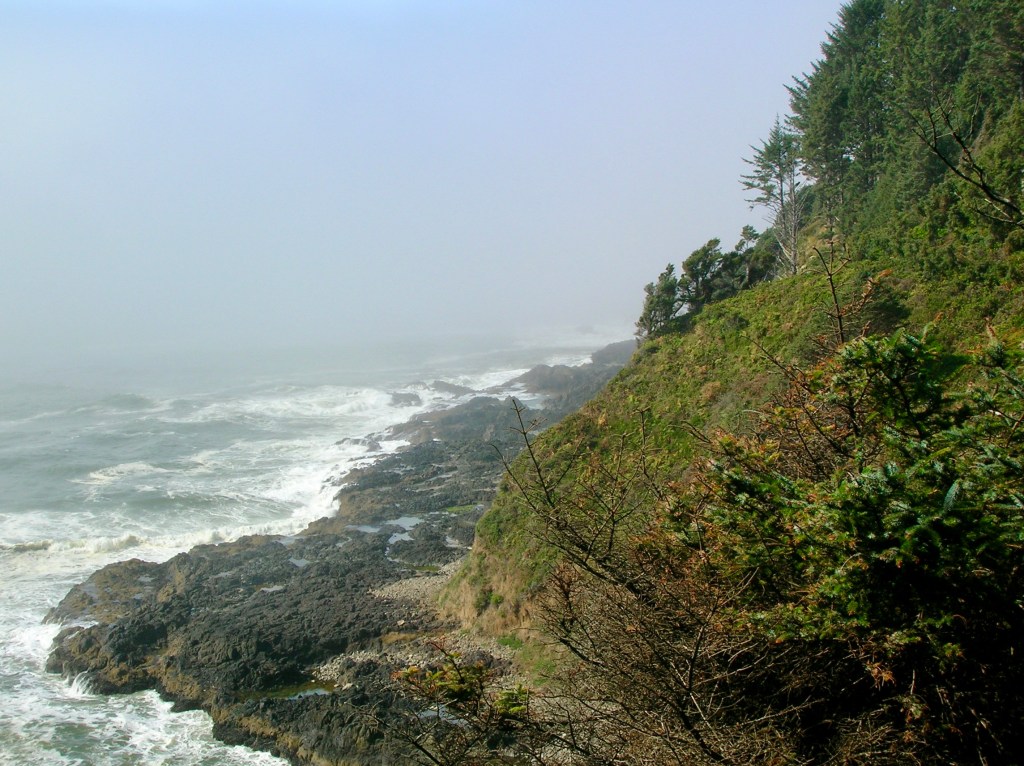
Oregon Coast, shrouded in fog

Although the yoga that we know doesn’t involve the original philosophy in its entirety, we are fortunate that its physical practice has been brought to us through the ages. As you can see, the advantages of yoga are practical, and regular practice builds a strong foundation for uniting mind, body, and spirit, getting us a little closer to a sense of oneness.

Yogi Blessings,

Lisa

The content of this article is for educational and informational purposes only, and is not intended as medical advice. Please consult with a qualified health care professional before acting on any information presented herein. Any statements about the possible health benefits of any subject discussed have not been evaluated by medical professionals or the Food & Drug Administration and are not intended to diagnose, treat, cure or prevent any disease or illness.

Does the Earth Love You?

If you’ve been around Micro of the Macro for a while, no doubt you’ve read a lot about the benefits of spending time with Nature. For example, being at the beach can reduce stress & cancer risk.  Interacting with animals can result in improved heart & immune function. Visiting a waterfall can reduce chronic pain.  I have written about how working with plants can reduce depression, trauma, and anxiety, and how wildflowers support all living systems. Nature, in Her infinite wisdom, contributes unceasingly to life, including ours.  But let’s drill down further: does the Earth, our Primal Mother, love us?

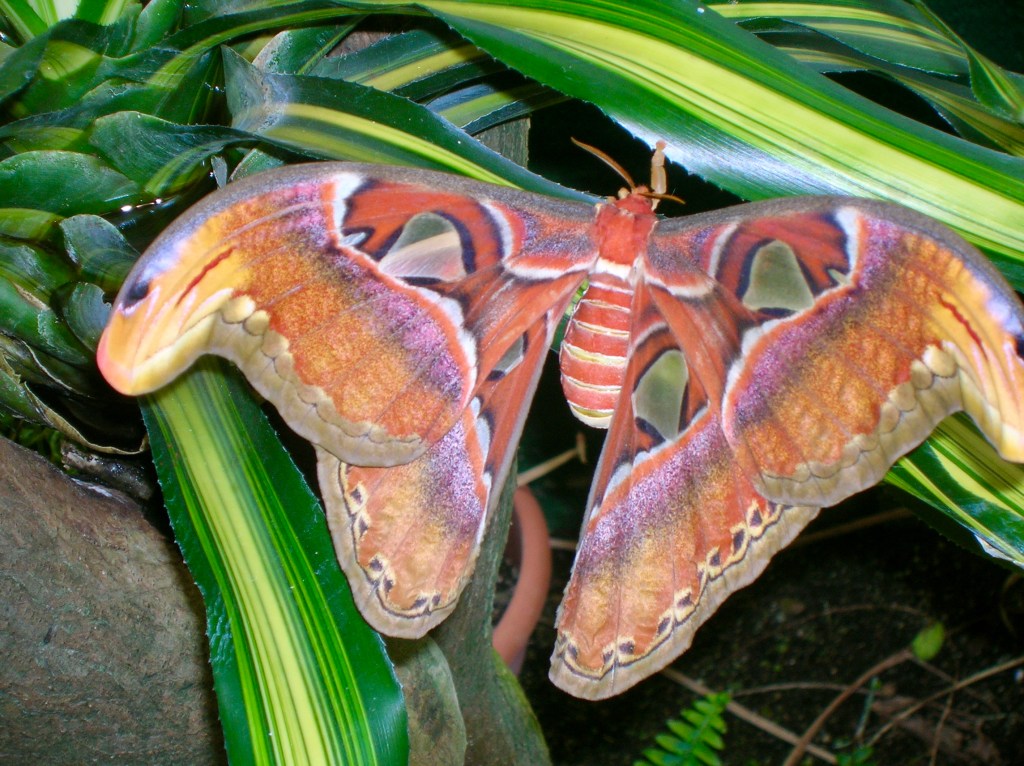
Butterfly Garden, Tucson, AZ

In last week’s post, I mentioned briefly the book I am currently reading, Braiding Sweetgrass: Indigenous Wisdom, Scientific Knowledge, and the Teachings of Plants by Robin Wall Kimmerer, member of the Potawatomi Nation and Distinguished Teaching Professor of Environmental Biology at The State University of New York. Early in the book, she writes of the differences in two foundations which have strongly influenced the ways we think of Nature: the Creation Story and the language we use.  

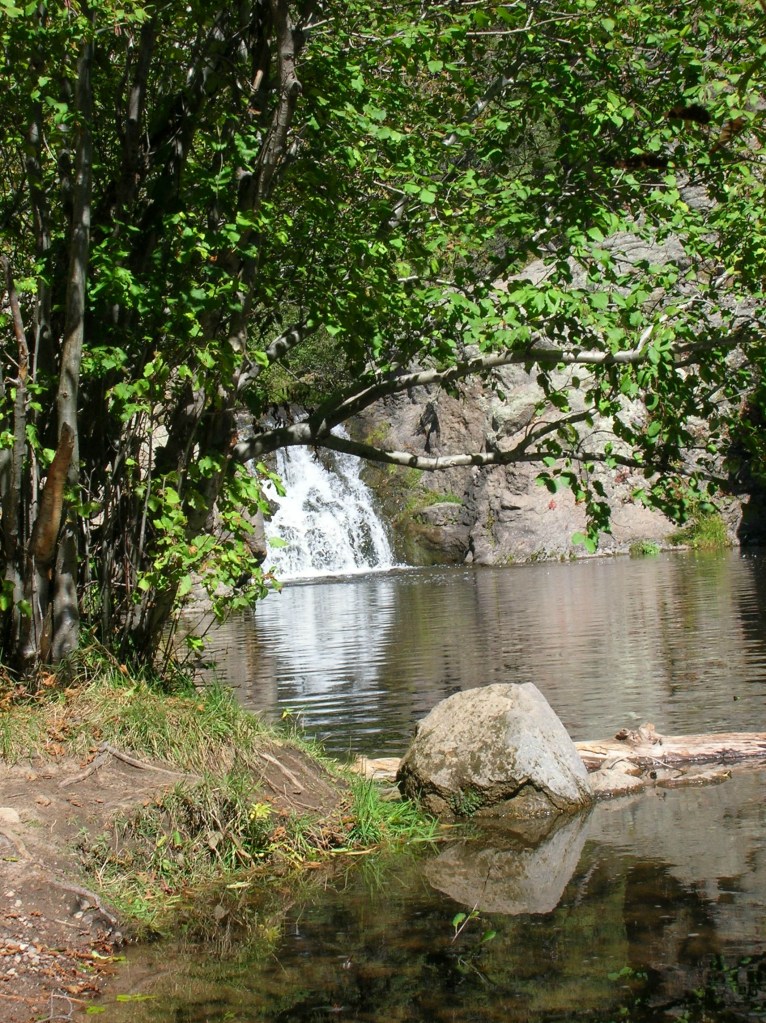
Aspens, ferns and wildflowers near Arizona’s Snowbowl Ski Resort

In Kimmerer’s Native American culture, and many others, the Creation Story does not involve Adam & Eve’s unhappy expulsion from a perfect garden due to a deceitful serpent.  Instead, it is a story of Skywoman, who falls from the Skyworld, grasping for the Tree of Life on her way down, bringing with her seeds, flowers, and branches, and leaving an opening for the sun to shine through.  During and after her landing, animals lovingly assist her. We are inevitably shaped by (Creation stories) no matter how distant they may be from our consciousness, the author writes.  One (of the stories mentioned) leads to the generous embrace of the living world, the other to banishment.  One woman is our ancestral gardener, a cocreator of the good green world . . . The other, an exile, just passing through an alien world on a rough road to her real home in heaven.  A huge difference between perspectives for the followers of each tradition, wouldn’t you agree?

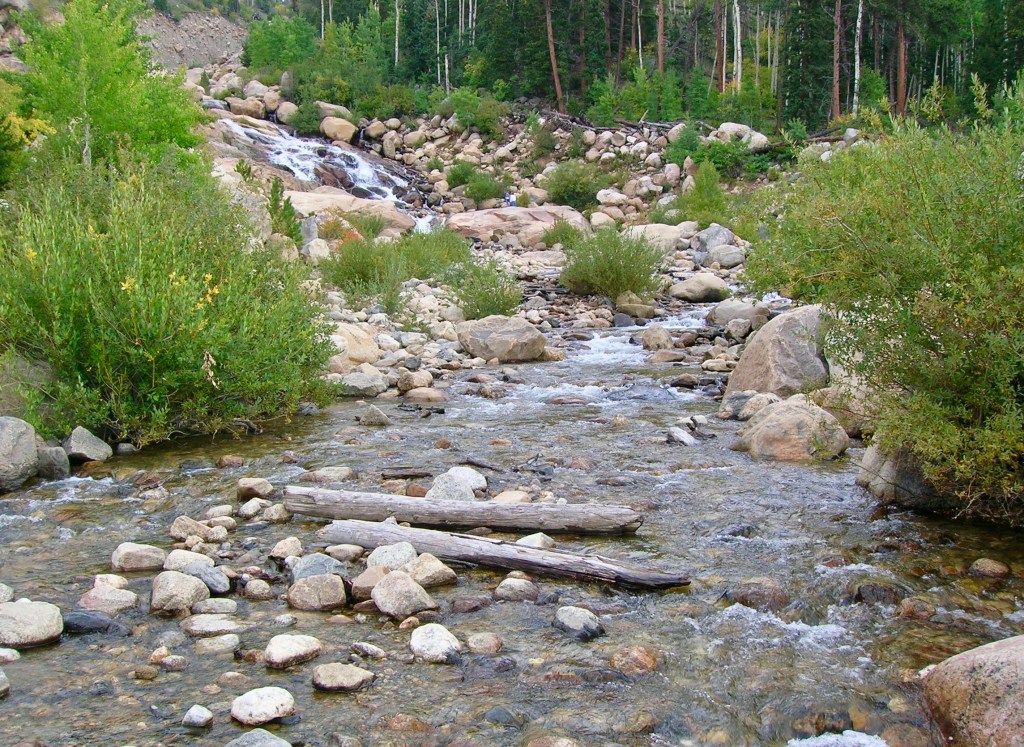
Rushing waters in Montana

Kimmerer’s native language, alive with the energies of the natural world, is almost completely gone.  (Due in large part to forced government board schooling of Native American children centuries ago, where speaking their native tongue was forbidden.)  The language of her ancestors addressed the Spirit in Nature; it was a mirror for seeing the animacy of the world, the life that pulses through all things, through pines and nuthatches and mushrooms, she writes.  The language reminds us, in every sentence, of our kinship with all of the animate world.  A far cry from English, which categorizes the living world as either people or things.  And how easy is it to neglect or abuse when we objectify?  (Think of the unfortunate slaves of ages past who were considered property.) How could we possibly come to believe that things love us?

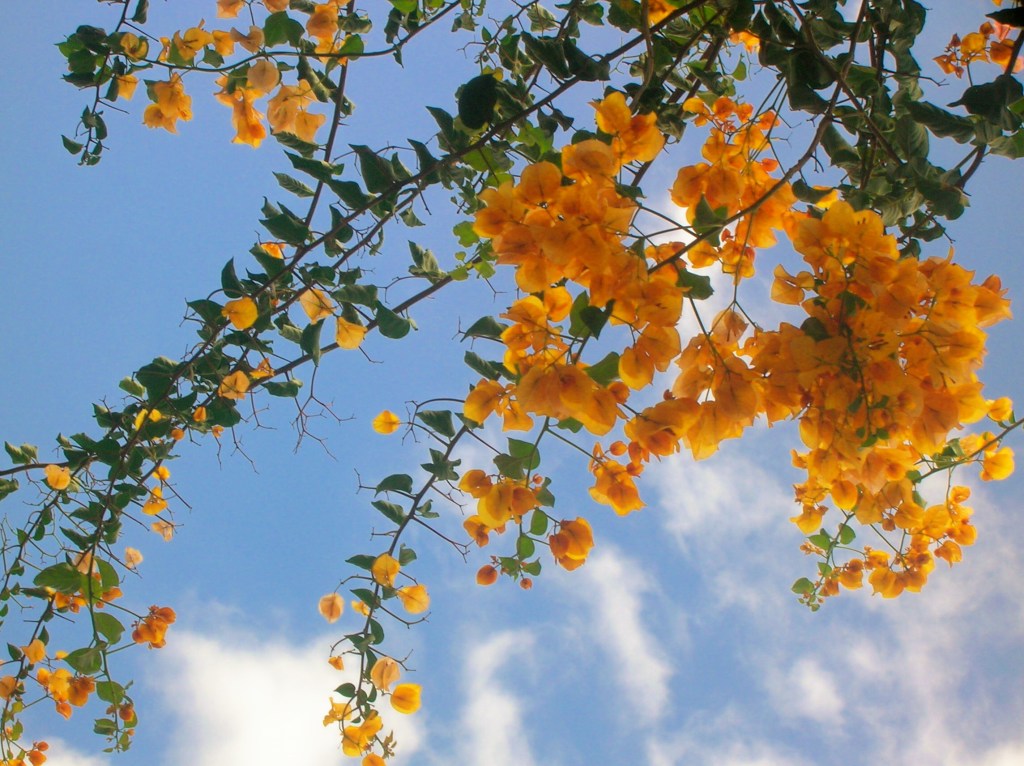
Cactus blooms in the Sonoran Desert

The author, a scientist and teacher, is a mother of two, as well.  She writes with the greatest affection of her daughters, and says she taught them to garden so they would always have a mother to love them, even after she’s gone.  She composed a list of loving behaviors shared with her girls.  Included in the list are: nurturing health and well-being, protection from harm, encouraging growth, interdependence, and creation of beauty.  When we observe these behaviors between people, she says, we know they must love each other.  We even make the statement, “She loves her garden” when the same behaviors are demonstrated by someone carefully tending a plot of land.  Why then, the author asks, would you not make the leap to say that the garden loves her back?  The thriving of one is in the best interest of the other.  This, to me, sounds a bit like love, the author concludes. I couldn’t agree more.

A desert dove

Braiding Sweetgrass is packed with practical teachings of the old ways, offering a clear way forward out of the environmental disaster we are living presently.  But there is so much more to this book.  The beauty of Kimmerer’s prose could make a willing student out of anyone.  I find myself rereading some of her lines 3 or 4 times to relish gentle teachings that feed my soul.  Her descriptive, love-infused narrative brings the science of botany to life, revealing the exquisite luminosity of Mother Earth.

Jemez Springs, near Santa Fe, New Mexico

An endless supply of loving support is made available to us by Nature, being the good Mother that She is. In addition to making things beautiful, She also provides us with ways to help us feel better and improve our lives overall. Like Robin Wall Kimmerer, I strongly believe that the Earth cares for us beyond measure, and spending time in Nature is the easiest way to feel the embrace of that unconditional love.

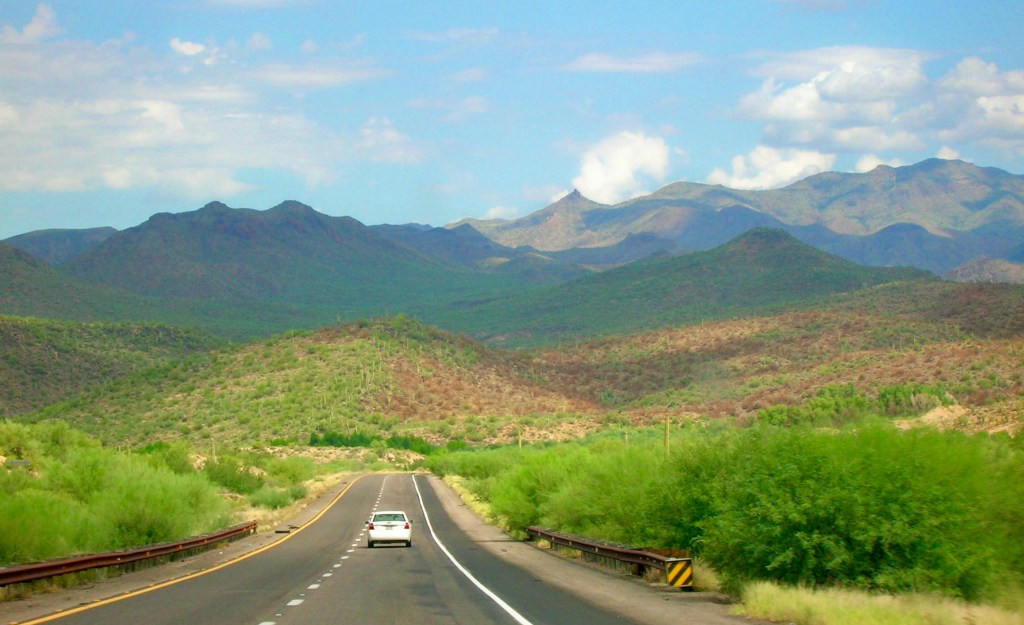
Mazatzal Mountains, Arizona, strewn with Saguaro Cactus

Blessings for Motherly Love,

Lisa

The content of this article is for educational and informational purposes only, and is not intended as medical advice. Please consult with a qualified health care professional before acting on any information presented herein. Any statements about the possible health benefits of any subject discussed have not been evaluated by medical professionals or the Food & Drug Administration and are not intended to diagnose, treat, cure or prevent any disease or illness.

The Dazzling Blogger Award

The Dazzling Blogger Award, designed by Helen at Crispy Confessions, recognizes bloggers who excel in at least one major area of blogging: writing skills, engagement, social media marketing, or content. A big thank you to my friend Suzanne at Happily Decluttered, who has honored me with a nomination.

Suzanne is super-organized and shares tips to help the rest of us reach that pinnacle. In addition to loads of practical ideas, her writing is brimming with love for her family and Nature. She does a monthly Happiness Highlights post that demonstrates what a rich life she is creating. I urge you to visit her site, and let her know I sent you!

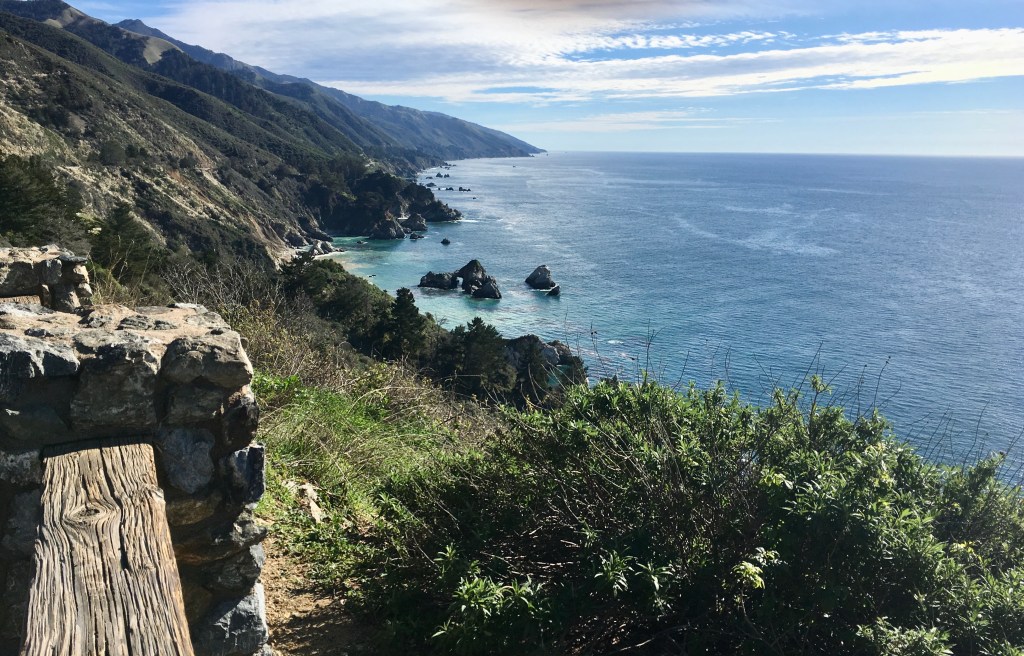
Dazzling view of Big Sur

The Official Rules of The Dazzling Blogger Award

  1. Thank the person who nominated you for the award & link back to their site.
  2. Provide a link back to Helen, the award’s designer.
  3. Answer the seven questions asked.
  4. Compose seven questions of your own.
  5. Nominate & notify seven more people.

Suzanne’s Questions

  1. What is your favorite hobby and how did you get started?

Creating new dishes in the kitchen.  I seldom prepare the same meals, and I’m always on the lookout for new ideas.  I think this originated during the many months I worked in the kitchens of Esalen, Omega, and Ratna Ling, all holistic retreat centers.

Black beans, rice, & roasted plantains with fresh onion, cilantro, & tomatoyum!
  1. What is your favorite meal to cook?

Veggie burgers.  We have burger night twice a month, and I have found so many great ways to make them.  The leftovers get broken up over beds of romaine with red onions, brown rice, and avocado – my favorite salad!

  1. Do you live by any piece of advice or motto?

I am blessed and I am grateful.

  1. What was the highlight of your week?

Getting together with a friend I hadn’t seen in months for hours of talking and laughing and sharing plans for travel.

  1. What is your favorite board game?

Scrabble

  1. Have you read any good books lately that you would recommend?

I’m about 100 pages into Braiding Sweetgrass: Indigenous Wisdom, Scientific Knowledge, and the Teachings of Plants by Robin Wall Kimmerer, Distinguished Teaching Professor & Director, Center for Native Peoples and the Environment at SUNY College of Environmental and Science Forestry. I’m enjoying it so much that I’m already considering how I might share its ideas.  The author’s message is erudite with paradigm-changing potential, but her stories of the “old ways” are sweet, gentle, and communicate directly to the heart.  I feel everyone should read it, and its precepts should be taught to young children.

  1. If you could pick one chore that you could snap your fingers and it would magically be done, which chore would you pick?

The “big clean” of our house, which involves a deeper-than-daily cleaning that is done once a week.

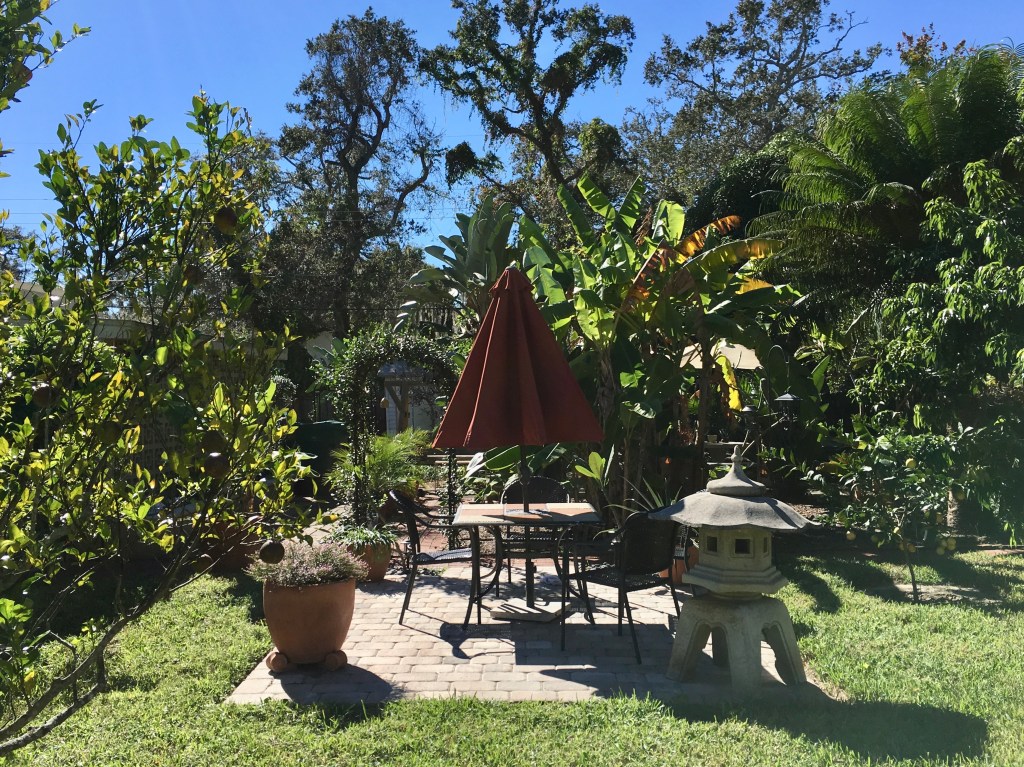
Favorite outdoor space of a beloved aunt and uncle in Cocoa, Florida

My Questions

  1. During the pandemic, have you learned of any new places you want to visit?
  2. In what way would you say the pandemic has changed your life the most?
  3. What is your favorite season of the year, and why?
  4. What wild animal do you admire the most?
  5. Do you grow/care for a garden, flowers, or trees?
  6. What is your favorite outdoor space?
  7. Do you have a mindfulness practice?
Dazzling reflection in Yosemite’s High Country

As for nominations, in a world of fantastic bloggers, I hereby nominate the first 7 who tell me in a comment below they’d like to participate. Or, if you’d like to answer one or more of my questions without fully participating, that’s ok too.

Thanks again, Suzanne, for the nomination!  

Dazzling Blessings,

Lisa

The content of this article is for educational and informational purposes only, and is not intended as medical advice. Please consult with a qualified health care professional before acting on any information presented herein. Any statements about the possible health benefits of any subject discussed have not been evaluated by medical professionals or the Food & Drug Administration and are not intended to diagnose, treat, cure or prevent any disease or illness.

Notes on My Beloved AZ

A tree bloom on Sedona’s West Fork hiking trail

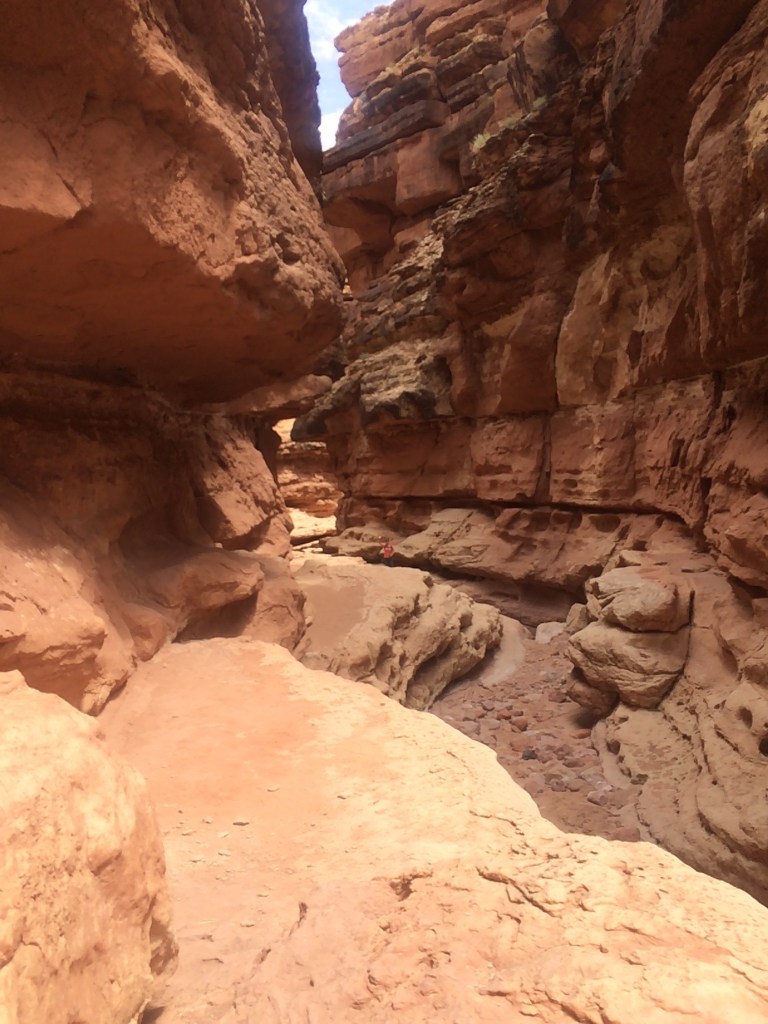
During my first extended visit to Northern Arizona, it stole my heart. It was early springtime, and the trees were budding and blooming and releasing sublime fragrances. The hiking trails were numerous, and lined with boulders, multi-colored sandstone, red cliffs, huge ponderosa pine trees, alligator junipers, small cactus shrubs, and aspen groves. Some trails featured Native American cliff dwellings, mud-walled structures, and petroglyphs. Other trails crossed creeks or lead to lakes, big and small. The most interesting trail I hiked, Cathedral Wash (a workout for both body and mind due to the trail dropping between 5 and 30 feet in areas, leaving you to figure out how to descend) ends at the Colorado River, just outside the Grand Canyon.

Cathedral Wash Trail. Look closely and you will see me (dwarfed, but waving!)

I find that a great number of people are unaware of Arizona’s elevation changes, the presence of trees, and the dramatic climate differences in the state. If you think of a featureless, sandy, flat state with no water, trees, flowers, or beauty when you hear someone speak of Arizona, this post is for you.

“Whales” in Sedona’s Oak Creek

You may have heard of the lovely red rocks of Sedona. Before beginning my 3-year road-trip adventure years ago, friends suggested I visit Sedona due to its incredible beauty and reputation as a spiritual hub. I took that advice, and they were right: its splendor is unforgettable, and with a guide, I was able to access a remote area that felt very sacred. But, did you know that Sedona sits at 4000 feet above sea level? And that it has a big, beautiful creek running through it, much of it recreation-accessible? (See this post for more on that.) During the late fall and early winter, trees along the creek turn spectacular shades of red, orange, and yellow. When snow falls on the red rocks, the sight is nothing short of glorious.

Hiking trail among Sedona’s red rocks

Speaking of snow, the highest point in the state, Humphreys Peak, topping out at 12,633 feet in elevation, sits among The San Francisco Peaks to the north of the small town of Flagstaff. At about 7000 feet above sea level, Flagstaff is one of the snowiest areas in the country, getting an average of 100 inches annually. Each of the seasons could not be more beautiful in Flag, as the locals call it. After winter covers Humphreys Peak with a bright white blanket, a lovely springtime arrives, bringing with it happy meadowlarks, woodpeckers, blue jays, hummingbirds, wrens, robins, warblers, finches, sparrows, and juncos. When summer takes over, there are a couple weeks of 90+ degree temps, but most days are cooler. It is possible during the summer to need a jacket at night, as high desert summer temps can drop into the 40s. Beginning around the first week in July, the area gets super-saturated with rain as a result of monsoon season, which lasts through September. The heavy precipitation encourages a myriad of wildflowers to pop up in meadows & canyons, alongside roads, and on hiking trails, once again transforming the beauty of the little mountain town. And then, fall arrives, causing local leaves to sing with vibrant colors.

Spring tree blooms in Flagstaff
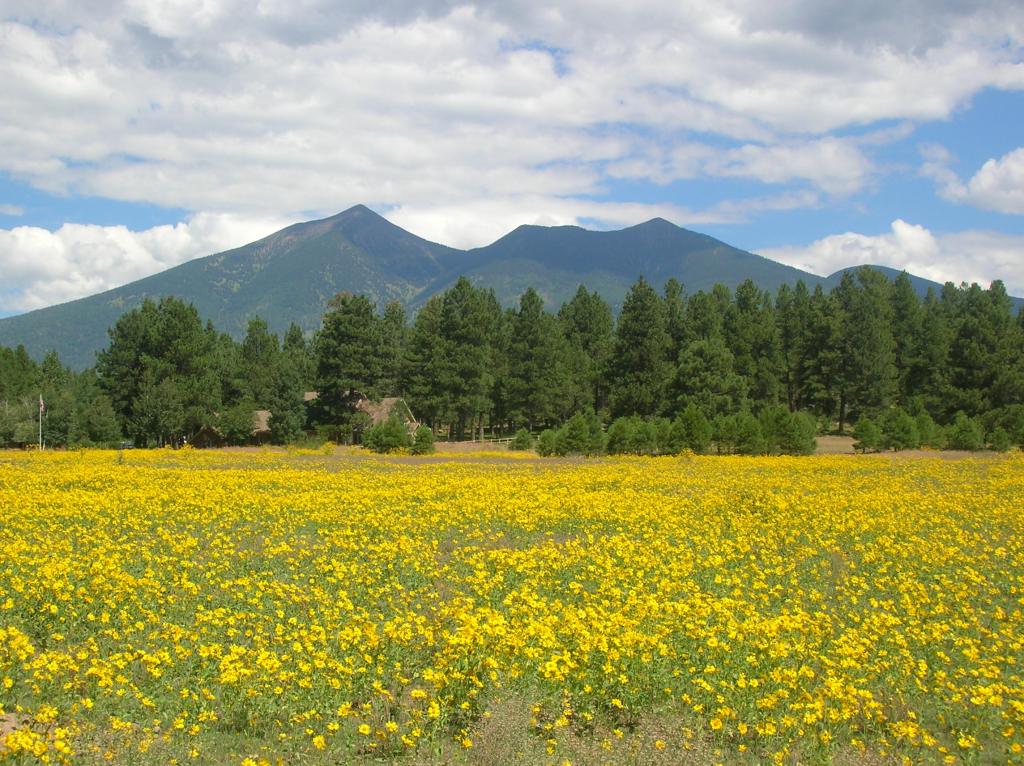
The San Francisco Peaks overlooking a field of wildflowers in Flagstaff. Humphreys Peak is on the far left.

The drive north from Flagstaff reveals an other-worldly topography. Most of the land in the northeast corner of the state belongs to Navajo Nation and is largely undeveloped. About 90 minutes north of Flagstaff, you will see the turn-off to the Grand Canyon, which is a must-see. Carved by the Colorado River over millions of years, the Canyon is immense, sporting an elevation change of 8000 feet between its highest point and the mighty Colorado.

View of the Grand Canyon

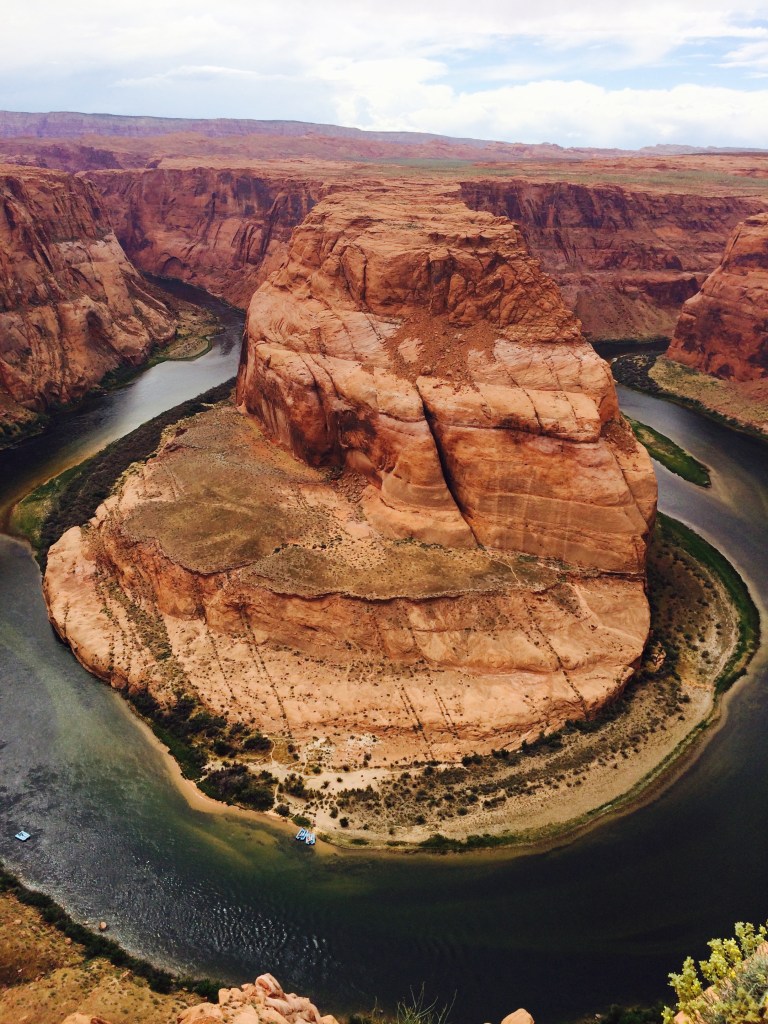
About an hour farther north, you will discover Horseshoe Bend, Lake Powell, and Antelope Canyon. A boat tour on Lake Powell (located in both Arizona and Utah) offers spectacular views of the red, orange and white sandstone cliffs surrounding the water. With a Navajo guide, a walk through the narrow, beautifully formed Antelope Canyon will astonish you. The slot canyons are the happy result of flash floods having eroded the soft sandstone.

Horseshoe Bend, part of the Colorado River that runs through the Grand Canyon
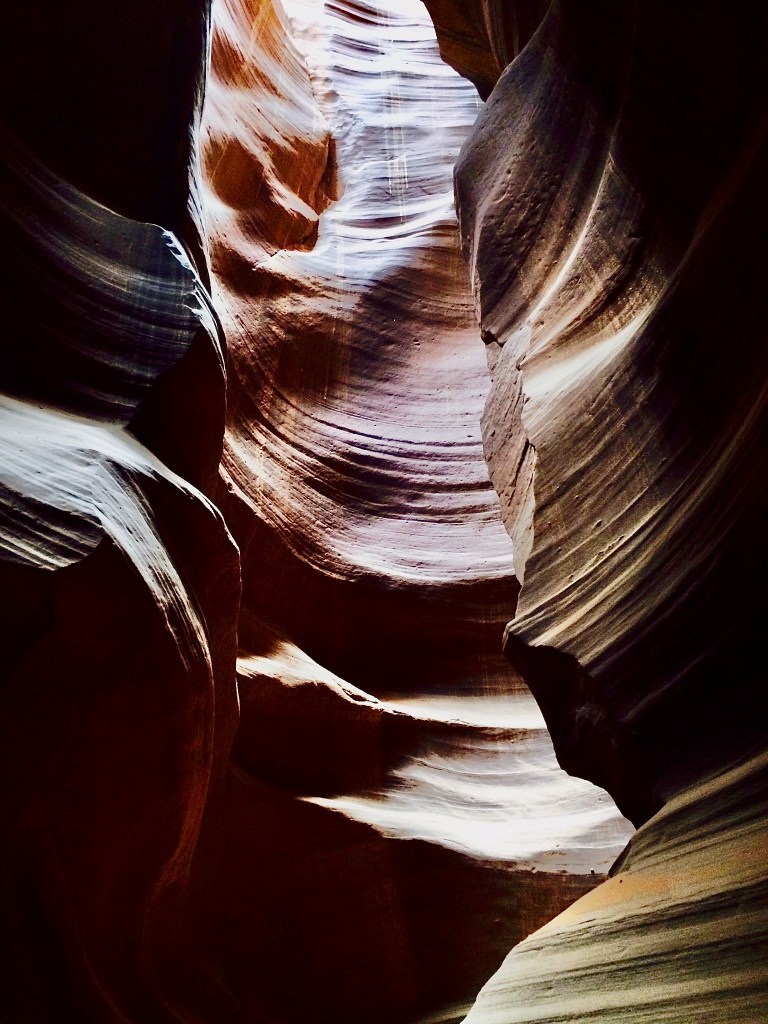
Antelope Canyon’s unique beauty

As for points farther south, you will find them uniquely interesting as well. A drive south on I-17 just north of Phoenix yields a plethora of saguaro cactus plants at a certain point, and although I’ve yet to witness it, I’m told their beauty is astounding when they’re all in bloom. Tombstone, made famous by outlaws like Wyatt Earp and Doc Holliday, is a cool little town where gunfight reenactments are performed in the unpaved streets. It has been designated one of the best-preserved rugged frontier towns of the late 1800s. And Tucson offers an extensive Botanical Gardens network, Saguaro National Park, and Mt. Lemmon, a jewel that rises over 9000 feet out of the Sonoran Desert.

Part of the set from the gunslinger performance

If you have always pictured the state of Arizona as hot, sandy, and drab, I hope this post has forever changed that image. The state’s diverse and distinctive terrain is an eye-popping Mecca for outdoor enthusiasts. Experience its unique history and allure, and you may find yourself writing love notes, as well.

Blessings for Arizona Beauty,

Lisa

Note: My beloved state is currently aflame. At the time of this post, there are more than 130 fires burning around the state; the largest 7 encompass over 400,000 acres, and many of the fires continue to grow. If you plan to visit Arizona this year, I strongly advise that you wait until the fires have subsided and air quality has improved.

Comments have been turned off for this post.

The original version of this post, entitled Arizona: A Love Letter, was published in May of 2020.

The content of this article is for educational and informational purposes only, and is not intended as medical advice. Please consult with a qualified health care professional before acting on any information presented herein. Any statements about the possible health benefits of any subject discussed have not been evaluated by medical professionals or the Food & Drug Administration and are not intended to diagnose, treat, cure or prevent any disease or illness.

6 Reasons I Choose Clean Eating

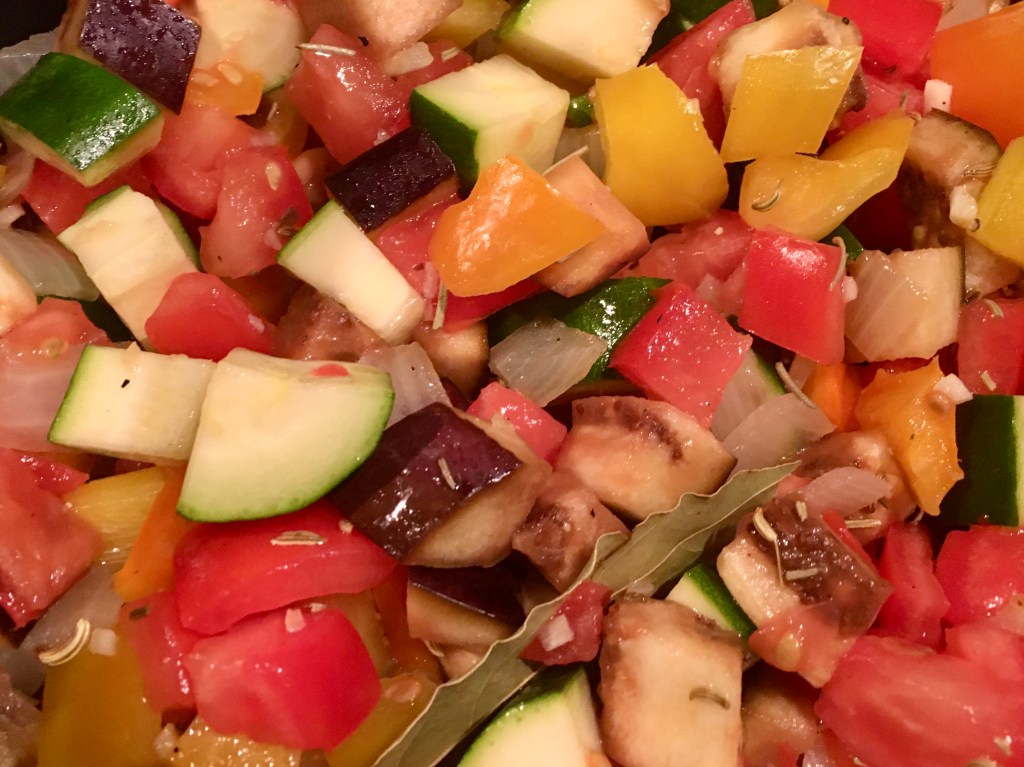
Ratatouille ready to simmer

Clean eating is a term that is broadly & loosely defined, I’ve learned while writing this post.  It can relate to not only food & drink, but also exercise, sleep, stress management, and spending time with loved ones, all of which are important for a happy, healthy life. But, to me, clean eating refers to only the consumption portion: choosing closer-to-the-Earth foods & drinks that are whole and organic, either unprocessed, or minimally processed with nothing artificial added. This practice provides my body with what it really needs.  As a result, I am the best possible steward of my health, which I believe to be my greatest asset.

Mango loveliness

There are many reasons I have made clean eating a lifestyle, and I want to share 6 of the biggies with you.

  • Eating whole, clean foods is the manner in which our ancestors ate, and the way Nature intended.  Only in the past 150 years has the practice of adding artificial flavors, colors, fillers, and other chemicals made in a lab become the norm. Because we evolved eating whole foods in their natural state, our bodies don’t recognize the man-made additives, and therefore don’t know how to process them.  Many times, they are tucked away in our fat stores, but sometimes, they make their way into our vascular system and organs, and have the potential to cause disease. I don’t want to take that risk.
Birthday cake made from black beans & dates, with avocado, date & cacao frostingDELISH!

  • Committing to buying organic fruits and vegetables keeps genetically-modified foods out of my body.  Due in large part to government subsidies in this country, GMO food production is on the rise. This is true even though there have been no long-term studies done on human consumption, and short-term studies have yielded frightening results.  According to the article 10 Scientific Studies Proving GMOs Can Be Harmful to Human Health, consuming GMO food & drink may contribute to various cancers, gluten sensitivity, autism, Parkinson’s, and Alzheimer’s.  
Mineralizing water with cucs, berries, and Himalayan salt
  • Nutrient-dense whole foods are high in fiber, the preferred food of my gut’s microbiome.  Keeping my gut bugs happy is a priority, since they wield such power over my cravings and, therefore, my health in general.  (Go to this article for more on that.) According to Michael Greger, MD, author of the book How Not to Die, eating the Standard American Diet, (which is high in processed foods, meats, & dairy, and low in high-fiber whole plant foods) can result in needing 4 or more days for digestion and elimination, whereas plant-based eating requires only one to two days.  The slower process is undesirable for many reasons. For example, when those 4 or more days are passing, we don’t stop eating and wait for clearance; we continue eating more of the same hard-to-assimilate foods, placing an even larger burden on all body systems.  It’s no wonder that the US spends more than any other country on healthcare (or disease management, to be precise.)

  • Eating clean allows me to avoid taking most supplements.  That saves me money. It also helps me avoid more man-made additives.  In The China Study: Startling Implications for Diet, Weight Loss, and Long-Term Health, T. Colin Campbell, PhD, Professor Emeritus at Cornell University, asserts that obtaining nourishment from a variety of whole plant foods is superior to taking supplements due to the symphony of nutrients released from plants that all work together, versus the single extracted vitamin or mineral that works on its own or with its manufactured ingredients.
Cherry tomatoes ready for a light sauté
  • Whole foods have a good amount of structured water in them, a different type of water molecule that is deeply hydrating and contributes to the optimal function of my body.  In his book Cells, Gels, and the Engines of Life, Dr. Gerald Pollack states that water is essential to each and every cellular process.  Most processed foods & drinks have little to no water content that can be used for cellular hydration.  (If you’d like to know more about the critical importance of hydration, check out this article.)

  • Clean eating contributes to a healthy pH balance in my body.  Processed foods cause the blood to become overly acidic, throwing off homeostasis.  When this occurs, the blood can leach minerals from the bones to reestablish its set point.  This can contribute to thinner bones and osteoporosis.  Additionally, blood that is constantly exposed to excess acid can become a breeding ground for cancer.
Cucumber blooms

Eating clean is a way to help meet your body’s essential needs while avoiding a tangle of harmful effects.  You were designed to eat real, whole foods.  By following Nature’s protocol, you are taking responsibility for your health, your greatest asset.

Blessings for Healthy Choices, 

Lisa

The content of this article is for educational and informational purposes only, and is not intended as medical advice. Please consult with a qualified health care professional before acting on any information presented herein. Any statements about the possible health benefits of any subject discussed have not been evaluated by medical professionals or the Food & Drug Administration and are not intended to diagnose, treat, cure or prevent any disease or illness.

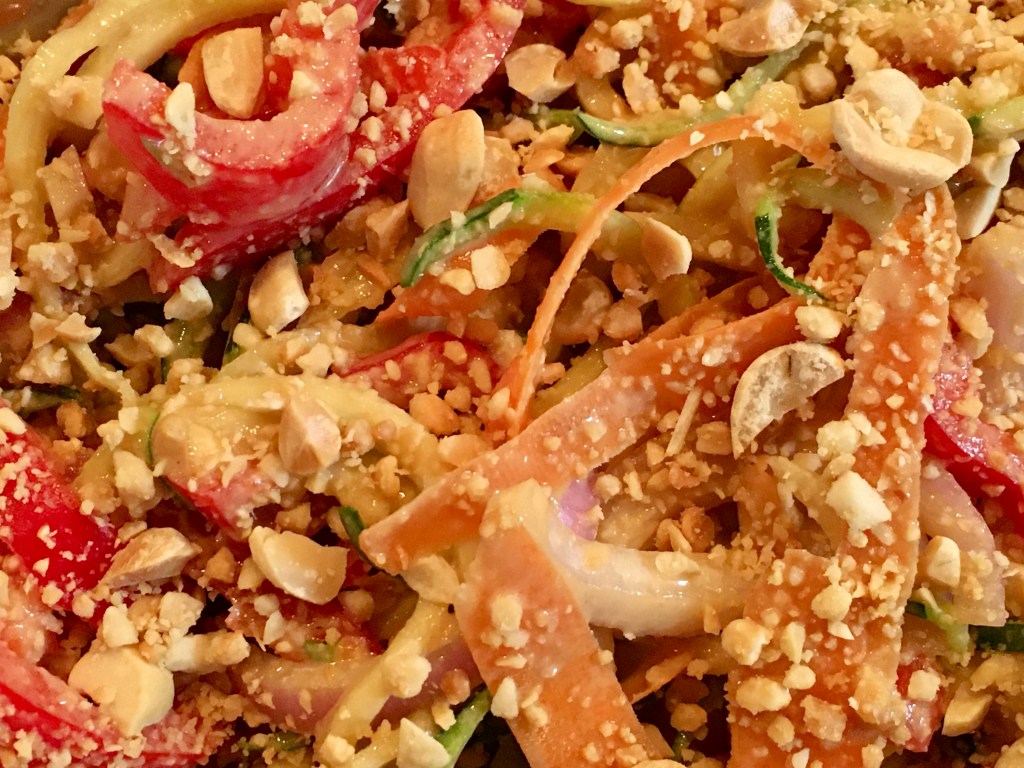
Spiralized Veggies with Thai Peanut Sauce

I first tried raw spiralized zucchini noodles at a deli in a Whole Foods Market near Austin, Texas years ago.  There was a choice of raw tomato sauce or spicy peanut dressing to top the noodles, and of course, I had to try some of each.  The peanut dressing was better, hands-down!  The bold, piquant flavors of that sauce haunted me, until finally, a few years later, I found a recipe that could be modified to taste similar.  (Regrettably, I didn’t record the name of the cookbook or author, so I cannot properly credit the person whose recipe I altered to create this fabulous sauce!)

Since that day at Whole Foods, I’ve experimented with many veggie noodle recipes.  In addition to zucchini, I’ve spiralized other vegetables, including cucumbers and sweet potatoes, and thrown in all kind of nuts, fresh herbs, cherry tomatoes, and coconut.  Sometimes I lightly sauté the noodles in olive oil with garlic, other times I leave them raw.  I’ve even cooked grain spaghetti and mixed it with raw noodles. I’ve found that the colorful, raw combination shared below is my favorite.

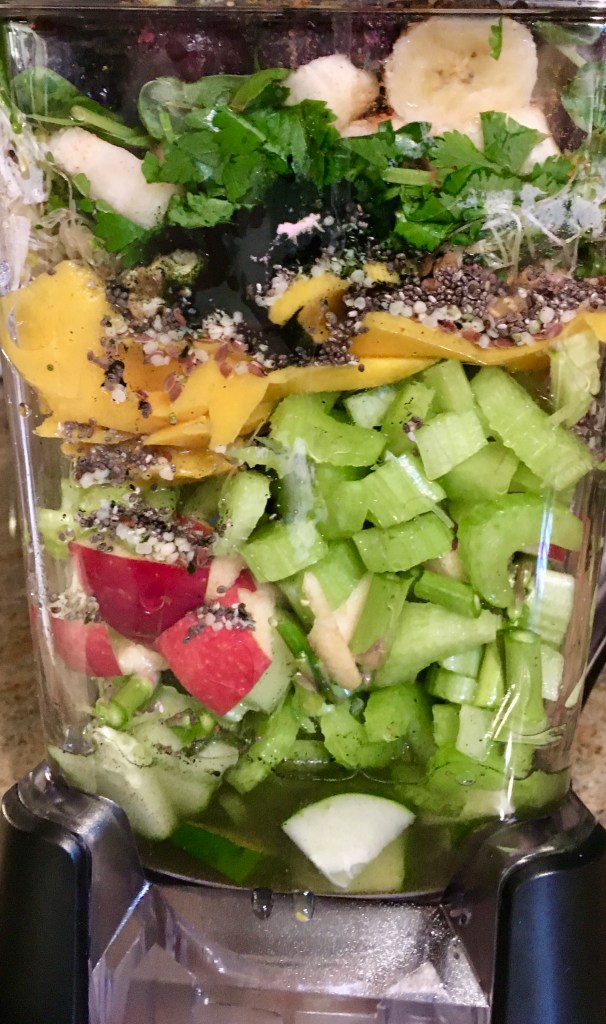
As for health-giving qualities, raw foods have significantly more enzymes, vitamins, minerals, alkalizing properties, and structured water than cooked foods.  From various sources, I’ve read that, owing to these beneficial factors, 50 to 70% of our regular diet should be raw.  When I first learned about raw foods from the life-changing book Conscious Eating by Gabriel Cousens, MD, the recommendation was for 100% raw – too radical for me, but I’ll admit, the people I’ve known who can manage that lifestyle are incredibly healthy.  As much as I love to cook, going completely raw would take away my favorite creative endeavor.  But I do shoot for 50% raw each day.  My morning fruit and vegetable smoothie accomplishes most of that goal.  I also eat quite a few salads and avocados, & often snack on raw veggies while I’m prepping them to cook.  During the hotter months, there’s nothing I find more refreshing than a cool slab of watermelon.  Additionally, I’ve started making various dessert balls by combining oats, nuts, dates, & other raw ingredients in the food processor.  They are so yummy, I give them as gifts!

On to the recipe.  My sincerest thanks to the cookbook developer whose name I did not record; this sauce was inspired in large part by the recipe Soba Noodles with Peanut and Ginger Sauce.

(Those of you with peanut allergies can sub almond butter & top with chopped almonds. I’ve made the sauce this way many times, even though I’m not allergic.)

Yield: 2 Large Servings 

Ingredients (use all organic/non-GMO if possible)
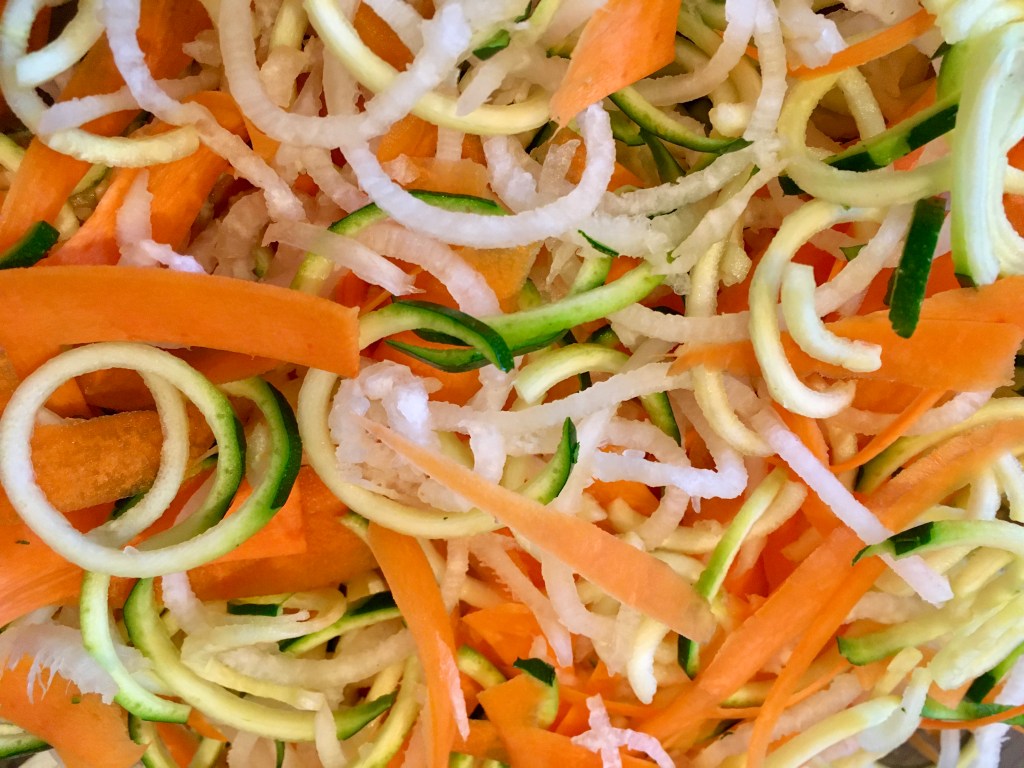
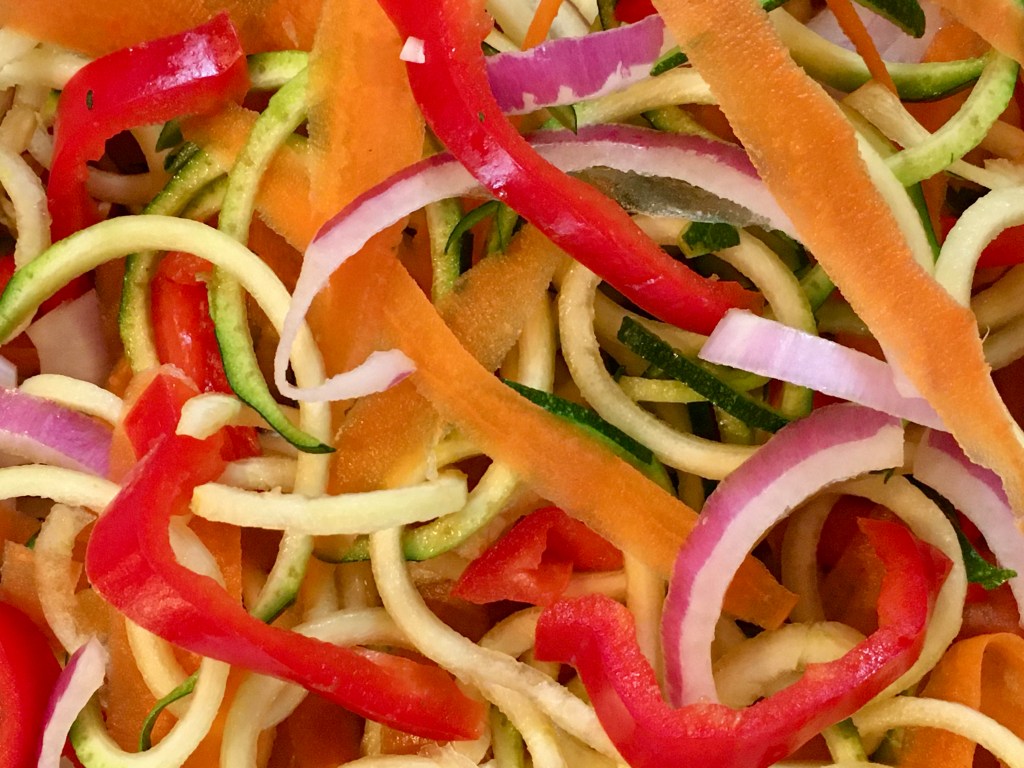
8-10” long zucchini, spiralized
6” long daikon radish, spiralized
Large carrot, spiralized or cut into thin strands with a veggie peeler
Large red bell pepper, cored, seeded, & sliced into thin strips
1/4 medium red onion, thinly sliced (optional)
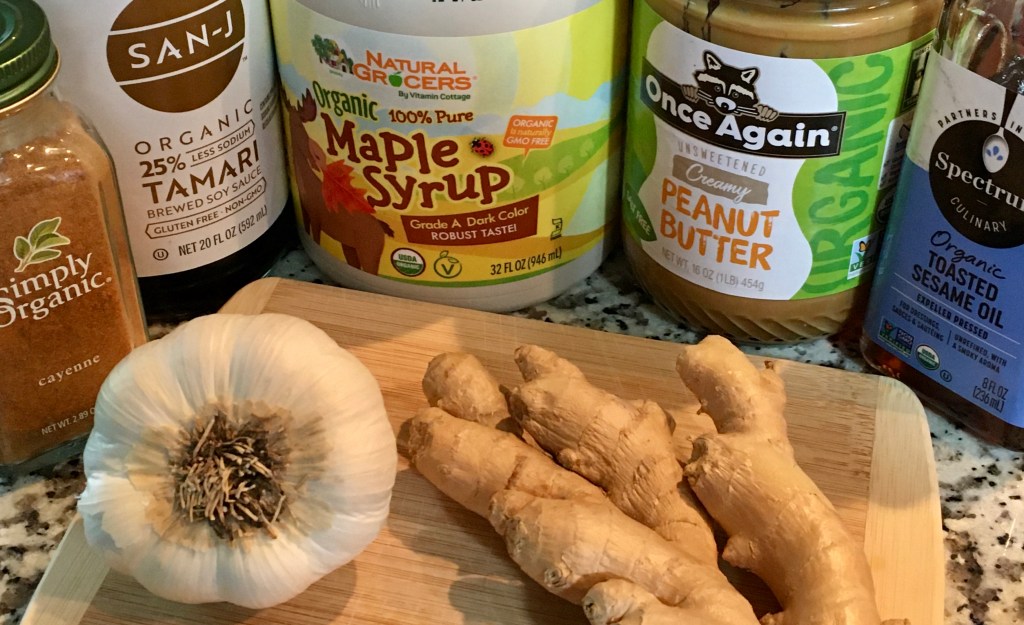
2 tbsp tamari
2-3 tbsp maple syrup (to your preferred sweetness)
1 tbsp freshly grated ginger
2 tsp freshly grated garlic
1 1/2 tbsp toasted sesame oil
1/4 tsp cayenne
6 tbsp peanut butter
1/3 – 1/2 cup water (to your desired consistency)
salt to taste, if needed
chopped peanuts for the top

Directions
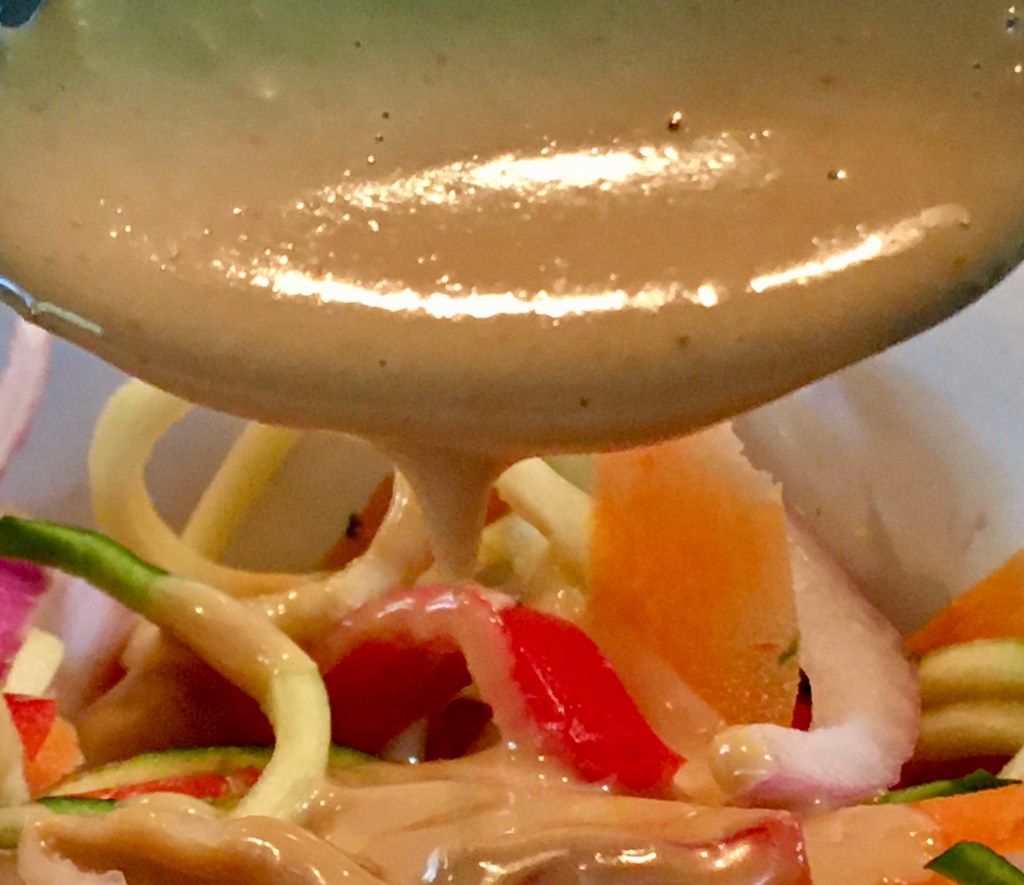
Mix all the vegetables in a medium bowl. Put the next 7 ingredients (tamari through peanut butter) in a small blender cup & spin until creamy and well combined. Add part of the water & spin again. Stop and check consistency. Add more water (or don’t) until you’re happy with the thickness. Taste for salt, adding a dash or 2 if needed.

Split the veggie noodles between 2 bowls and top with *sauce & chopped peanuts. Enjoy!

*You will have leftover sauce. Try its deliciousness on any green salad, or simply spiralize more veggies! Or, how ’bout using it as a dip for fresh rolls? It also works beautifully as a stir fry sauce. It might even be good on chocolate ice cream😊! It will thicken after refrigerating, so whisk in an extra tablespoon or so of water as needed the next day.

The content of this article is for educational and informational purposes only, and is not intended as medical advice. Please consult with a qualified health care professional before acting on any information presented herein. Any statements about the possible health benefits of any subject discussed have not been evaluated by medical professionals or the Food & Drug Administration and are not intended to diagnose, treat, cure or prevent any disease or illness.

Little-Known Weight Loss Strategies

Smoothie time!

A few months after the pandemic first started wreaking havoc, internet searches worldwide began showing a significant increase in the quest for weight loss information, according to Google Trends. It seems covid robbed us of not only our individual freedoms, but also our willpower. Many of us have put on weight as a result of gym closures, more time at home, fewer social interactions, and higher stress levels. In addition, several news stories at the inception of the virus focused on increased consumer demand for comfort foods such as hamburgers & fries, hot dogs, pizza, and ice cream. These foods, which are often filled with artificial ingredients, salt, sugar, fat, and excess calories, can offer a brief sense of stress relief as a result of their effects on the brain’s reward center, much like cocaine or heroine. But once that fades, we can be left with a sugar crash, extra calories to burn (or store as fat), an unhappy gut, guilt, and an overall sense of feeling worse than before we ate them.

So what can we do to feel better and drop the extra weight? Learn to work with, rather than neglect, the needs of our bodies. As you may have already discovered from past articles, the health information shared on Micro of the Macro is well outside the box, based on new or unpopular scientific studies. The star of this article, the gut’s microbiome, has become an area of extensive study over recent years, and the findings are changing the way we understand the concepts of health and disease.

The beauty of transformation

I’ve written before on the importance of this colony of bacteria in our guts (check out this article for my tips on immunity). What I didn’t mention in past posts is the fact that these microbes are often in charge of the foods we crave and those we choose to eat. Yes, you read that right, in charge. According to an article from the US National Library of Medicine/National Institutes of Health entitled Is Eating Behavior Manipulated by the Gastrointestinal Microbiota?, the gut bacteria that we “host” can manipulate not only the brain’s reward center, but also our tastebuds, cravings, and mood. Furthermore, the less diverse the bacteria colony (largely a consequence of antibiotics and nutrient-depleted foods), the more power the bacteria has to manipulate us, increasing our chances of obesity. In fact, the control our gut bacteria has over us is so exacting that the article refers to them as puppet masters! Frightening, huh?

What’s in your smoothie?

In order to regain mastery of your cravings and relationship with food, and therefore your weight, it is necessary to diversify your microbiome. Making healthy choices, such as organic fruits and vegetables, local and seasonal if possible, is a great first step. Introducing new foods to your diet results in new bacteria in your gut. Probiotic food and drinks, such as miso, sauerkraut, tempeh, kombucha, and kefir result in greater numbers of diverse healthy bacteria. Fiber-rich prebiotic foods, such as onions, garlic, leeks, asparagus, artichokes, dandelion greens and jicama support the growth of those good bacteria. And a healthy, diversified colony of microbes can help you make healthier food choices in the days, months and years ahead.

Healthy, high-carb dinner

Fiber is extremely beneficial for gut bacteria, according to Justin & Erica Sonnenburg, PhDs, researchers at Stanford’s University of Medicine. Fiber is actually a carbohydrate (something worth considering if you’re doing keto or another low-carb diet) that is indigestible. The Sonnenburgs’ research team has done long-term studies of the gut bacteria of a hunter-gatherer tribe in Tanzania, whose members, young and old, are considered models of vitality. Their studies revealed that each member of the tribe consumes between 100 and 150 grams of dietary fiber daily. Most Americans, it pains me to say, get about 15 grams per day.

The joys of jicama!

In addition to being a favorite food of your good gut bacteria, fiber also helps your body eliminate toxic chemicals, such as artificial food additives, pesticides, and environmental pollutants. These toxins, often stored in fats, interrupt the body’s normal functionings of blood sugar and cholesterol, which can lead to diabetes and obesity. (For more on this, check out Environmental Pollution and Diabetes: a Neglected Association.)

Proper hydration makes your microbiome happy, as well. (For additional info, see my article Hydration – Does It Really Matter?) Healthy fats like seeds, nuts, and avocados are deeply hydrating and should be a part of your daily intake. Drinking plenty of mineralized water (made with fresh lemon juice and/or Himalayan salt) & eating lots of melons, cucumbers, celery, grapes, peaches, berries, & other water-rich fruits keeps your cells & fascia hydrated. When your body is not properly hydrated, you become unable to regularly eliminate food and toxins. You have less energy. You can feel dull and heavy. Your blood thickens, making your heart and kidneys work harder. (For more on that idea, check out New York Times best-selling author Anthony William’s book Liver Rescue.) A poorly-hydrated body cannot function optimally, and may very well thwart your weight loss efforts.

A yummy high fiber lunch

Eating fewer flesh foods, dairy, and eggs may also help. Not to say that you need to become vegan, but I’d like to share my experience with you. I adopted a whole foods plant based vegan diet in stages. I became vegetarian first, and lost so much weight, so fast, that it scared me. In fact, I started binging on granola to stop the weight loss! Years later, after learning about the evils of animal protein, I gave up cheese and eggs, which made me totally vegan. Again, I lost a lot of weight in a very short period. A testament, I believe, to the power of good plant food bacteria crowding out animal food bacteria in my gut.

The folks that live in Blue Zones, the places that have the healthiest, longest-lived populations in the world, typically eat whole food plant based diets. Usually, if they do eat meat or dairy, it’s only a few times a month, and in very small portions. In these areas, it is common for people to age without the chronic diseases that plague the majority of Americans, and to have leaner builds.

Weight loss is something many of us struggle with, especially when we turn to food as a source of comfort. Choosing to supply your gut’s microbiome with what it needs goes a long way in helping you accomplish your weight loss goals and feel better in general. And, not just for now, but for a lifetime.

Time to get ready for the beach!

Blessings for a Healthy Microbiome,

Lisa

Note: The content of this article is for educational and informational purposes only, and is not intended as medical advice. I am not a medical professional.  Please consult with a qualified health care professional before acting on any information presented herein. Any statements about the possible health benefits of any subject discussed here have not been evaluated by medical professionals or the Food & Drug Administration and are not intended to diagnose, treat, cure or prevent any disease or illness.

And Another Note: The original version of this post was shared in July, 2020.

Green Exercise? Yes, Please!

View from O’Leary Peak trail, Northern Arizona

According to an article from Woodland Trust, the largest woodland conservation charity in the UK,  Exercise . . . releases endorphins, improves both physical and mental health and helps you sleep better. . . But did you know that where you exercise can make a real difference?  Exercising outdoors in a green space, studies show, results not only in profound benefits for physical health, but can also boost mental health in as little as 5 minutes.  Five minutes!

The term green exercise was coined in a paper from 2003 by researchers at University of Essex.  Their writings include an idea set forth by the American Biologist E. O. Wilson, called the Darwin of the 21st century, that humans have an innate connection with Nature, and therefore, time outdoors increases well-being in general and can even be transformative.  Coupling that with the merits of exercise, this paper was the first to address body movement in the great outdoors, declaring it doubly beneficial.

Peeking through a rock at the water’s edge, Southern California

I prefer exercising outside whenever possible, probably because I so enjoy being near plants, natural waters, wildlife, and looking at the sky.  Hiking and trail riding are activities that we enjoy on a regular basis.  If I must exercise inside, I make sure there’s a view and fresh air if possible.  When I belonged to a regular gym, I would focus on the trees outside the window while lifting or on the treadmill.  At my climbing gym, all the doors are propped open to allow the wind to blow through.  In our home workout room, I like to open the window and watch the birds while I’m on the boxing bag or glider.  Yoga is best practiced, in my opinion, with an outside view.  In fact, many classes are now offered in park settings.  I used to attend classes at a studio with windows revealing a direct view of the San Francisco Peaks, Arizona’s tallest mountains.  On snow days, it was particularly lovely and inspiring. 

Beautifully flowered rock found on a high desert hike

An article entitled The Great Outdoors: How a Green Exercise Environment Can Benefit All from the National Institute of Health states we may be still genetically designed to be hunter-gatherers in the great outdoors, (but) we are not being stimulated physically or mentally in the same way and this may be detrimental to health . . . maybe green exercise should be used to facilitate physical activity to improve health.  Going to the farmer’s market just doesn’t do it!  The article goes on to say that, owing to various factors, outdoor exercise can be perceived as less demanding.  (Maybe that’s another reason I prefer it?!)

Hiking Trail near Flagstaff, Arizona

Although there aren’t a great number of studies on green exercise, the research that has been done shows it yields many benefits physically, mentally, emotionally, and spiritually.  Alive, a leader in natural health publishing for almost 50 years, shared a write-up encouraging outdoor exercise due to its ability to reduce stress and confusion; improve self-esteem, mood, and focus; and offer better recovery from training.  It can also reduce behavioral problems, especially in children. Plus, limited sun exposure enhances vitamin D levels, which can help us avoid cancers and heart disease.  And, bonus, due to outside sights and sounds being more interesting, green exercise increases the chances that we will stick to our exercise routine.  When you find you’re short on motivation, this might be the perfect fix.

A walk along the dog beach in South Florida

I’ve shared in past posts some of the many benefits we derive from simply being among trees, wildflowers, near waterfalls, and at the beach.  (Check out my Categories link for more.) Incorporate those benefits with the value of physical activity and you have a combination that’s hard to beat.  Not to mention, being outside makes exercise so much more fun!

A stroll near Moab, Utah

The many advantages of green exercise, even if limited to only 5 minutes at a time, shows a great deal of promise for improving our lives.  You are intimately connected to Nature; being active in this nurturing environment is a practice from the distant past that can easily transform your future.

Green Space Blessings,

Lisa

The content of this article is for educational and informational purposes only, and is not intended as medical advice. Please consult with a qualified health care professional before acting on any information presented herein. Any statements about the possible health benefits of any subject discussed have not been evaluated by medical professionals or the Food & Drug Administration and are not intended to diagnose, treat, cure or prevent any disease or illness.
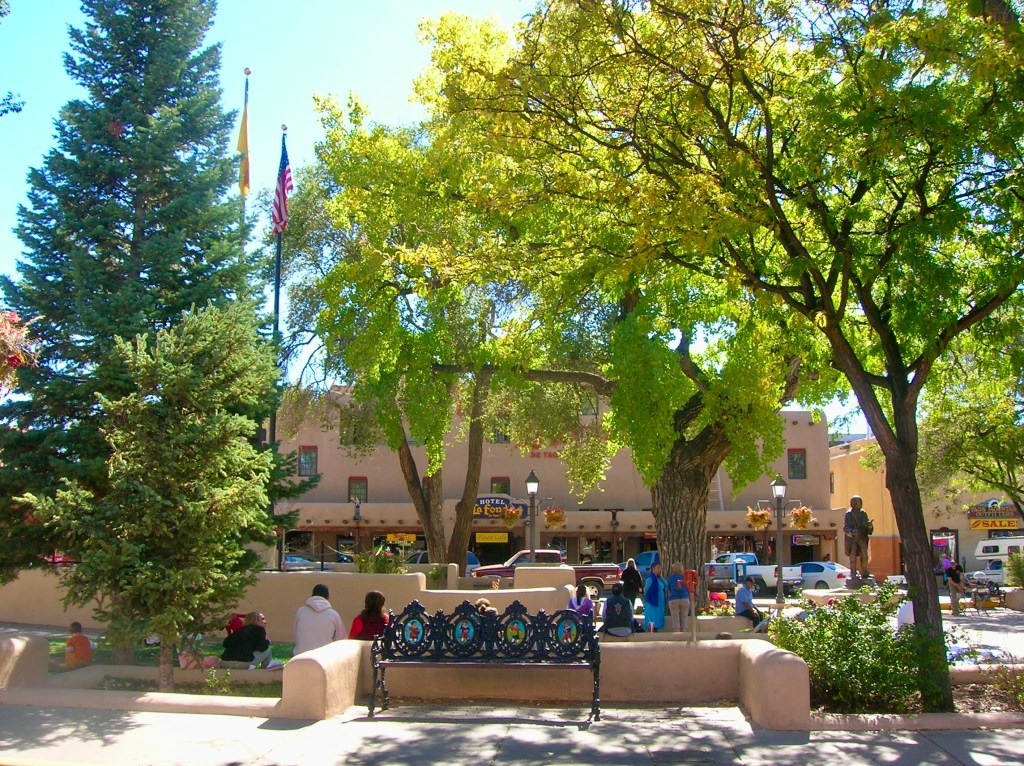
Let’s Get Lost in a Forest!

Autumn at Wheeler Peak in Carson National Forest, NM

If you go off into a far, far forest and get very quiet, you’ll come to understand that you’re connected with everything. ~Alan Watts

The above quote describes the experience I had as I began hiking in the forests of the Western US.  What a difference it’s made in my worldview!  The hundreds of miles I’ve trekked among trees, boulders, rushing waters, shrubs, and wildlife have felt healing from the start, as if the forests have wrapped me in a maternal embrace.

Chama River in Carson National Forest, NM

The first forest to ever steal my heart was Carson National Forest surrounding Taos, New Mexico.  I’ve spent a good bit of time in the area, taking in much of its untamed beauty.  I’ll never forget a late fall hike at Wheeler Peak, New Mexico’s highest mountain, looking at acres of Evergreens and Aspens in the distance with their streaks of dark green and vibrant yellow. I also have fond memories of picking piñon nuts and learning to prepare them inside their shells. The area’s forest includes Aspens, various Pines, Firs, Spruce, fragrant Sage, Rabbitbrush, and sometimes a gazillion wildflowers.  Part of the Chama River runs through the forest, occasionally flanked on one side by mountains.  I was, and still am, head over heels with the Carson NF area. In fact, after years of talking about my love for northern NM, friends and family were puzzled that I chose to move to Arizona instead.

The clearest way into the Universe is through a forest wilderness. ~John Muir
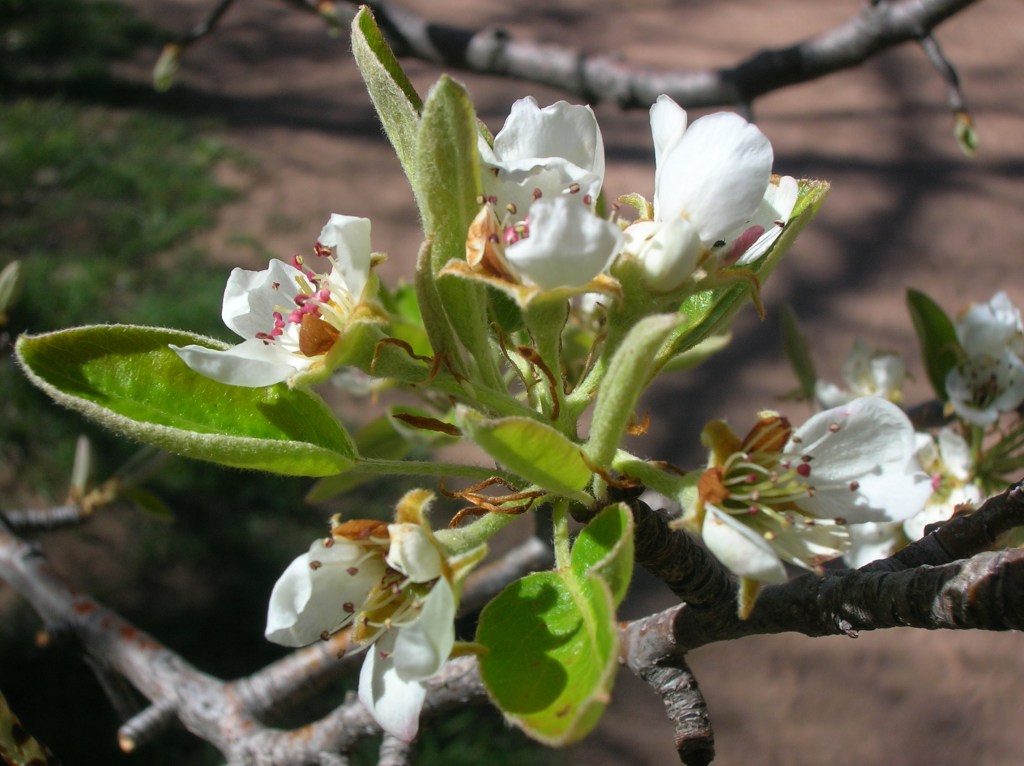
Hiking Trail inside Coconino NF, Arizona

The Coconino National Forest played a key role in my selection of northern Arizona.  Humphrey’s Peak, which tops out at 12,633 feet and is sometimes snow-capped for long periods, can be seen throughout much of the forest, and became iconic in my mind.  Between the time I first felt at home here & the year I was able to become a resident, I missed Mt. Humphrey’s like a far-away loved one.  The forest has plentiful hiking trails and encompasses the country’s largest stand of Ponderosa Pine Trees.  With a climate similar to that of northern New Mexico, Aspens, Spruce, Firs, and Junipers can be found here, as well as a few ancient Bristlecone Pines and Cypress trees. Due to a great number of blooming trees and bushes, Springtime delivers an intoxicating fragrance to the air.  As a bonus, the Red Rock-Secret Mountain Wilderness is part of the forest, running parallel with Oak Creek between Flagstaff and Sedona.  This part of Red Rock Country is not as touristy as Sedona proper, yet its beauty could be superior.
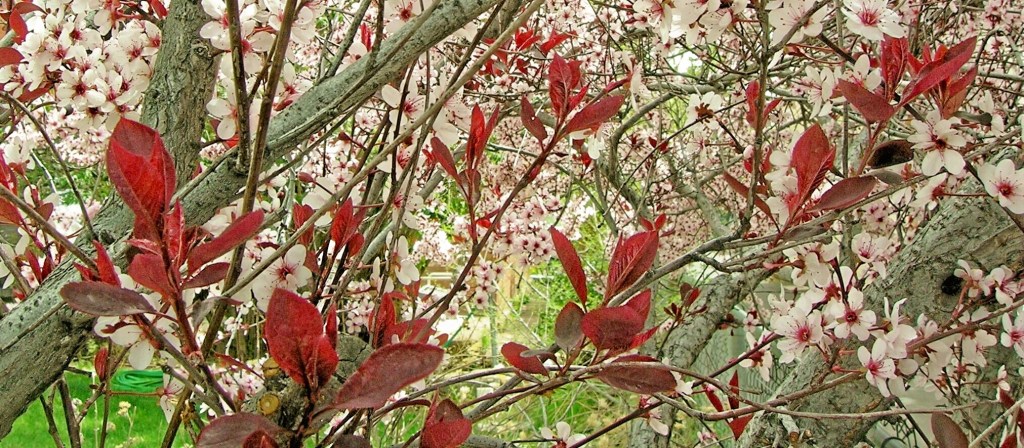
A warm hike inside Dixie National Forest, Utah

Speaking of red rocks, southern Utah has its share inside Dixie National Forest.  From the first time I explored the area, I was struck by the gorgeous contrast between the burnt red of many of its rocks and the bold greens of surrounding trees, bushes, and grasses.  I’ve done quite a bit of hosteling, camping, hiking, and exploring of National Parks in and around the forest.  Bryce Canyon NP’s many hoodoos are unlike anything I’ve ever seen.  The simple act of driving through the beauty of Zion NP is a soothing experience, and hiking is even better.  Arches NP has some really unusual red rock formations, including, of course, arches!  Dixie National Forest’s desert-type terrain is dotted by plants, lakes and streams.

I absolutely believe in a greater spiritual power, far greater than I am, from which I have derived strength in moments of sadness or fear. That’s what I believe, and it was very, very strong in the forest. ~Jane Goodall

Bridger-Teton National Forest, Wyoming

Further north and east lies the state of Wyoming.  After my first time driving almost the entire length of the state thinking what’s all the fuss about?, I came to the Bridger-Teton National Forest.  The nagging question disappeared from my mind, replaced by Oh, my . . . wow! . . . gorgeous!  The area contains 7 of the world’s largest glaciers, hundreds of alpine lakes, and a number of sweeping valleys.  Many headwaters can be found in the forest, including Two Ocean Creek, which is split by the Continental Divide to eventually make its way to both the Atlantic and Pacific Oceans.  The Grand Tetons are part of this stunning forest.  Considered an adolescent range due to their age of 10 million versus the Rockies’ 50-80 million years, the Tetons have experienced much less erosion, which accounts for their jagged tops.

Bridger-Teton NF, Wyoming

This post would not be complete without mention of Los Padres National Forest in California, which includes the breathtaking coast of Big Sur.  This forest includes over 200 hiking trails, 100 peaks, 150 springs, and almost 300 camping areas.  Impressive, huh?  If you ever visit the area, you will never forget its extraordinary beauty.  My first visit involved a month-long work-study program at Esalen Institute.  Each morning, I walked among the trees near the cliffs of the Pacific Ocean from the boarding house to the main property, taking photos & imprinting on my soul the aesthetics of this wondrous forest by the ocean.

Pacific Coast Hwy shrouded in fog, Los Padres NF, California

What an irony it is that these living beings in whose shade we sit, whose fruit we eat, whose limbs we climb . . . are so poorly understood. We need to come, as soon as possible, to a profound understanding and appreciation for trees and forests and the vital role they play, for they are among our best allies in the uncertain future that is unfolding. ~Jim Robbins, author of The Man Who Planted Trees: Lost Groves, Champion Trees, and an Urgent Plan to Save the Planet

Forests have indeed changed my perception of myself and that of the world.  I have no doubt now that I belong; I am a part of Nature, as are you.  During my many hours among the trees, I have come to know a healing embrace: that of our Primal Mother.

Blessings for Forest Healing,

Lisa

The content of this article is for educational and informational purposes only, and is not intended as medical advice. Please consult with a qualified health care professional before acting on any information presented herein. Any statements about the possible health benefits of any subject discussed have not been evaluated by medical professionals or the Food & Drug Administration and are not intended to diagnose, treat, cure or prevent any disease or illness.