Working Toward Oneness: Meditation

Attention to the present moment can be most gratifying

After a 14-year hiatus, I have reestablished a daily meditation practice.  It  is part of a deep Ayurvedic cleanse I’m doing, and its purpose is to release stored emotions. After only 3 weeks, I’m already experiencing positive results; I no longer feel the stress of getting things done at a hurried pace.  My daily mode of living had become a super-stressful rush, rush, rush to do everything.  I’m not sure why.  But what a relief to leave the race behind!

Looking through past posts, I see that I’ve touched on meditation in 10 of them.  In 5 Little Known Secrets for Looking & Feeling Younger, I reference the work of Dr. Deepak Chopra, who discusses the hormone DHEA. He says this chemical that improves muscle & bone strength and reduces body fat & skin atrophy is often depleted over a lifetime, but can be found in elevated levels in meditators of all ages.  In Awaken Your Healer Within, I shared Dr. Roger Jahnke’s explanation that the lowered brain activity and reduced blood pressure resulting from meditation can help neutralize the effects of stress on the body and heal disease.  And in Mindfulness: What’s In It for Me?, I wrote that over 200 studies show mindfulness practices including meditation are effective at boosting immune function, decreasing chronic pain, helping with depression, improving relationships, and even ameliorating addictive behaviors. I’ve long known how beneficial the practice is.  I’m not sure why it took me such a long time to get back into it.

Meditation has been practiced for thousands of years, and is referenced in texts across philosophical and religious traditions.  I’m sure I’ve mentioned this before, but practices that are around for such prolonged periods survive because they are effective.  In fact, Dr. Kulreet Chaudhary, integrative neurologist and author of The Prime: Prepare and Repair Your Body for Spontaneous Weight Loss, describes meditation as a daily brain detox, and states that it is indisputably a beneficial practice which will change your life.

I put a lot of pressure on myself to understand & do things correctly, so I was grateful to find the YouTube video Debunking the 5 Most Common Meditation Myths.  In it, I learned that the wondering of the mind does not take away from the benefits of the practice; it may in fact help.  I do hope you’ll check out the clip if you’re feeling either discouraged in your practice, or set on your inability to meditate because your mind is too active.

Maybe you’ve never tried a meditation practice, or it’s been a long time since your last attempt.  In this Healthline article, 9 types of meditation are listed, along with descriptions of each.  Maybe you can find one that’s a good fit for you.  Also, YouTube has plenty of guided meditations, many of them less than 5 minutes long.

I’m excited to be experiencing the profound benefits of my new meditation practice.  Will I continue after the cleanse is complete?  Absolutely.  With all its physical, mental, and emotional benefits, I can hardly wait to see the next positive change!

Blessings for Stillness,

Lisa

The content of this article is for educational and informational purposes only, and is not intended as medical advice. Please consult with a qualified health care professional before acting on any information presented herein. Any statements about the possible health benefits of any subject discussed have not been evaluated by medical professionals or the Food & Drug Administration and are not intended to diagnose, treat, cure or prevent any disease or illness.

Very Cheesy Vegan Ziti

It’s recipe time again!  I always look forward to these weeks because they stir my creativity in the kitchen, and I’m excited to share the results with you.  This week, I’ve prepared a dish that I’ve been considering since late last year!  I have been hesitant (maybe lacking confidence) because it’s the veganization of a delicious recipe by Mollie Katzen from Moosewood.  Back in my dairy-eating days, it was a favorite cool-weather dish.  Her recipe calls for butter, cottage cheese, cheddar, and buttermilk, and is called Macaroni & Cheese Lite.  (Her recipe was lite as compared with the recipe from which it was adapted.)

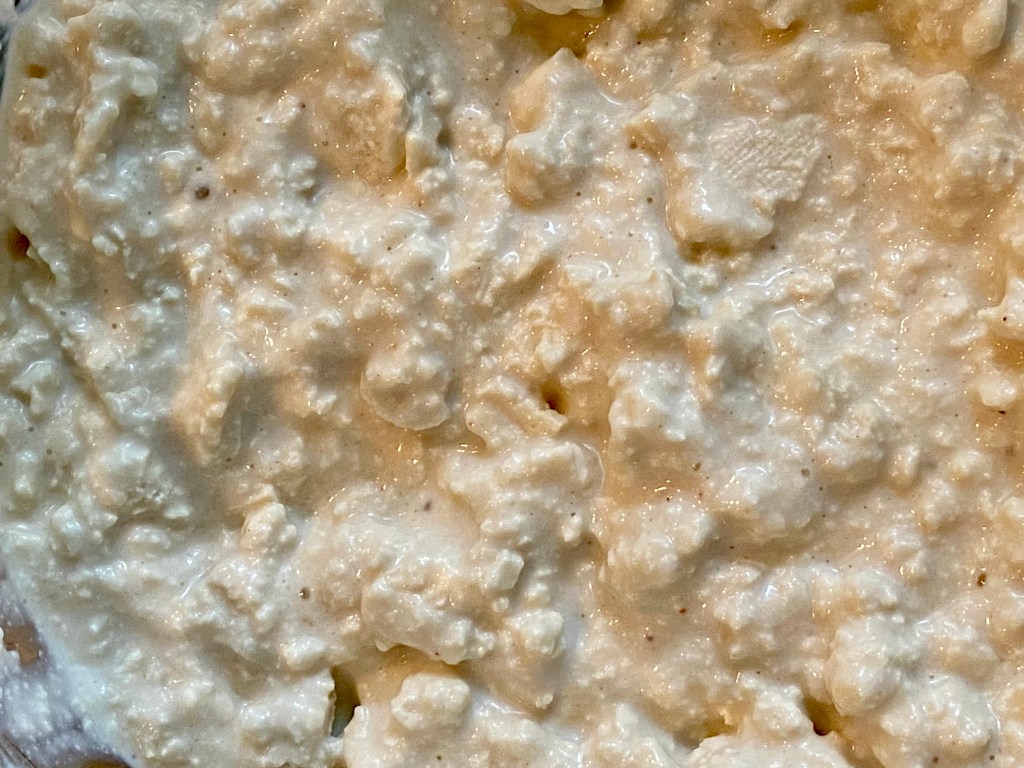
I’ve mentioned in past posts that I’ve found lots of really good subs for different types of cheese.  Cottage cheese is my latest discovery.  The first formula I tried was bad, I mean not even close.  Usually, I can salvage things that don’t turn out well by adding a little more of this or that, but this went right into the compost bin.  Thankfully, I found a version at Ela Vegan that is similar to real cottage cheese in both taste & texture, and I knew I could go forward with Mollie’s recipe once I tasted it.

While I’m giving credit, my super-tasty cashew sour cream was modified slightly from Angela Liddon’s recipe at Oh She Glows.

It would be easier if I used ready-made packaged vegan cheeses, of course.  But my body doesn’t like them.  If the difference between your trying my recipe and not trying it hinges on it, please use ready-made products!  (And because this is a big recipe, you might want to save it for the holidays, when others might be around to help you devour it & clean up afterwards!)

Cheese was one of the last things I gave up to become completely vegan.  I loved cheese, and I know many of you do.  But it’s unhealthy for so many reasons.  In the US, cheese often contains antibiotics, hormones, pesticides, herbicides, and other dangerous chemicals, all results of industrialized farming.  (And let’s not forget the inhumane treatment of the animals involved.)  Additionally, pasteurization of the milk followed by further heating in the cheese-making process kills many of the live enzymes that are essential for proper digestion and assimilation.  Making matters worse is the fact that it’s a mucus-producing food.  And although it has a great deal of calcium, cheese is acidic on the pH scale, and research shows that acidic foods can result in a very high excretion of calcium through urine, resulting in lower bone density.  (So, no, dairy is not good for healthy teeth & bones!) I could go on, but let me just wrap it up by mentioning that cheese and other dairy foods, due in large part to the inflammation they cause, can contribute to obesity as well as many other chronic diseases.

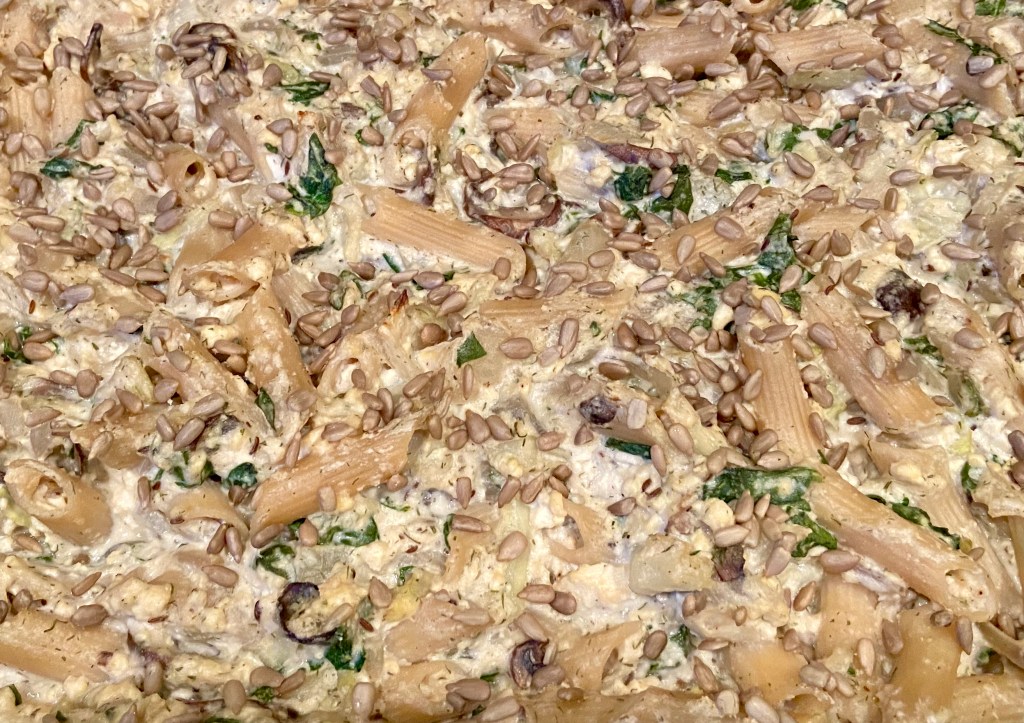
Back to the recipe.  I haven’t mentioned how yummy my veganized version is.  I believe Mollie herself would approve!

Very Cheesy Vegan Ziti

Yield: 6 – 8 servings

Ingredients (use all organic or non-GMO if possible)

For the cottage cheese: make an hour ahead of the rest & refrigerate
8 – 10 oz firm tofu, drained
1/2 cup vegan unsweetened yogurt
1/2 tsp Himalayan salt
1/4 tsp onion powder
1/4 tsp garlic powder
1 1/2 tsp white vinegar
1 tsp nutritional yeast

For the cashew sour cream:
1 cup cashews, soaked for 2 hours for easier processing
1/2 cup water (or as needed to achieve desired consistency)
3 tbsp fresh lemon juice
heaping 1/4 tsp Himalayan salt, or to taste

For the rest:
oil for the baking dish
salted water for boiling pasta
2 tbsp olive oil
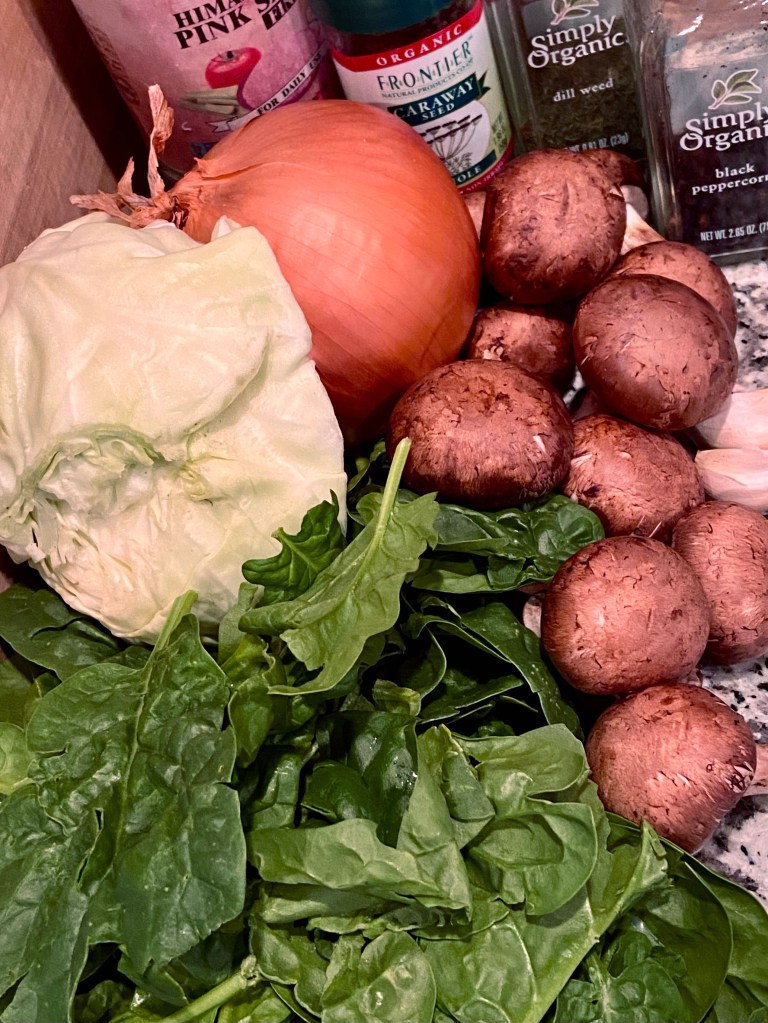
2 cups yellow onion, small diced
3 med cloves garlic, minced
1/2 lb cremini mushrooms, sliced
4 cups green cabbage, shredded
1 tsp Himalayan salt
1 1/4 tsp caraway seeds
3 handfuls fresh spinach, chopped
12 oz ziti
all of cottage cheese from recipe provided
all of cashew sour cream from recipe provided
1/2 cup vegan yogurt
2 tsp dried dill
fresh ground black pepper to taste
handful of sunflower seeds

Directions

Make the cottage cheese at least an hour ahead of time & refrigerate to allow flavors to marry.  In a medium bowl, crumble the tofu, leaving plenty of texture to mimic curds.  In a smaller bowl, whisk together the rest of the cottage cheese ingredients.  Pour the liquid mixture over the tofu, stir gently to combine, and taste for salt.  Chill for at least 1 hour prior to using.

For the cashew sour cream, if you have soaked your cashews, drain them well.  Add them, the 1/2 cup water, lemon juice, and salt to a small food processor & spin until completely smooth.  Taste for salt, lemon, & consistency.

Heat your oven to 350 F & lightly oil a 9 x 13 inch baking dish.  Get the water started heating for the pasta.

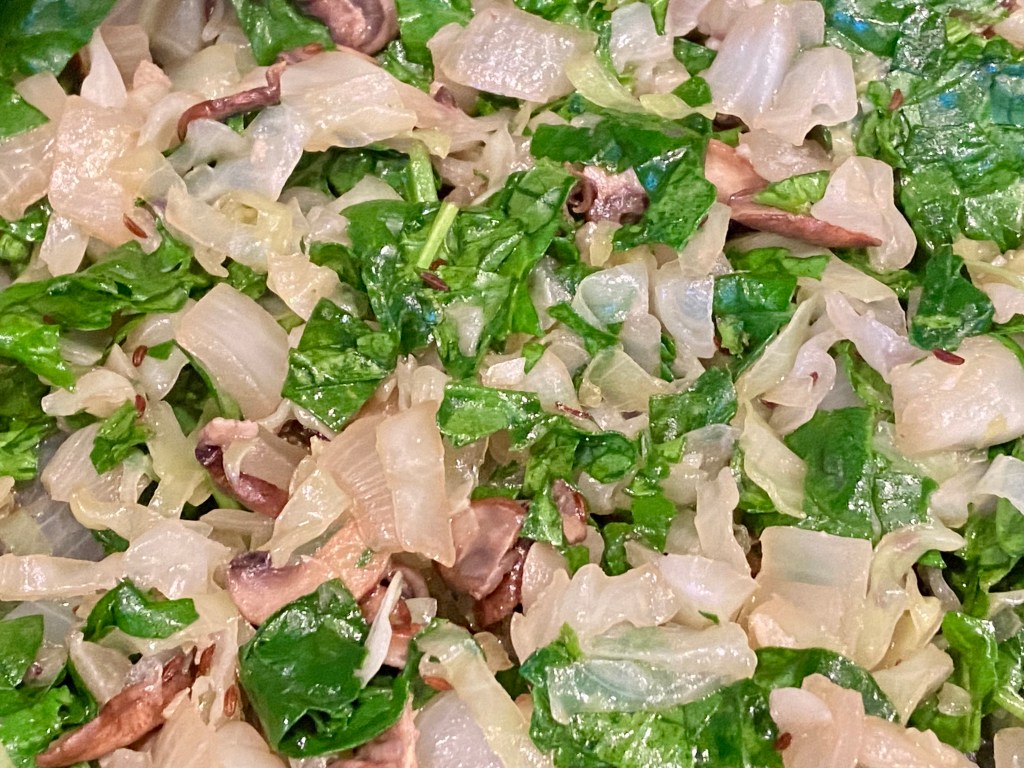
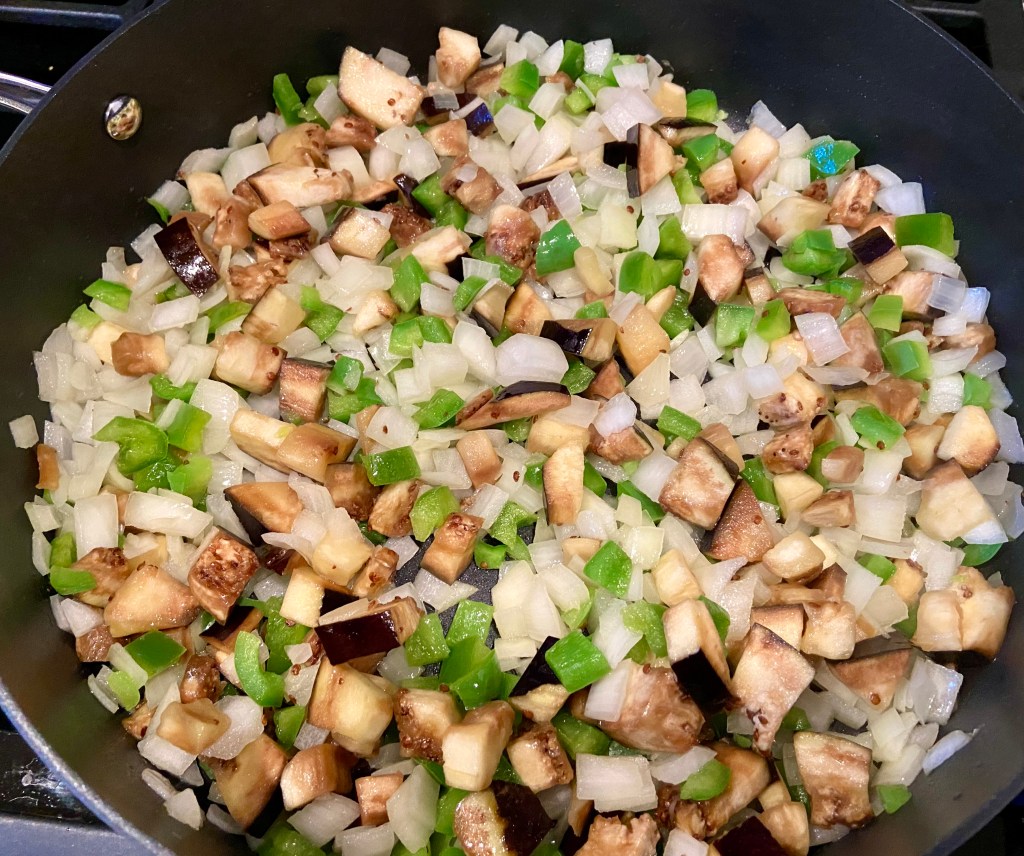
Sauté the onions in the oil on medium heat in a large sauté pan for 5 minutes.  Add the next 5 ingredients (garlic – caraway seeds,) stir, and cover.  Cook until the cabbage is just tender, about 10 minutes, stirring every few minutes.  (If your stove is like mine, you may need to turn the heat down to med-low.)  Stir in the spinach and remove from heat.

Cook the pasta about 1 – 2 minutes less than your package directions, until barely tender.  (It will cook more in the oven.)  Drain well.  Place in a large bowl and stir in the sautéed veggies.  Add the next 5 ingredients (cottage cheese through black pepper,) stirring gently but thoroughly.  Taste for salt & other seasonings. Pour into your baking dish and sprinkle sunflower seeds evenly over the top.  Bake for 30 minutes.

Enjoy!  And please let me know if you give it a try! 😊

The content of this article is for educational and informational purposes only, and is not intended as medical advice. Please consult with a qualified health care professional before acting on any information presented herein. Any statements about the possible health benefits of any subject discussed have not been evaluated by medical professionals or the Food & Drug Administration and are not intended to diagnose, treat, cure or prevent any disease or illness.

The Gift of Rumi

All images in this post are from New Mexico

Why do you stay in prison
When the door is so wide open?
Move outside the tangle of fear-thinking.
Live in silence.
Flow down and down in ever
widening rings of being
. ~Rumi

Recently, I watched Rumi: Poetry of the Heart, a short documentary in which teachers, historians, and American translators shared some important events from the poet’s personal life.  Eight hundred years after being composed, Rumi’s translated works are the best-selling poetry in the US. Among the many things we Americans choose to collect, this is truly a gift.

Jalal ad-Din Muhammad Rumi was born in 1207 in present-day Afghanistan, at the time a part of Persia.  His father was a Sufi teacher, and immersed his son in the teachings of Islamic mysticism.  Upon his father’s death, Rumi, at 25 years of age, stepped into his father’s teaching role, amassing many followers.  Twelve years later, his life was changed by a wandering stranger, Shams of Tabriz, who challenged the scholarly educator with the idea of putting aside his books to experience the life in his teachings.  Shams is credited with inspiring Rumi to create many of the beautiful verses we know today.

Why should I seek?
I am the same as He.
His essence speaks through me.
I have been looking for myself!
~Rumi

According to Coleman Barks, an American translator who worked with a Sufi master for 9 years, Rumi’s sense of the Divine is the jewel-like quality of our inner awareness.  It is reflected in a baby’s smile, in natural beauty, and even in a group of friends sharing a meal.  

Years ago, I bought an exceptional recording, A Gift of Love: Music Inspired by the Love Poems of Rumi.  It’s one of those collections that requires more than one play – when I listen to it, I have to hear it again every day for a week or more.  I can’t describe how it opens my heart, elevates my spirit, and encourages me to ponder spiritual truths. This partial poem is from that recording:

From the beginning of my life
I have been looking for your face
but today I have seen it.
Today I have seen
the charm, the beauty,
the unfathomable grace
of the face
that I was looking for.
Today I have found you
and those who laughed
and scorned me yesterday
are sorry that they were not looking as I did.
I am bewildered by the magnificence
of your beauty
and wish to see you
with a hundred eyes.
My heart has burned with passion
and has searched forever
for this wondrous beauty
that I now behold. 
~Rumi

An opinion shared by all those featured in the documentary is the reason for Rumi’s modern popularity: truth.  The ways in which the poet intertwined spiritual truth and beauty speaks directly to the heart.

At night, I open the window
and ask the moon to come
and press its face against mine.
Breathe into me.
Close the language door and open the love window.
The moon won’t use the door, only the window.
~Rumi

Since first hearing his work, Rumi has been far and away my favorite poet.  I find it encouraging that the American population is embracing the writings of this ancient mystery tradition teacher.  Our culture’s need for love, beauty, and truth has never been greater.

Poetic Blessings,

Lisa

The content of this article is for educational and informational purposes only, and is not intended as medical advice. Please consult with a qualified health care professional before acting on any information presented herein. Any statements about the possible health benefits of any subject discussed have not been evaluated by medical professionals or the Food & Drug Administration and are not intended to diagnose, treat, cure or prevent any disease or illness.

Interdependent by Design

The whole idea of compassion is based on a keen awareness of the interdependence of all living beings, which are all part of one another, and all involved in one another.  ~Thomas Merton

Merriam-Webster defines the term interdependence as the state of being dependent upon one another.  Examples are given for interdependent economies as well as little universes we call ecosystems.  On a macro level, coronavirus has shown us just how interdependent we all are.  On a micro level, the workings of this concept are not always as evident.

All photos in this post were snapped in California

For example, we humans host an ecosystem in our guts called the microbiome.  That community consists of trillions of microbes that help digest food, extract nutrients, build or diminish the immune system, and inform the brain.  The microbiome is interdependent with every other system in the body, a fact which should be considered when any kind of health issue or disease presents itself. 

Similar to our hosting of this internal ecosystem, Nature hosts humans within an external ecosystem.  We depend on soil, plants, the ocean, and animals for our basic needs.  Soil, like our microbiome, is an ecosystem unto itself.  The life in our soils determine the health of our plants.  (Read about our struggling soils here.)  Plants release oxygen, absorb carbon dioxide and have the ability to clean our toxic wastes.  Our oceans’ seaweed is responsible for producing even more oxygen than land plants.  (Both rainforests and oceans are referred to as the lungs of the planet.)  Animals play an important role in controlling the population of other animals as well as inhibiting plant overgrowth. And domesticated animals, as you know, can provide us with wonderful companionship and unconditional love.  By caring for all of life, we are interdependently supporting the soil, plants, oceans, and animals that sustain us.

In her book Symbiosis in Cell Evolution: Life and Its Environment on the Early Earth, microbiologist Lynn Margulis writes about an important process undertaken by ancient bacteria.  About 2 billion years ago, she explains, bacteria covered our planet.  To complete their life processes of respiration, photosynthesis, and fermentation, they utilized natural resources alongside other bacteria.  When the number of bacteria increased, forcing resources to go further, the bacteria found themselves in crisis. Their once peaceful ways of living changed, fueled by the fear of scarcity.  Many of them struggled.  (Does this remind you of the human story?) Because it became evident that none of them would survive if this competitive way of living continued, they realized the need for interdependence.  Due to making a shift which was better for all, their kind is still around today, living in cooperatives known as nucleated cells. 

The interdependence of biological systems offers strong evidence for intelligent design. They function synergistically in such a way that the sum of their actions is greater than the addition of separate, individual actions. ~CreationWiki

We were intelligently conceived to thrive in cooperation with all forms of life, including soil, plants, other animals, the ocean, and all of humankind.  Now more than ever, understanding the concept of our interdependence with the whole, and living in a way that honors it, is needed to ensure our perpetuation on the planet.

Blessings for Embracing Interdependence,

Lisa

The original version of this post was shared in November of 2020.

The content of this article is for educational and informational purposes only, and is not intended as medical advice. Please consult with a qualified health care professional before acting on any information presented herein. Any statements about the possible health benefits of any subject discussed have not been evaluated by medical professionals or the Food & Drug Administration and are not intended to diagnose, treat, cure or prevent any disease or illness.

The Gift Economy

When I was a small girl in the Southern US, my Grandmother kept a sizable vegetable garden, a large number of chickens, a few cows, and several pigs. My memories of time in the garden and with the animals outnumber any others from those days.  I befriended one of the chickens, actually a rooster, who would sit in my lap & allow me to pet him.  And I helped slop the hogs many evenings, although I never got too close to them or the cows, for fear of being bitten or stepped on.

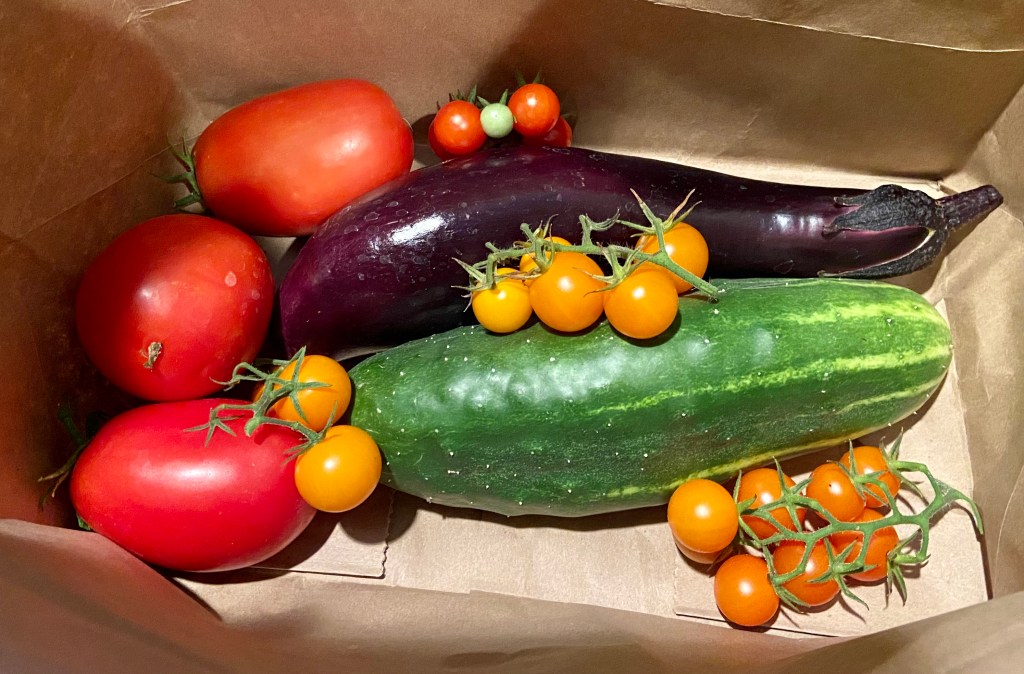
A bounty recently shared from a neighbor’s harvest

When it came time to harvest, some vegetables were canned or placed in my granny’s deep freeze, and some went to family members, neighbors, and friends.  This sharing also took place when one of the animals was slaughtered.  And folks were always bringing by free baskets of beans, corn, apples, berries, and jars of freshly made jam.  I didn’t know I was witnessing a gift economy; that’s just the way things were done.  

In a recent essay in Emergence Magazine, Robin Wall-Kimmerer, State University of NY Distinguished Professor of Environmental Biology and the Founder and Director of the Center for Native Peoples and the Environment, considers a similar gift economy as she’s picking Serviceberries, also called Juneberries.  These unique fruits are enjoyed not only by her and her neighbors, but also many other citizens. It is a preferred browse of Deer and Moose, a vital source of early pollen for newly emerging insects, and host to a suite of butterfly larvae—like Tiger Swallowtails, Viceroys, Admirals, and Hairstreaks—and berry-feasting birds who rely on those calories in breeding season, she writes.

Kimmerer names the essential gifts received by the tree in return for this bounty of sweet berries, stating its economy is based upon reciprocity rather than accumulation, where wealth and security come from the quality of relationships, not from the illusion of self-sufficiency. Without gift relationships with bees and birds, Serviceberries would disappear from the planet.  All flourishing is mutual, she sets forth.

Wildflowers in Kachina Peaks Wilderness, Northern Arizona

Generosity is a major theme of the essay.  In past posts including The Generosity of Plants and Wildflowers: Resilience, Beauty, & Grace, I have written about benefits of altruism in the plant world.  And human studies show that generosity can boost immune function, reduce stress, improve mental health, and prolong life.  

I am blessed to be a part of a gift economy with a small group of neighbors & friends, with whom I exchange garden veggies, nuts, farmers market picks, flowers, holiday goodies, and help with snow removal & cat sitting. They are always willing to lend a helping hand, and vice versa. But since childhood, I have seen less and less of this good-hearted reciprocity.  I believe the inflation and short supply of goods and services (in the US) brought about by covid has resulted in a population consumed with thoughts of scarcity.  But must fear prevent us from establishing a strong, loving community?  

Kimmerer has the perfect antidote for this fear: naming the world as a gift.  She explains: Conceiving of something as a gift changes your relationship to it in a profound way.  She gives an example of a hat knitted by a beloved auntie vs. one bought at a store, saying that you’re much more likely to take better care of the hand-knitted one because it is knit of relationships. She continues, this is the power of gift thinking. I imagine if we acknowledged that everything we consume is the gift of Mother Earth, we would take better care of what we are given.  To name the world as gift is to feel one’s membership in the web of reciprocity. It makes you happy—and it makes you accountable.

Reading Kimmerer’s essay makes me even more appreciative of those practices from my formative years, based on the infinitely renewable resource of kindness, which multiplies every time it is shared rather than depreciating with use, in her words.  (To sample more of her writing, check out my post Does the Earth Love You?)

I hope your heart, like mine, has been opened by sharing in Kimmerer’s knowledge and ideas.  May our inspiration and collective willingness to participate more fully in a gift economy be spurred to create a kinder world. 

Blessings for Shared Abundance,

Lisa

All flourishing is mutual. ~Robin Wall-Kimmerer

The content of this article is for educational and informational purposes only, and is not intended as medical advice. Please consult with a qualified health care professional before acting on any information presented herein. Any statements about the possible health benefits of any subject discussed have not been evaluated by medical professionals or the Food & Drug Administration and are not intended to diagnose, treat, cure or prevent any disease or illness.

Aspects of Autumn

If I were a bird, I would fly about the Earth seeking the successive autumns. ~George Eliot

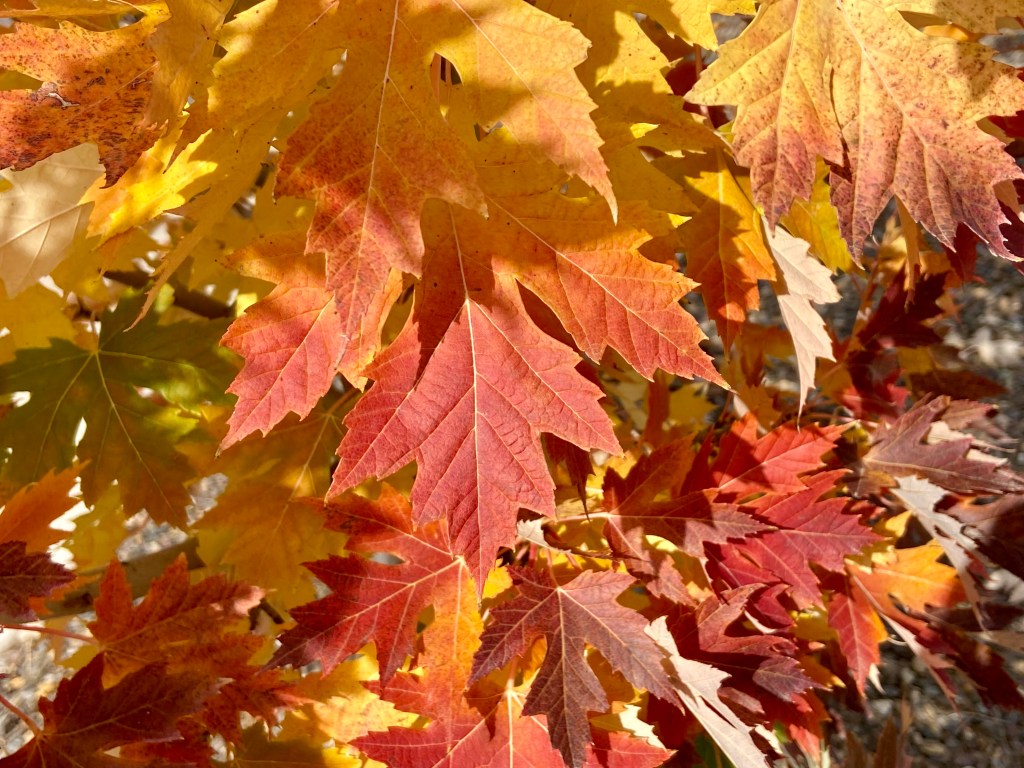
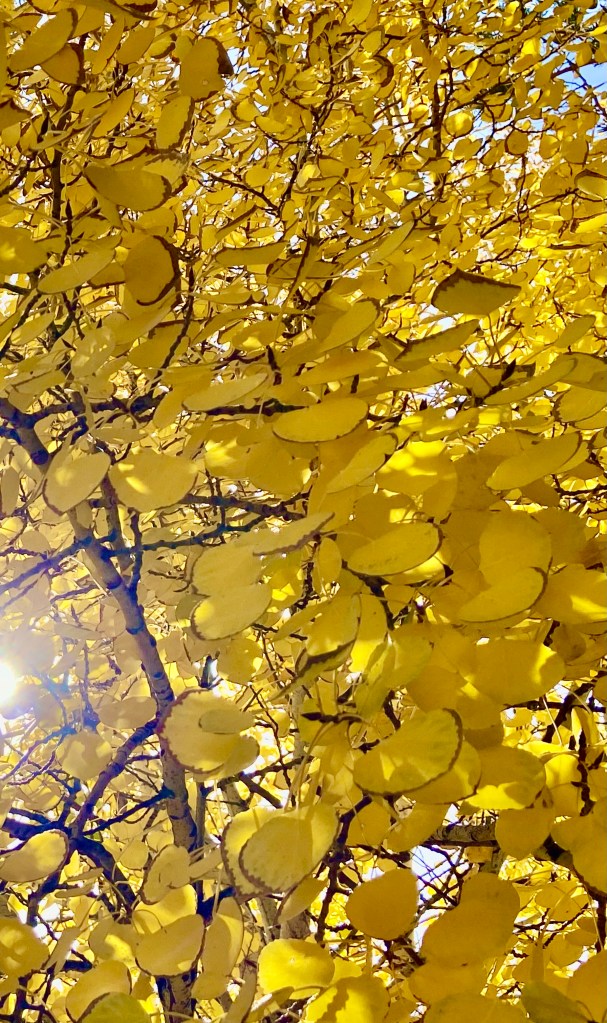
Fall hasn’t always been my favorite season.  As a kid, I loved Summer, when school was out, more than any other.  (Maybe that’s true for everyone?) As I got older, vibrant colors & cooler temperatures started having a stronger pull on me.  Now in the hottest of the hot days of Arizona’s summer, I long for the gentle qualities of Autumn.

Lord: it is time. The summer was immense.
Lay your shadow on the sundials
and let loose the wind in the fields.

Bid the last fruits to be full;
give them just two more southerly days,
press them to ripeness, and chase
the last sweetness into the heavy wine.

Whoever has no house now will not build one.
Whoever is alone now will remain so for a long time,
will stay up, read, write long letters,
and wander the avenues, up and down,
restlessly, while the leaves are blowing.
~Rainer Maria Rilke

Dr. Vasant Lad, the Ayurvedic Physician largely responsible for bringing Ayurveda to the US, says that the autumnal change that happens in Nature also occurs in the human body.  Trees pull in energy from their leaves which results in their coloring & eventual falling.  In a similar manner, the human body pulls in energy, which can result in a feeling of ungroundedness as well as insomnia, dry skin, painful joints, constipation, bloating, and ringing in the ear.  Moisturizing from both the outside & inside is necessary to help with these maladies.  In this clip, Dr. Lad shares methods for applying moisturizing oils and explains how they benefit us.  During this cold, dry Vata season, we also benefit from eating heavier, sweet, and cooked whole foods, including soups with warming spices, and avoiding raw foods.

I notice that Autumn is more the season of the soul than of nature. ~Friedrich Nietzsche

Because this is my second post on this gorgeous season (go to this link for the first), I simply want to share some of my favorite things about Fall.  

Nature’s colors are at the top of the list, but not just those of the leaves.  I also enjoy the many shades of gourds that appear at the market this time of year.  And I’ve seen brilliant hues of wild mushrooms on recent hikes.

We don’t eat many desserts, but Autumn finds me making more sweet treats.  Same goes for foods like casseroles, baked ziti, and stuffed veggies.

Just the thought of apple cider (which I’ll make at home this year for the first time) and chai (see my recipe here) make me warm!  I feel these spiced concoctions are musts for the season.  And they can make the house smell delightful for days!

I love wearing beanies, scarves, and boots.  Even if I don’t don a coat, these 3 are essentials for me in cooler months.

And who doesn’t love the holidays?!  Planning what foods to cook, considering invitations, cards, and gifts – I look forward to these preparations each year.  And we always take a winter vacation, usually on the Atlantic or Pacific Coast. When going someplace new, my planning includes reading guidebooks to make sure we don’t miss anything!

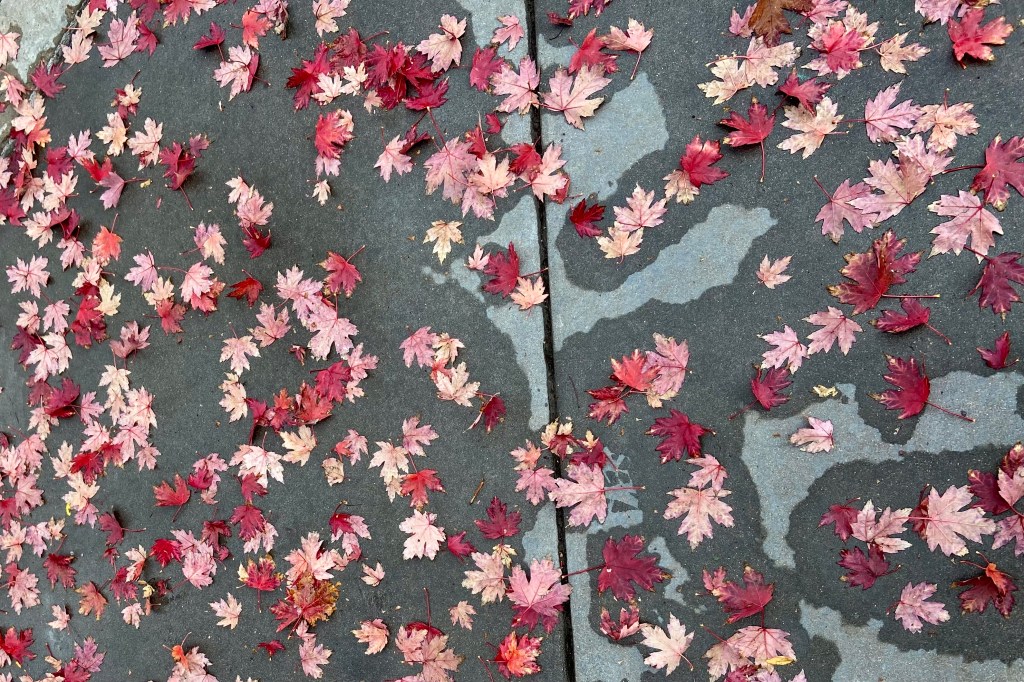
Sidewalk art

As long as autumn lasts, I shall not have hands, canvas and colors enough to paint the beautiful things I see. ~Vincent Van Gogh

I hope your heart, like mine, is filled by the joy and beauty this glorious season imparts. And I wish you the good grace to embrace & work with the changes it brings in mind and body.  

Warmest Fall Blessings,

Lisa

This little guy is at the top of a large bush trying to get to the bird feeder after we lubed the pole to prevent him & his buddies from climbing up & emptying it!

The content of this article is for educational and informational purposes only, and is not intended as medical advice. Please consult with a qualified health care professional before acting on any information presented herein. Any statements about the possible health benefits of any subject discussed have not been evaluated by medical professionals or the Food & Drug Administration and are not intended to diagnose, treat, cure or prevent any disease or illness.
5 Ideas to Reduce the Cost of Travel

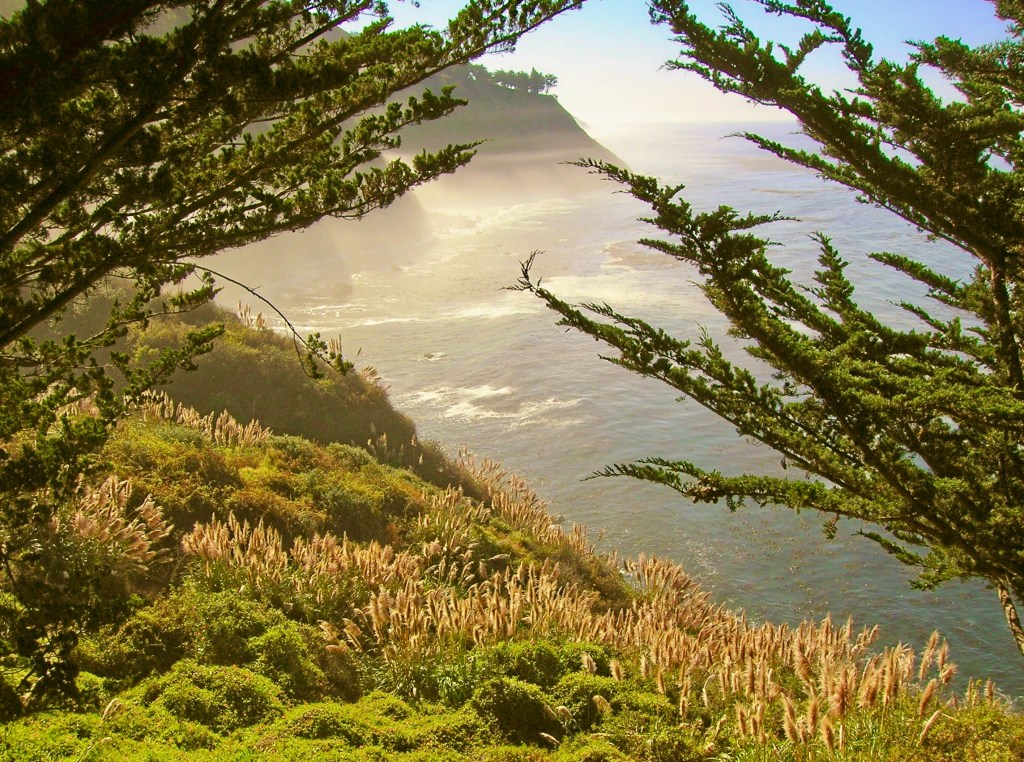
An unusually gentle view of the California coast

Other than airfare, (which, unfortunately, has gone through the roof over the past couple years) lodging is usually the biggest expense when traveling.  Hotel stays are pretty pricey, so unless you have friends and family all over or a home on wheels, you might be finding the cost of traveling prohibitive these days.

Just as the fog burns off

There are alternatives.  With an open mind and a sense of adventure, you can still enjoy exploring new lands without paying an arm and a leg.  And you will come home with stories unlike any you’ve shared in the past!

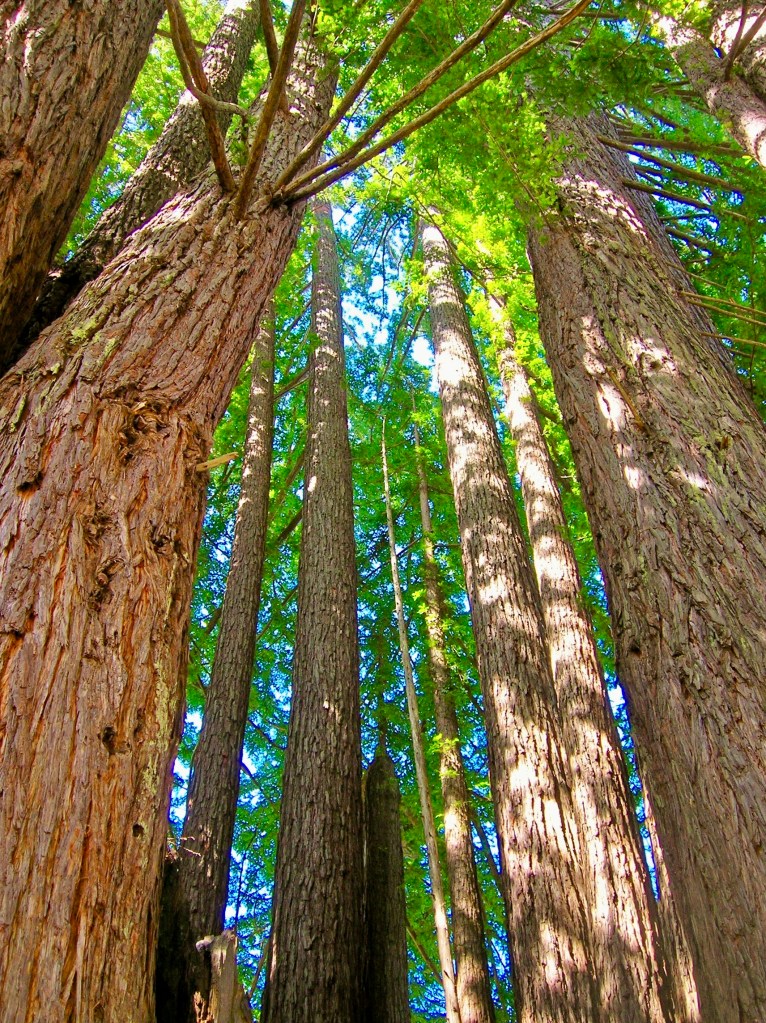
Redwoods

Below you will find some of my best suggestions.

  1. Sleep in your tent.  There’s nothing quite like sleeping outside, with only a thin sheet of material between you and the stars (and a queen-size inflatable mattress between you and the ground!)  Through the years, I’ve stayed in my tent at State and National Parks, as well as on Public Lands.  Hiking new trails each day, photographing extraordinary Nature scenes, building sweet-smelling campfires at night, and listening to the gentle thump of raindrops before falling asleep are a few of the wonderful memories I’ve collected.  There is usually a small fee for a campsite, and, if not reserved in advance (which can be done online at the Park’s website), they are typically first-come-first-serve.  
  2. Stay in a hostel.  Fellow hostelers are some of the nicest people I’ve ever met.  I bunked with a young woman at a San Francisco hostel who later hosted me at her home in Germany, and a gal from London whom I got to know at a Kanab, Utah hostel met up with me in Paris, where we stayed in, yes, a hostel.  You can opt for a private room (the most expensive option, but still a fraction of the price of a hotel room) or a shared dorm room (the least expensive.)  Everyone shares the living area & kitchen.  Sometimes you share a bathroom.  Often, a hostel stay will include the opportunity for tours, various activities in a game room, and even food for purchase.  I recommend reserving your stay directly or through HostelWorld.com.
  3. Teach English as a foreign language.  Although I didn’t try this one, I came very close.  I researched a position in Chile & was learning Spanish through Rosetta Stone.  (Before committing, I decided that I was much more excited to explore the western half of this country.) However, I have a friend who taught EFL for many years, working in countries in Europe and the Middle East.  She loved the experience and is still in contact with many of her students.  If you’re interested, The TEFL Academy is a reputable organization.
  4. Do a different kind of work exchange.  I’ve participated in work exchanges twice in California and once in Upstate New York.  At Esalen in Big Sur, I paid a reasonable amount in addition to working part-time for room, board, and classes.  At Ratna Ling in California’s redwoods, room and board were payment for my 6-day workweek.  At Omega Institute, which is 90 minutes north of NYC, I worked 32 hours a week and received a small stipend in addition to room, board, and classes.  Check out CoolWorks.com to see the wide variety of possibilities available.
  5. Stay at an ashram, mission, or monastery.  Again, this is not something I’ve done, but looked into & met folks who’ve experienced it.  (And I have every intention of staying at the ashram in Taos, New Mexico at some point!)  This type of stay is not for everyone, as it is often necessary to observe periods of silence, keep your shoulders covered, or other protocol.  But costs are minimal, and you can often work in the kitchen or garden to offset part of your stay.  For more information, call directly or check out a few monasteries at this link.
The waterfall at Julia Pfeiffer Burns State Park

There is a world of reasonable lodging options available to the traveler willing to try something new and different.  Don’t let today’s high prices of most everything keep you from visiting new destinations.  Look into some of these alternative ideas, or explore some of your own.  Happy traveling! 

Traveling south from Big Sur

Blessings for Traveling on the Cheap,

Lisa

The content of this article is for educational and informational purposes only, and is not intended as medical advice. Please consult with a qualified health care professional before acting on any information presented herein. Any statements about the possible health benefits of any subject discussed have not been evaluated by medical professionals or the Food & Drug Administration and are not intended to diagnose, treat, cure or prevent any disease or illness.

Kitchen-Crafted Broth

This broth would be great in my bok choy souprecipe here

I recently had a conversation with a member of my climbing gym’s staff about making broth.  (Yes, I’ll talk about food & nutrition with anyone!)  His version, which calls for fresh vegetables, sounded delicious.  My recipe is a bit different, using leftover pieces of veggies collected & frozen over a period of months.  And I have to say, it’s the best broth I’ve ever tasted.

I defrosted my bag of veggies, but it’s not necessary

I like using homemade broth over store-bought not only because it tastes so much better, but also because it helps keep those broth boxes from ending up in a landfill.  Good broth is essential in so many recipes, especially during the upcoming holidays.  Now’s a great time to start saving the scraps needed for a big batch.  I make it throughout the year so I’ll always have some on hand to use in soups, risotto, and casseroles.

It also works well with my Asian Veggie Noodle Soup – recipe here

Anytime I cook with mushrooms, I break off the (washed) stems and place them in a gallon bag kept in the freezer.  At some point, I’ll add the green parts from 2 leeks.  When the bag gets full after a few months, it’s time to make this yummy concoction!

Throughout history, a variety of these edible fungi have been used medicinally.  They are a good source of vitamins and minerals, and studies show that mushrooms can help protect the brain from cognitive impairment, boost gut health, and reduce cancer risk.

It’s gonna taste sooooo good!

My recipe was inspired by others that utilize a variety of food scraps, as well as my love for the taste of the water used to reconstitute dried mushrooms.  I hope you’ll find this broth as delightful as I do!

Ready to strain

Yield: 3/4 – 1 gallon, depending on the amount of water used

Ingredients (use organic or non-GMO if possible)
12 – 16 cups water (use less for a more concentrated broth)
1 gallon bag of mushroom stems
2 green parts of leeks (as part of the gallon bag)
Himalayan salt to taste

Directions
Place water in a large pot over high heat. Add frozen mushroom stems & leek greens. Put the lid on and bring to a boil. Reduce heat and simmer for an hour. Remove from heat and add salt to taste.

Remove the stems and greens from the broth before straining, using tongs and a mesh dipper.  Set up a regular mesh strainer lined with 2 layers of cheesecloth over another large pot.  Pour the broth slowly so that it doesn’t pull down the sides of the cheesecloth.  

Use the broth immediately in the dish of your choice or freeze in glass containers for use over the next several months. Enjoy!

The finished product

I am not available for comments this week, but look forward to catching up with you next week! 🌞

The content of this article is for educational and informational purposes only, and is not intended as medical advice. Please consult with a qualified health care professional before acting on any information presented herein. Any statements about the possible health benefits of any subject discussed have not been evaluated by medical professionals or the Food & Drug Administration and are not intended to diagnose, treat, cure or prevent any disease or illness.
Down by the Creek

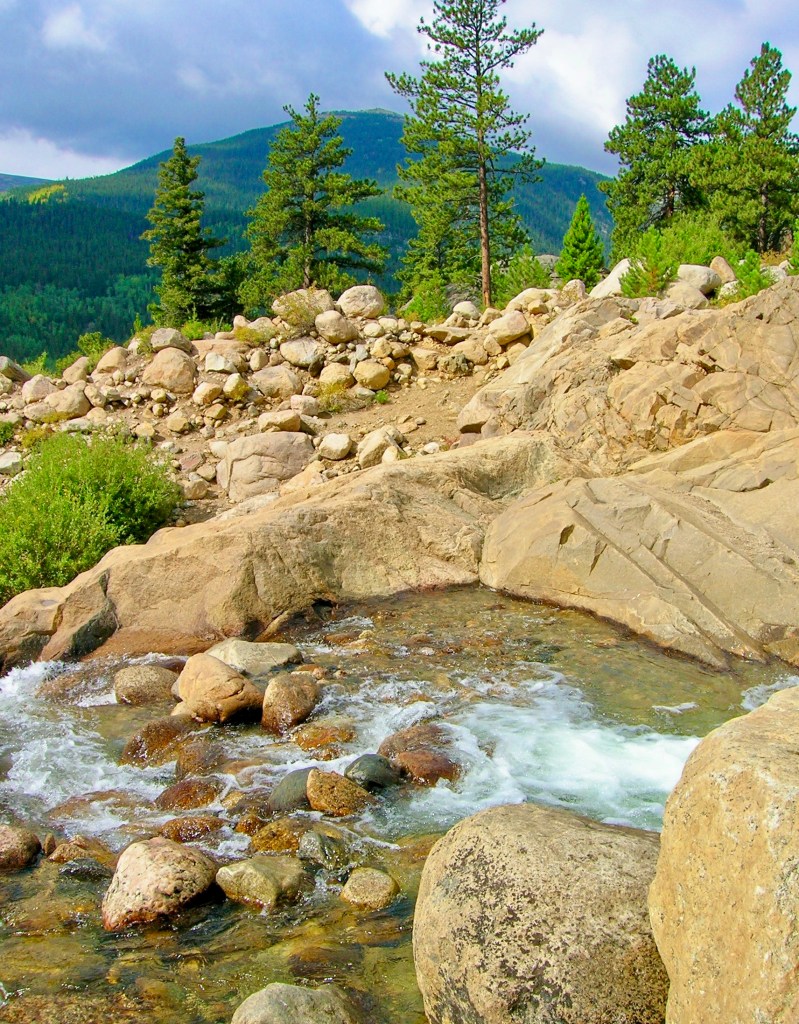
All photos in this post were taken in or near the Wind River Range of Wyoming

I have always been irresistibly drawn to water, particularly creeks, streams, and brooks.  While road tripping, I’ve stopped to photograph them more than any other feature in Nature.  Their beauty can be breathtaking, nestled beside a mountain, surrounded by trees and wildflowers.  And the sound of the water running over the stones in the creek bed is one of the most soothing I know.  In fact, it’s the white noise I use to lull me to sleep each night.

Looking at a topographical map, the myriads of little creeks in the US look like a diagram of human capillaries, and are similar in that they also transport oxygen and other nutrients.  Only after spending time in the Southwest did I learn that in much of the desert, trees can be found only where water runs through the land.  That may seem obvious, but it never occurred to me when I was living full-time on the East Coast of the US, where trees are much more abundant.

I’ve heard many stories about funny happenings at creeks, and I have one to share.  Years ago, I met a new friend from Texas at a hostel in Northern New Mexico.  We enjoyed spending time under some ancient trees that shade a creek running behind the village’s few merchants. We once bought a bottle of wine to share on the edge of the water and took it out of the bag to realize we had no way of opening it.  There was a bar a short walk away, so I strolled inside and asked the bartender, whom we had befriended, to lend us a corkscrew.  Back by the creek, we tried in every way known to man to get that cork out of the bottle, but couldn’t get it to budge.  (If anyone was watching, I can imagine what a belly laugh they had!)  Embarrassed, we took the wine and the cork screw into the bartender who smirked while opening it for us.  We laughed at ourselves the whole time we were drinking it.

On a more serious note, there is a little stream I crossed at least twice each day for a month when I did a work-study program at Esalen Holistic Institute in Big Sur, California.  It was canopied by trees and had a small wooden foot path. I often passed someone meditating beside it on my way to or from classes or my work in the kitchen.  It is one of the most peaceful places I’ve known.

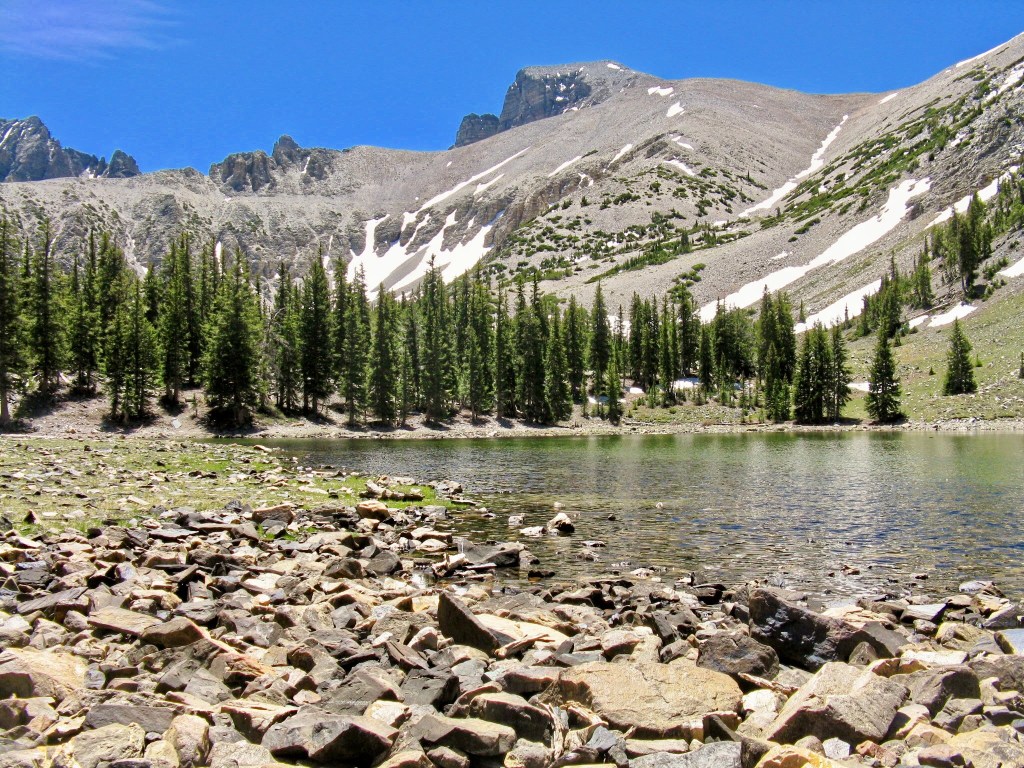
In Eastern Nevada, I once camped at Great Basin National Park.  I arrived early enough during the week to have my pick of campsites, and chose one with a brook running through the back.  I set up my tent close enough that I could hear the water babbling at night.  It is by far my favorite-ever campsite.

The unique beauty of Sedona, Arizona, is magnified by Oak Creek, a canyon stream that runs through much of town.  West Fork, a hike mentioned in my post Red Rocks on the Water, is among the area’s 400 miles of trails.  It’s very popular, especially in Spring and Fall, due to the many wildflowers and changing leaves that flank the creek, which the trail crosses many times.  Fallen logs and small boulders form the paths across the water, and can be quite the challenge.  But the water is pretty shallow for the distance of the hike, and the surrounding red cliffs and colored stones on the creek bed are gasp-worthy.  So what if you get your feet wet!

The sights and sounds of creeks, streams, and brooks bring me joy, entertainment, and peace.  And I’m certain I’m not the only one.  Do you have similar stories that you’re willing to share?

Blessings from the Creek,

Lisa

The content of this article is for educational and informational purposes only, and is not intended as medical advice. Please consult with a qualified health care professional before acting on any information presented herein. Any statements about the possible health benefits of any subject discussed have not been evaluated by medical professionals or the Food & Drug Administration and are not intended to diagnose, treat, cure or prevent any disease or illness.
Essential Oils: A Primer

Rose oil is one of the best for anti-aging

If you’re like me, you’ve been using essential oils for as long as you can remember without a clear understanding of how they work.  Over the years, I’ve read a little about them here and there and been inspired to try them for various issues.  The more I’ve used them and learned about them, the more I appreciate them.  Finally, I’ve taken the time to get a better understanding of the how and the why.
I find their history fascinating.  This write-up from The Essential Oils Academy shares from the beginning of recorded history, the plant kingdom has provided powerful extracts and essences that have been prized for their beauty-enhancing, medicinal, spiritual, aromatic, and therapeutic values.  There is evidence of plant elixir use in Egypt, Ancient Greece, and past- & present-day India, where they are a remedial element of Ayurveda. You will find mention of them in the Bible. They have even been utilized by physicians through the ages to treat soldiers during wartime.  And now in Europe and North America, their use is widespread.

Oregano oil is a powerful household cleaner & immune booster

If you’ll remember, in my post For the Love of Trees, I shared that plants emit an abundance of chemicals that benefit themselves as well as animals, including us.  Essential oils are a condensation of these phytochemicals as a result of distillation.  Because so much plant material is required to make them, the oils are super-concentrated, strong medicine.  (And sometimes quite pricey.)  

Essential oils are used in all kinds of products, from cleaners to insect repellants, body lotions, and face creams.  But even when we don’t apply the oils directly, their aromas can have profound impacts.

Essential oils of lemon & lime heighten mood

Years ago, I remember walking into a casino in Las Vegas and realizing I was being drenched in aromatherapy.  I read up on it, and learned that casinos began using these scents to increase profits in 1991.  Presently, every spot on the Las Vegas Strip has a proprietary scent that is constantly emitted from their ventilation system.  Scent marketing is now a multi-million dollar industry, also used in medical offices, retail stores, and sports stadiums to help us remember our visits as pleasant ones, encouraging our return.

How can the scent of these plant oils have such strong effects?  I was curious, too.  In The Ultimate Guide to Aromatherapy, Jade Shutes and Amy Galper elucidate: the olfactory tract sends nerve impulses to the limbic system, including the heavily-innervated amygdala.  The role of the amygdala in emotion, memory, and autonomic control directly ties olfaction to these primordial functions and adds complexity to the odor perceptual experience, they writeThat explains why scents from the past can take us back.  (For more on the power of smell, check out my post Smellscapes.)  

There are a number of essential oils made from conifer trees, and many have analgesic effects

The book is filled with information on specific oils and their benefits.  Many are anti-bacterial, anti-viral, anti-inflammatory, and anti-aging.  In my experience, a whiff of lavender oil can help with sleep.  A couple drops of peppermint oil on the hairline gets rid of headaches, and rubbed onto muscles, it eliminates or reduces pain.  I’ve also found diffusing eucalyptus while showering helps with a stuffy nose.  But that’s just scratching the surface.  There are oils used for healing wounds & various skin afflictions, reducing anxiety, increasing alertness, and helping with nausea.  (I would suggest adding the oils to an unscented lotion or carrier oil for application, doing a test patch before applying liberally, and reading up on possible effects on children and pets prior to using.  Also, make sure you’re purchasing oils that are organic if possible & sustainably-sourced.)

The little bit of digging I’ve done on essential oils has helped me to understand just how they have helped me through the years. I hope the information I’ve shared encourages you to try these phytochemical powerhouses, yet another of Nature’s gifts to us, in a variety of ways. 

Some of my favorite essential oils

Blessings from the Plant World,

Lisa

The content of this article is for educational and informational purposes only, and is not intended as medical advice. Please consult with a qualified health care professional before acting on any information presented herein. Any statements about the possible health benefits of any subject discussed have not been evaluated by medical professionals or the Food & Drug Administration and are not intended to diagnose, treat, cure or prevent any disease or illness.