6 Little-Known Habits to Help Achieve Your Resolutions, Part 2 of 2

Happy February!  Wow, did January slip by quickly for anyone else?! 

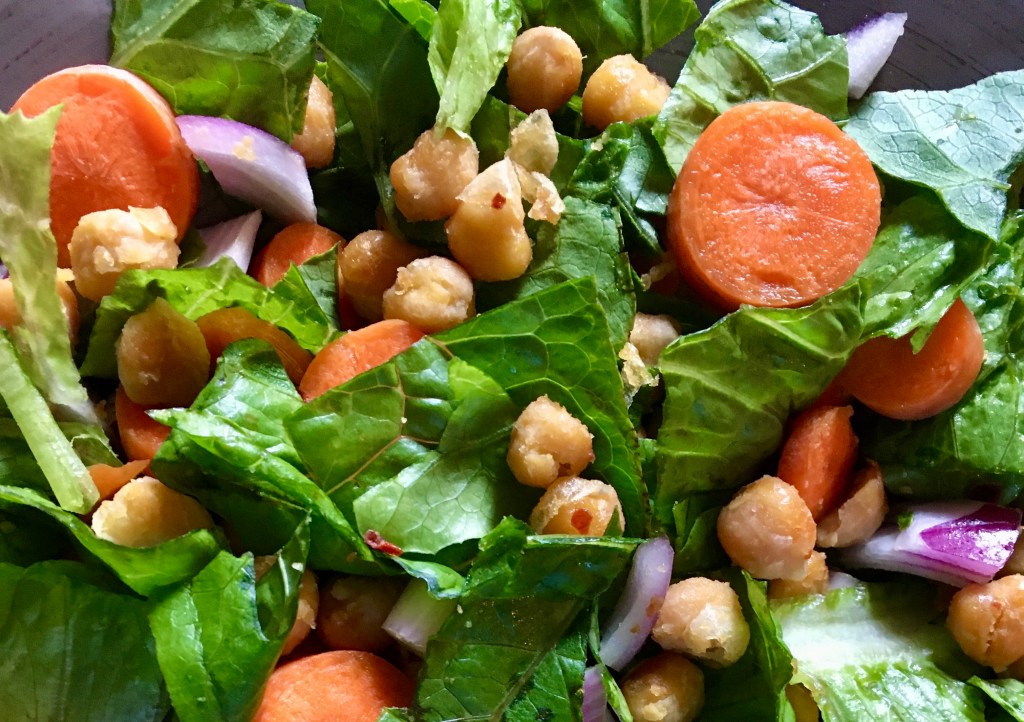
I shared the recipe for this crispy chickpea salad in August of 2020.

Last month, I posted on 3 of the 6 daily practices that I believe are fundamental to my overall health and wellbeing: using electrolytes, healing my gut, and reading labels.  Today I will complete the set by sharing some of the best information on nutrition I’ve learned to date.  It is my hope that this info can help you conquer your new year’s resolutions and live healthier in general.

Matcha lime smoothie bowl made with spinach, topped with coconut, berries and walnuts. Yum!

  1. Drink matcha.  If you’re unfamiliar, matcha is a green tea grown in Japan that is 10 times as powerful as regular green tea.  We started drinking it daily around 2016 for its mood-boosting, anti-carcinogenic, and fat burning properties.  Recently, I found a research article establishing its exceptionally high antioxidant and anti-inflammatory abilities.  The paper also tells us that it increases cognitive function & neuroprotection, decreases oxidative stress, slows the aging process, regulates insulin secretion, reduces glucose & lipids absorption, strengthens blood vessels, provides cardiovascular protection, and has anti-viral properties, including inhibiting COVID.  (Maybe a reason neither of us has had COVID, even though some friends and clients have suffered through it 2 or 3 times.)  Of course, the quality of your matcha determines just how beneficial it is.  I’ve always ordered ours from Got Matcha, a small company with amazing business practices and outstanding products.
  2. Eat legumes, greens, nuts & berries at least once a day.  (Smoothies can help with the last 3 on that list.)  In his book How Not to Age, Dr. Michael Greger reviews thousands of nutrition studies & these are a few of his findings:  Legume consumption has been linked to reducing the risk for cancer, depression, and stroke, as well as inducing weight loss and lowering blood pressure and cholesterol.  The brains of daily leafy green eaters are shown to be 11 years younger than others, and the risks of vision loss, premature death, stroke, and heart disease for that group are lessened.  A half ounce of nuts per day extends your life more than anything else studied.  And berries also have longevity benefits, perhaps because they help prevent damaging senescent cells (also known as zombie cells) from spreading inflammation and contributing to chronic disease.  As you’ve no doubt read here before, locally grown produce is best.
  3. Increase your omega-3 fatty acids while reducing omega-6 intake.  In this write-up, Dr. Mark Hyman, founder of the Cleveland Clinic Center for Functional Medicine, says about 90% of Americans have an omega-3 deficiency.  This is in large part due to the standard American diet, which includes many processed foods containing omega-6 oils.  This creates an imbalance that can predict your risk for many chronic diseases, he says, including heart disease, cancer, diabetes, dementia, depression, and autoimmune disorders.  (Studies also show that an increase in omega-6 oil products has been linked to rises in violent crime in the US, UK, Australia, Argentina, & Canada.)  To correct this imbalance, eat fewer processed foods and fast foods.  At home, choose only olive or coconut oils for low-heat cooking and avocado oil for higher heat.  Eat SMASH fish (salmon, mackerel, anchovies, sardines and herring) and pasture-raised eggs, or take an algae-based supplement if you don’t eat animal products.  I like Garden of Life Vegan DHA.
Down home” Southern cooking is hard to beat in my book!

Now you know my 6 fundamental practices.  These daily habits establish a strong foundation upon which other healthy choices come easier.

May this be the year that you build a stronger foundation for your health and achieve resolutions that stay with you for a lifetime.  

A favorite & delicious way to eat beans: black bean and date cake with cacao avocado frosting

Foundational Blessings, 

Lisa

The content of this article is for educational and informational purposes only, and is not intended as medical advice. Please consult with a qualified health care professional before acting on any information presented herein. Any statements about the possible health benefits of any subject discussed have not been evaluated by medical professionals or the Food & Drug Administration and are not intended to diagnose, treat, cure or prevent any disease or illness.


6 Little-Known Habits to Help Achieve Your Resolutions, Part 1 of 2

In Flagstaff, there is an annual pine cone drop for New Year’s Eve!

Happy 2025 to all of you in my blogging community!  I hope the year ahead brings you plenty of reasons to smile and be grateful.  If you’re a new year’s resolution maker, whether you share your intentions with others or keep them quiet, I hope you will find something beneficial in this post.

Recently, I spoke with a far-away friend via Google Meet (which is like Zoom without a time limit, apparently.)  It was a fun three-hour chat, with plenty of laughs and hijinks from Izzy, my crazy kitty.  As our conversation came to a close, my friend was asking me health questions and taking notes.  Afterwards, I started thinking, maybe you would be interested in some of the principles that I have studied over the years and adhere to every day.  I feel these habits provide a strong foundation for me to continue to feel good on all levels.  (My yearly lab work is testament to that.)

Happy new year from Izzy! She likes being a part of everything in this house.

That being said, I want to share 6 of my daily practices, 3 today and 3 in next month’s post.  (Please note that I do not receive a commission for the products I mention here.  It’s sometimes hard to find a company you can trust, and these companies formulate great products in my opinion.)

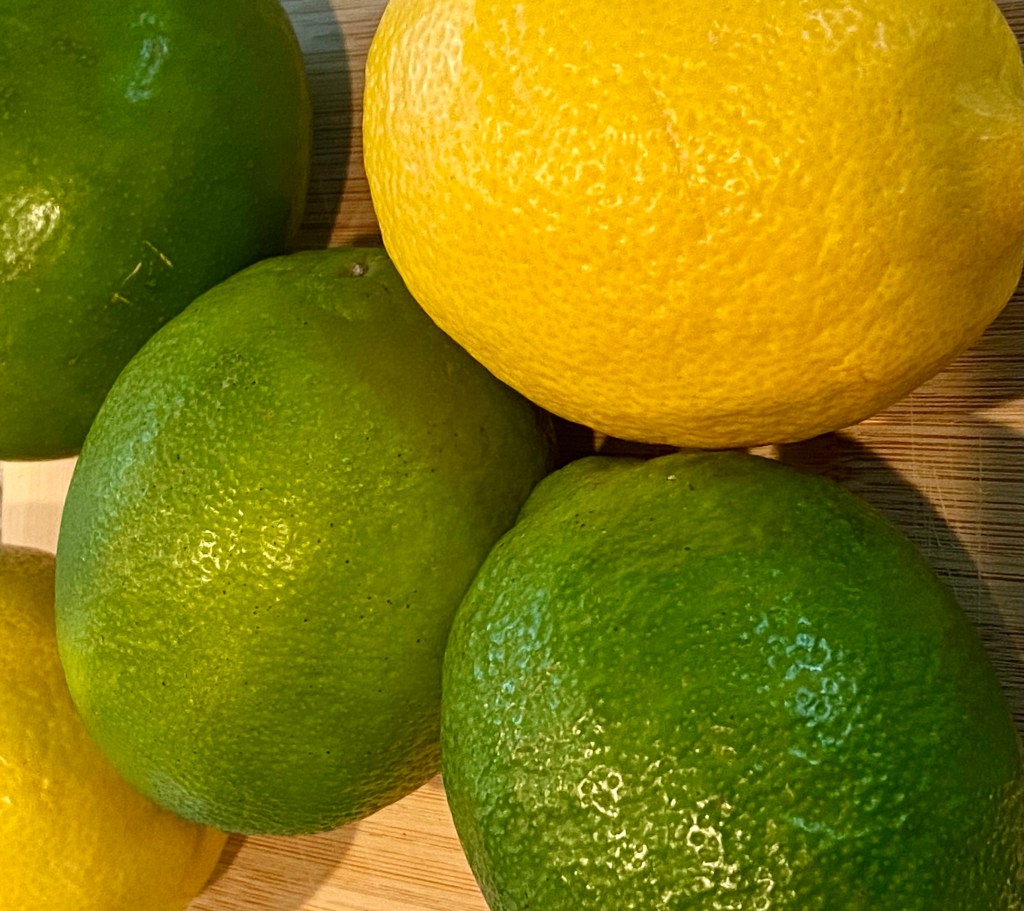
Slices of lemon and/or lime add electrolytes to water.
  1. Hydrate with powdered electrolytes, coconut water, and juicy fruits.  (NOT the stuff filled with sugar, dye, and other chemicals.)  Each time there is any action between or inside our trillions of cells, water is required.  By drinking plain tap or even bottled water, we can’t be sure our cells are absorbing what they need.  Electrolytes (which are basically charged minerals) from quality sources keep your energy going, blood flowing, cells communicating, nerve impulses firing, bones building, muscles contracting, and much more, according to this article.  Because I prefer the salt in my powdered electrolytes to be natural and not lab-made, I get mine from Redmond Life.
  2. Heal your gut lining.  If you’re like me in that you’ve partaken of more than your share of bread over the years, even if that behavior is in the rearview mirror, chances are your gut lining is in need of repair.  Genetically modified wheat can open the cellular connections in your gut that serve to deliver nutrients and keep out toxins.  When this gateway system is compromised, immune function suffers, and your biology can be adversely affected in a number of other ways.  I’ve found Intelligence of Nature’s Gut Support to be a great product.
  3. Limit processed foods, and read labels on those you can’t pass up.  Because food manufacturing is unregulated in this country, you may be eating all kinds of things you wouldn’t dream of consuming otherwise.  For one, most of us eat and drink way too much added sugar.  The CDC’s current recommendation for added sugars is only 10% of total daily calories (that’s 12 teaspoons for a 2000 calorie diet – still too much in my estimation!) for those over 2 years of age.  (If you’re curious, they advise that children 2 and under should not be given any foods or beverages with added sugars.)  In 2018, Americans aged 20 and older averaged 17 teaspoons a day.  Refined sugars contribute to nonalcoholic fatty liver disease, which is now more prevalent than alcoholic liver disease, cirrhosis, liver cancer, or any other liver disease.  In addition, refined sugars can contribute to metabolic syndrome, premature aging, and cognitive deficiencies, according to this Harvard Medical School write-up.
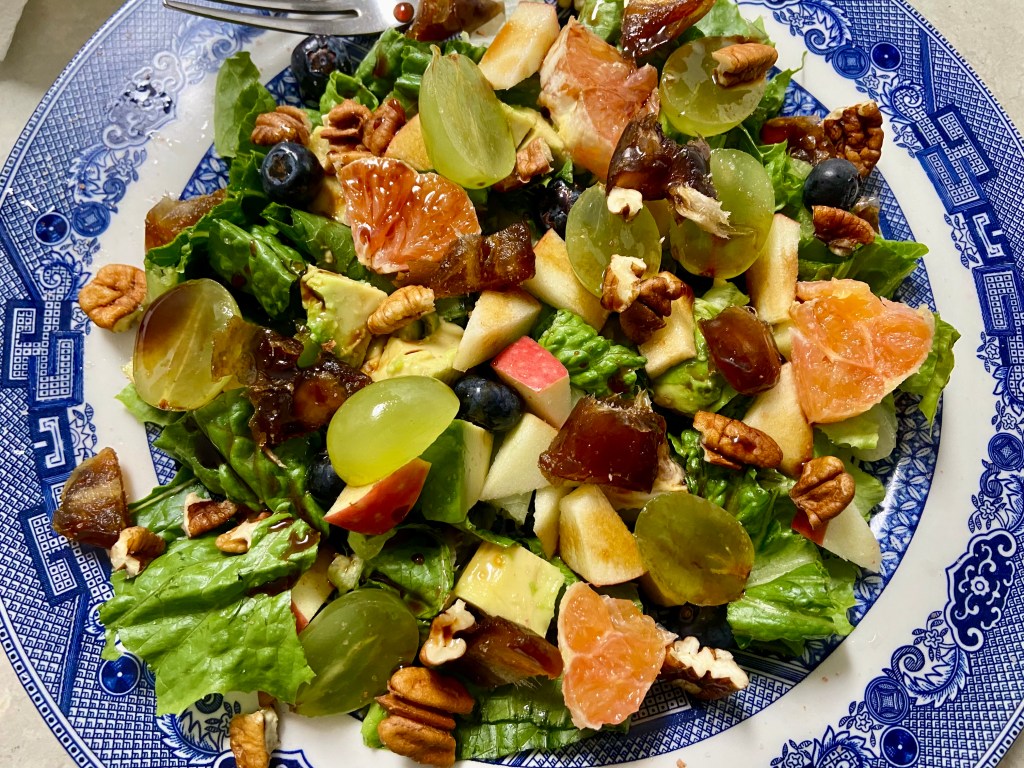
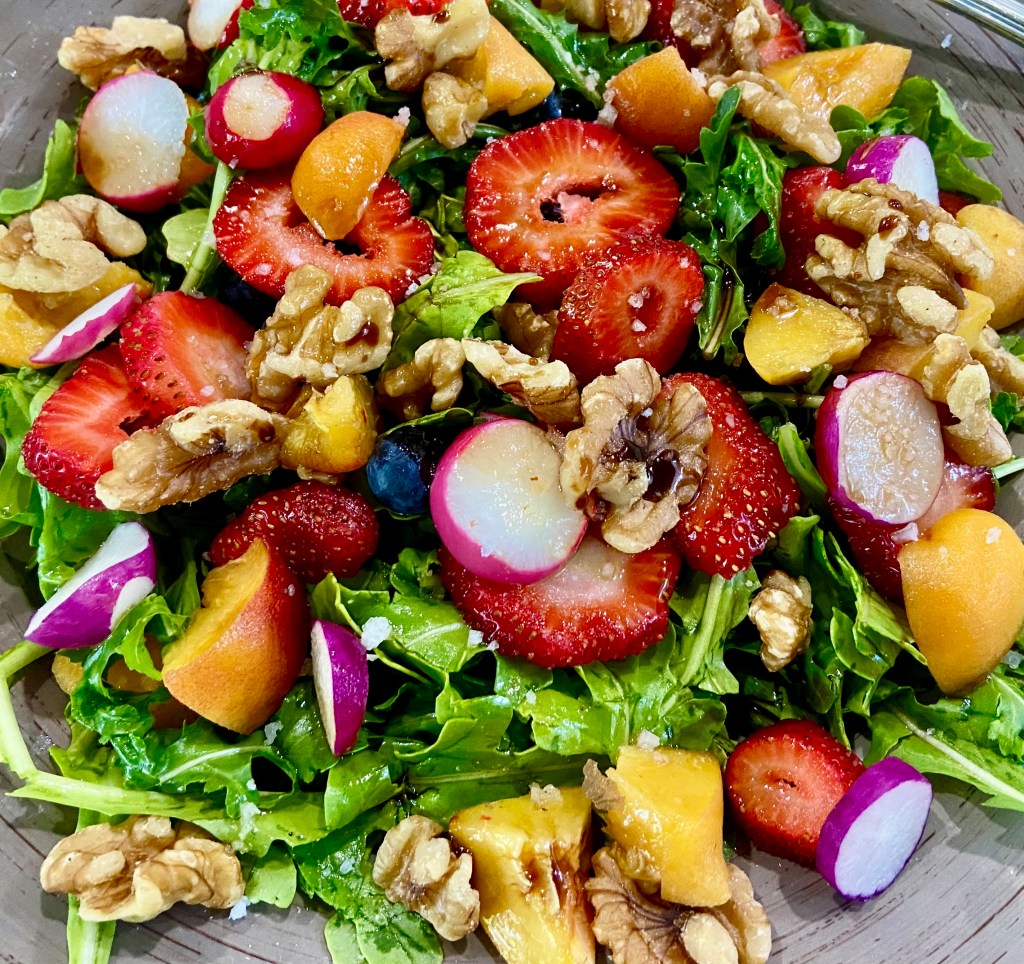
A salad shared at my mom’s recently. Unlike refined sugars, the sugar in fruit is coupled with fiber, a favorite snack of healthy gut microbes.

These habits have changed me.  No more post-workout headaches, I’m fitting into my skinny jeans again, and I haven’t been sick in over a year.  We desire results like these from our new year’s resolutions, right?

I hope you’ll give at least one of my daily foundational habits a try, and please look for my final 3 in next month’s post.  

Habitual Blessings,

Lisa

The content of this article is for educational and informational purposes only, and is not intended as medical advice. Please consult with a qualified health care professional before acting on any information presented herein. Any statements about the possible health benefits of any subject discussed have not been evaluated by medical professionals or the Food & Drug Administration and are not intended to diagnose, treat, cure or prevent any disease or illness.

Red Rocks on the Water

The lovely little desert town of Sedona, Arizona, has more than 400 miles of trails for hiking and biking, and is surrounded by 1.8 million acres of forest land, according to visitsedona.com. Not bad for a destination known for its spas and luxury resorts! The rich colors of Sedona’s earth and trees are a delight for the senses. As much as I love the trails and forestland in the area, my favorite part of Sedona is where the red rocks meet the waters of Oak Creek.


My first experience of Oak Creek was many years ago with a fellow hosteler from Switzerland and a guide. We were thrilled with the areas the guide shared with us, which were not open to the general public. We visited a sacred hollowed-out rock high on a ledge surrounded by breathtaking views. We hiked for miles in areas where we saw nothing but awe-inspiring vistas of trees and shrubs dotting red and orange rock formations. Finally, we found ourselves at a creek with towering colored cliffs on one side and old growth trees on the other. I will never forget how peaceful it was. And gorgeous!


Slide Rock State Park, on Oak Creek just north of Sedona, is a popular destination in the warmer months. The park is on a 43-acre historic apple orchard, and its 80 feet of narrow waters are open for swimming, sliding, and wading. There are also a few short hiking trails for those who’d like the opportunity to warm up after spending time in the extremely cold water!

One of the most photographed images in the Southwest, according to The USDA Forest Service, is the reflection of Cathedral Rock in Oak Creek at Red Rock Crossing, which can be seen inside Crescent Moon Recreation Area. This park offers a picnic area with views unlike any other. Fishing and swimming are allowed. We soaked up the beauty while strolling along the water’s edge and soaking our feet in the creek afterwards.

Many of the hiking trails in Sedona run alongside or occasionally cross Oak Creek, but there is one trail that zigzags it: West Fork. My favorite time to hike this trail is either spring or fall: during springtime, the area is strewn with flowers and blooming trees, and in autumn, leaves are at their most brilliant reds and golds. Crossing the creek can be tricky in places when recent rain and snowfall has been plentiful. Most crossings involve navigating rocks or a fallen tree.

Even if you choose not to hire a guide or pay to enter a park, there are other ways to enjoy Sedona’s Oak Creek. Check out a trail that takes you to the water, and pack some food in a backpack for a hike & picnic. Bring the little ones in their bathing suits with small water toys. Or simply find a place near the creek where you can hear the rushing water and take some time to meditate. However you choose to enjoy it, it’s an experience you won’t soon forget.

Many folks visit Sedona for luxurious accommodations offered among the extraordinary beauty of the red rocks, but the area offers so much more. Whether you are looking to hike, wade, swim, fish, photograph, or simply soak up some natural beauty, Oak Creek takes the beauty of Sedona to the next level.

Blessings for Beauty,

Lisa

This post was first shared in March of 2021. Comments are off, as all of us will be busy over the next couple weeks. I sincerely thank you for being a part of my blogging community. Wishing you & yours lovely, memorable holidays! ☀️

The content of this article is for educational and informational purposes only, and is not intended as medical advice. Please consult with a qualified health care professional before acting on any information presented herein. Any statements about the possible health benefits of any subject discussed have not been evaluated by medical professionals or the Food & Drug Administration and are not intended to diagnose, treat, cure or prevent any disease or illness.

CSA: An Introduction

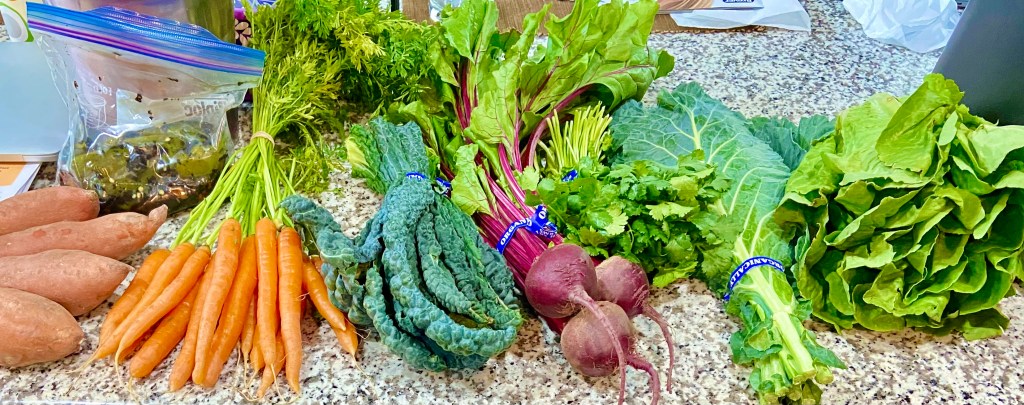
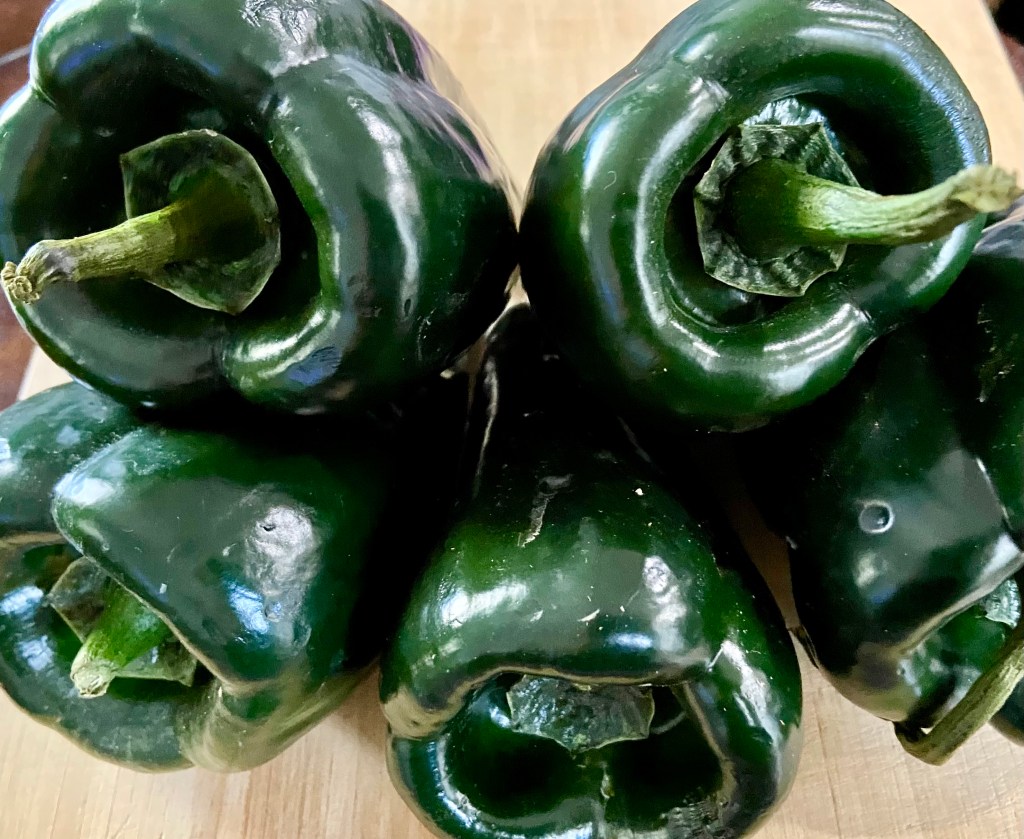
One week’s CSA haul, including roasted chilis

For years, we have purchased the majority of our produce from Community Supported Agriculture (CSA) programs, in both New York and Arizona.  There are over 12,000 in the U.S. now, but I find that when I talk about my new favorite veggie from this week’s CSA haul, most people are unfamiliar with the concept.  Because it’s such a win-win for farmer and consumer (as well as the planet!), I want to share the idea here.

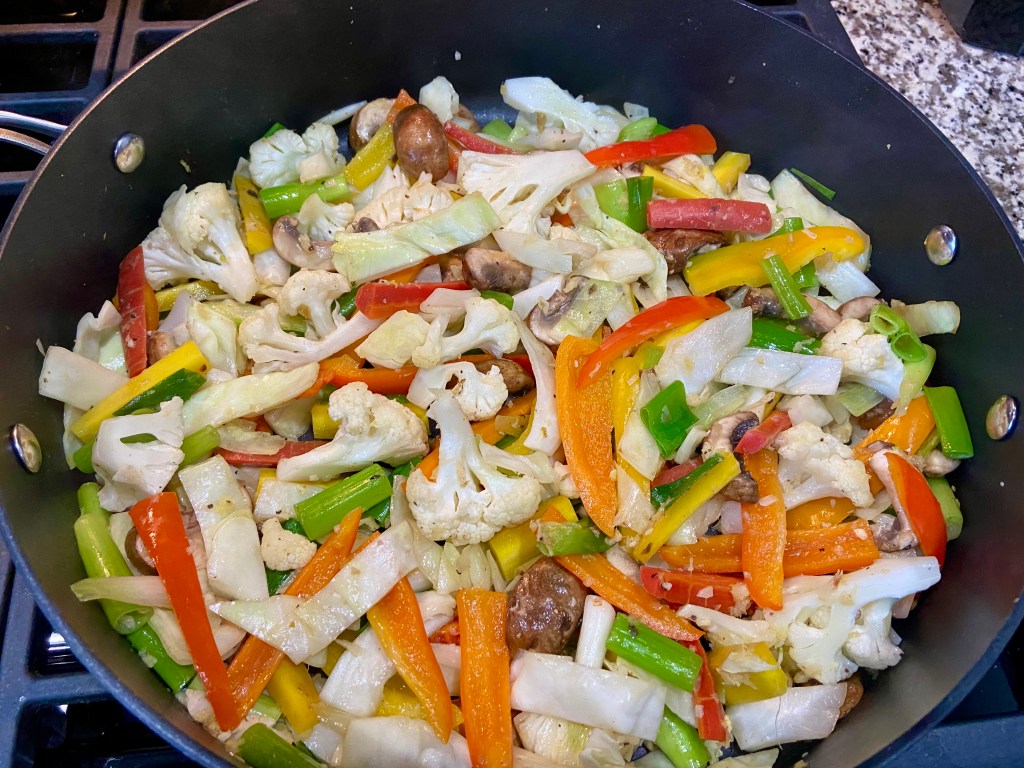
A recent “kitchen soup” made with CSA veggies

CSAs have their origin in mid-1960s Japan, at a time when more & more farm land was being lost to development, farmers were moving to cities, and imported foods were becoming more common at local markets,  according to Robyn Van En, co-founder of the CSA in this country.  In an effort to change that trajectory, a group of Japanese women met with several farmers, and a plan was hatched: the farmers agreed to provide fresh produce weekly if a financial commitment could be made by multiple families.  Today, this kind of partnership continues to benefit thousands in that country.

Purple carrots are the most delicious & beautiful on salads

The idea didn’t catch on in this country until the 1980s, and since that time, there have been evolutions on the theme.  For example, rather than going to participating farms each week, we have a CSA store in Northern Arizona where our goodies are delivered.  When we pick up our box of fresh veggies, we can also shop for homemade soaps, local honey, locally-made jams & pickled items, and the like.  (What a joy to shop there!)  Another variation is the solitary farmer in upstate New York who allowed us to choose our weekly produce from the limited harvest picked from his fields.  If we didn’t want garlic scapes, we didn’t have to take them.  We were able to choose 8 items out of about a dozen.

When I have more than I know what to do with, I roast ’em!

While researching this article, I learned about another variation of the original CSA set-up.  The work of the New York City Coalition Against Hunger includes a program involving a CSA that provides fresh food to underserved communities on a sliding scale.  This is no doubt a welcomed solution to some living in the many food deserts (low-income areas with less access to food and transportation) in and around the city.  

As mentioned before, the CSA concept benefits both farmer and consumer.  I believe one of the most attractive advantages for farmers is the shared risk, meaning if crops don’t do well in a given season, the consumer receives the smaller bell peppers and the chard that doesn’t look so great while still paying the regular fee.  And the steady income is certainly beneficial for the farmers.

I have made lots of pesto varieties with the many greens from our CSA

For the consumer, the benefits are more than ample, well worth the shared risk.  Locally grown foods, as you’ve no doubt read in my past blog posts, are much healthier than those grown elsewhere.  Regional, seasonal microbes provide a huge boost to our immune system.  Also, when produce is shipped from another state or country, it loses nutritional value, and many times is picked green & sprayed, or coated with wax or other additives to extend shelf life.  Smaller, local farms often use sustainable growing methods to avoid chemicals, and many of them are organic, so better for the planet.  Local produce keeps longer in the fridge if you don’t get around to using it right away.  And the taste – you won’t believe how delicious local arugula, carrots, and fruits are!

CSA veggies add lots of color – and therefore phytonutrients- to our meals

If you are interested in purchasing healthier, yummier fruits and veggies (and maybe other locally-made goodies), check out the website local harvest.  Your taste buds and gut bugs will be happy you did!

Locally-Grown Blessings,

Lisa

The content of this article is for educational and informational purposes only, and is not intended as medical advice. Please consult with a qualified health care professional before acting on any information presented herein. Any statements about the possible health benefits of any subject discussed have not been evaluated by medical professionals or the Food & Drug Administration and are not intended to diagnose, treat, cure or prevent any disease or illness.

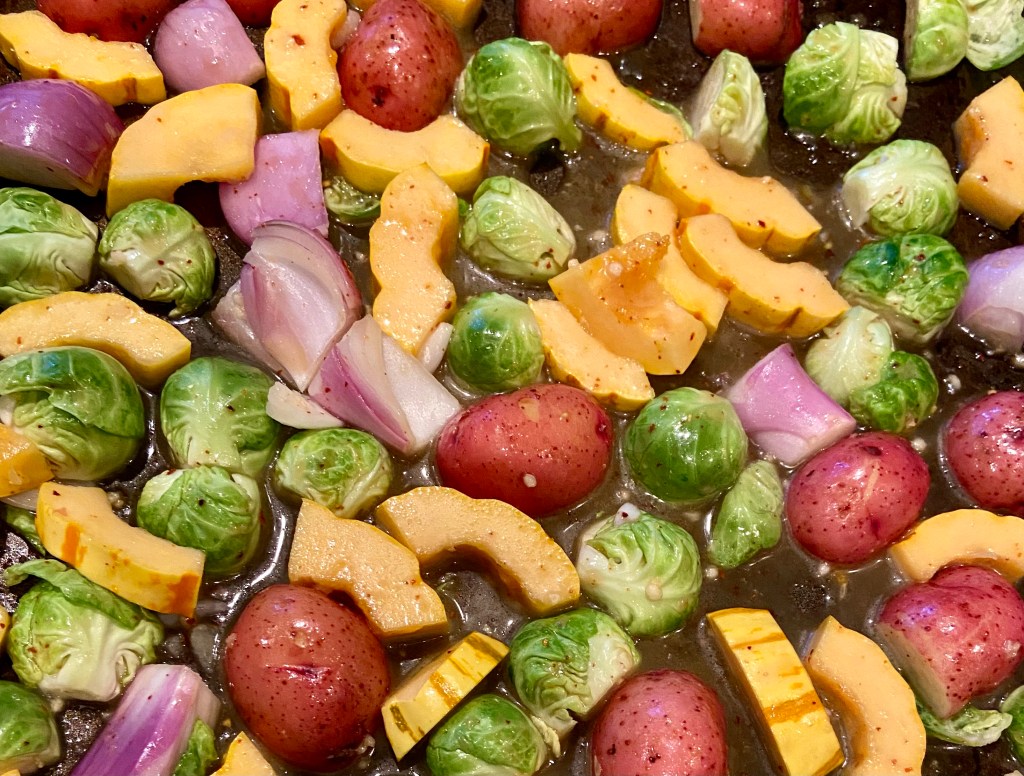
Glazed Autumn Bake

During Autumn, the process of baking seems to take on additional elements of warmth, goodness, and celebration.  Maybe because I relate it to meals shared with loved ones during the upcoming holidays.  Do you think of Autumn baking (or roasting, as the case may be) in a similar fashion?

This is one of those quick, super-flavorful meals that I could devour directly from the pan.  It’s filled with Mother Nature’s love designed specifically for this season.  It also gets high marks on nutrition scales.

Brussels sprouts are loaded with vitamins C and K, and have a wealth of antioxidants, according to Healthline. They contain Omega-3 fatty acids, and may reduce inflammation and help control blood sugar.  From other sources, I’ve read that cruciferous veggies, the group to which the little cabbages belong, are different in that the more you eat, the more your body benefits. Most other vegetable groups have a ceiling, meaning once you eat a certain amount, the nutritional benefits level off.

If you’re unfamiliar with Delicata squash, they don’t need to be peeled, and they are easier to chop than other gourd squash. They are also more subtly flavored.  For these reasons, they have become my favorite winter squash.  Delicatas are rich in vitamins A and C, and have a good bit of iron, according to Nutrition and You.  

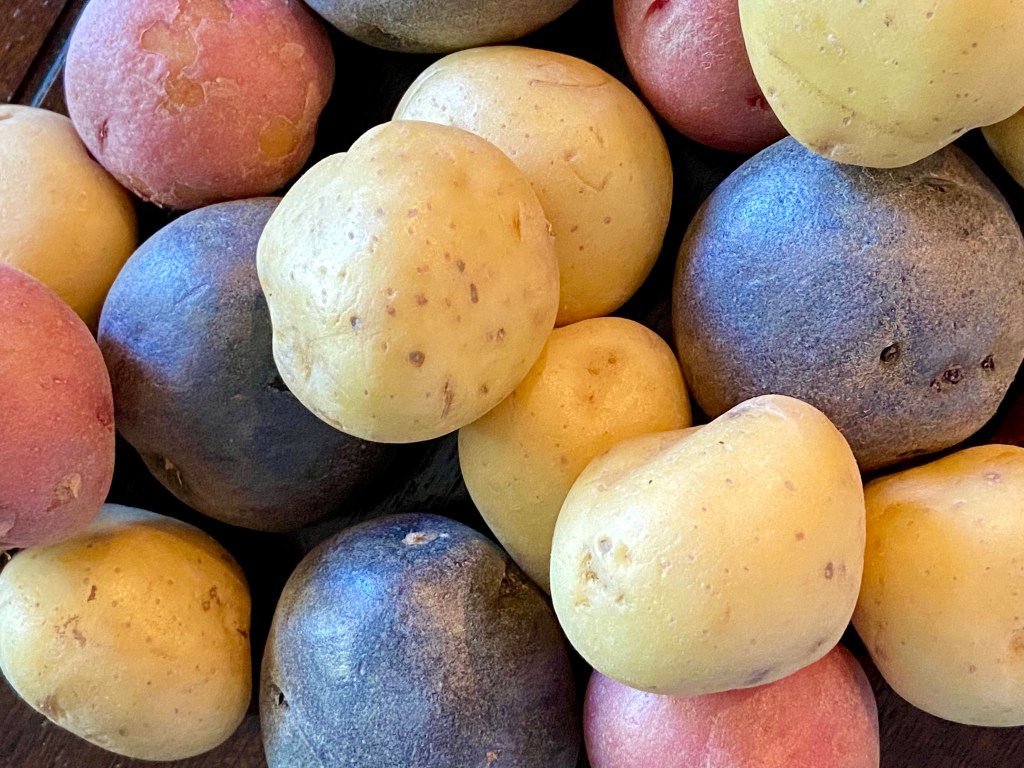
New potatoes have bioactive compounds including antioxidants that are found primarily in their skins, per this Potatoes 101 article.  They supply good amounts of potassium which contributes to cardiovascular health, and vitamin C, which is important for tissue growth and repair, as well as immunity.

For this Fall recipe, I owe a debt of gratitude to the creators of 2 other recipes, one from Simply Recipes and one from Deliciously Ella.  Elements of each are included here, along with the changes that suit my taste. Please let me know if you try it!

Yield: 4 – 5 servings

Ingredients (use organic and/or non-GMO when possible)
A bit of avocado (or olive) oil spray for pan
2 tbsp avocado or olive oil
1 tbsp apple cider vinegar
3 tbsp maple syrup
1 1/2 tsp Himalayan salt
1/4 – 1/2 tsp crushed red pepper (to your preferred heat level)
1 clove garlic, chopped
1/2 lb Brussels sprouts, stems and outer leaves removed, halved
1 medium delicata squash, unpeeled, seeded, quartered lengthwise &
cut into 1/4” crosswise slices
1/2 lb small new red potatoes, unpeeled & halved
3 large shallots, peeled & cut into thirds
1/2 cup hazelnuts (optional but yummy)

Directions
Preheat oven to 400 degrees F. Lightly spray a large baking pan with oil. Spin the next 6 ingredients (2 tbsp oil – garlic) in a small blender cup until uniformly smooth. Place all of the prepped veggies in a pile in the middle of the pan and pour about 3/4 of the combined liquid on top, & use your hands to mix well. Spread into a single layer and bake for 20 minutes. Remove from the oven to turn the veggies, and add the hazelnuts if using. Bake another 10 minutes, or until the veggies are soft with a bit of firmness, and the hazelnuts are lightly browned. Remove from the oven and add the remaining glaze, stirring gently to coat. Taste for salt, adding more if needed.

Serve on brown rice, couscous, or small pasta such as orzo. Enjoy!

It’s been a long time since I’ve shared a recipe, and this one, first posted in November of 2021, is of my most-liked.

The content of this article is for educational and informational purposes only, and is not intended as medical advice. Please consult with a qualified health care professional before acting on any information presented herein. Any statements about the possible health benefits of any subject discussed have not been evaluated by medical professionals or the Food & Drug Administration and are not intended to diagnose, treat, cure or prevent any disease or illness.

The Promise of Community

The American Heritage Dictionary defines community as a group of people living in the same locality and under the same government.  Or I should say, that is the first definition. Way down at the sixth definition, the words sharing, participation, and fellowship appear. Because our lives can be so enhanced by being part of a community, perhaps the dictionary should reverse the order of those meanings.

Group kayaking is a fun way to meet and engage with friends. Thank you, Jan, for the photo!

Marta Zaraska, science journalist and author of Growing Young: How Friendship, Optimism, and Kindness Can Help You Live to 100, writes about how strong relationships are just as important to being healthy as what we eat and how much we exercise.  One of the findings she shared: living in a community where neighbors care about one another means, for women, cutting the risk of coronary heart disease by a third.

In fact, an article in Psychology Today states that because our social connections literally shape our brain development, our network of social support serves as the most profound predictor of our health and well-being.  

Hiking with a group allows you a chance to strengthen relationships.

The Center for Compassion and Altruism Research & Education at Stanford University published a write-up indicating that social connection is critical but subjective.  In other words, whether you have loads of friends and family or very few, it’s how connected you feel that counts.  Feeling lonely or unloved can result in compromised immunity, a higher likelihood of depression, and a shorter lifespan. 

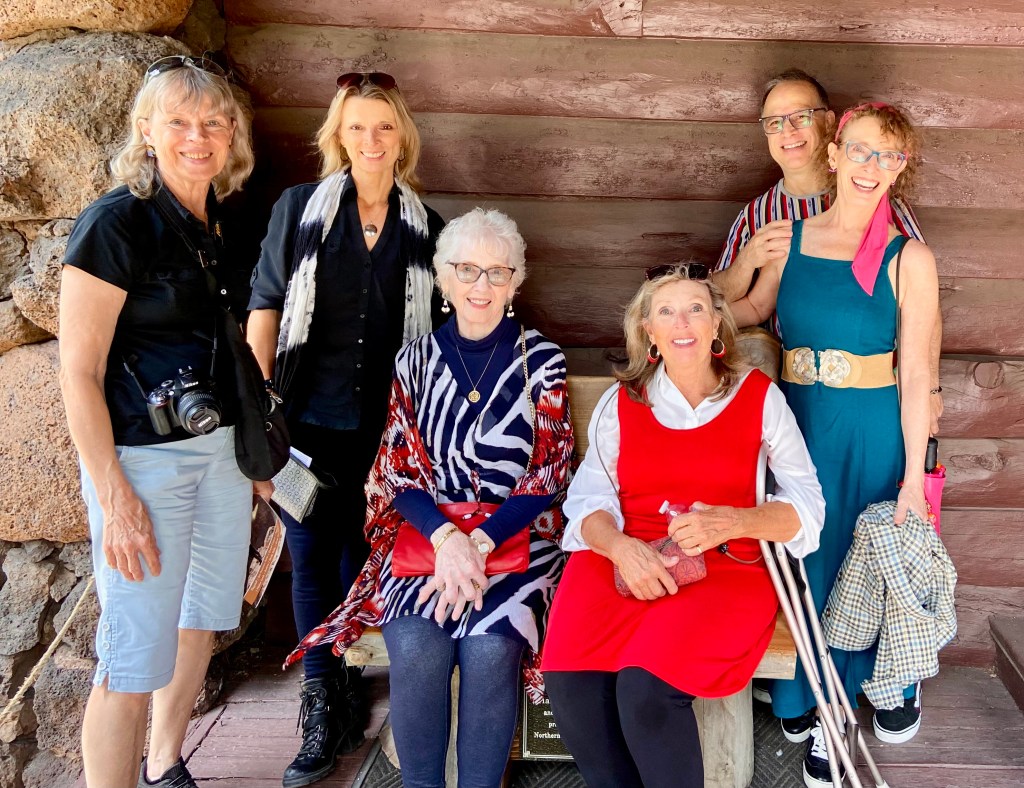
Reconnecting with others in the Arizona blogging community is always a treat!

From a piece in Frontiers in Psychology: Love is the positive emotion that connects people. Attachment, care giving-receiving, and positive affect always have others as the reference point. Raising awareness that we are all one people and that we are all interdependent and connected worldwide is crucial and has become a focus in social support research.

Fostering a stronger sense of connection with others can be done in many ways.  Volunteering, taking a class, hosting game nights, reconnecting with old friends, and attending church services are just a few examples. 

By upping your sense of community, the amount of time you feel good increases immediately.  So let’s get busy connecting!

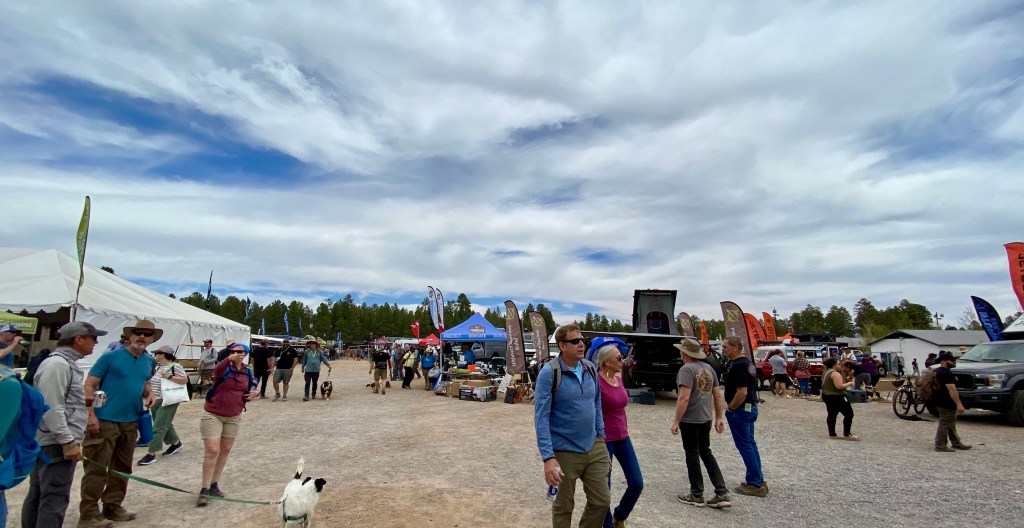
Community events are a great way to reconnect with old friends and meet new ones.

Blessings for Connection,

Lisa

If you enjoyed this post, you might also check out my first post on community, A Secret to Happiness.

The content of this article is for educational and informational purposes only, and is not intended as medical advice. Please consult with a qualified health care professional before acting on any information presented herein. Any statements about the possible health benefits of any subject discussed have not been evaluated by medical professionals or the Food & Drug Administration and are not intended to diagnose, treat, cure or prevent any disease or illness.

6 Reasons You Shouldn’t Fear Fruit

I’ve been eating and drinking a lot more fruit lately.  In the past, my smoothies have been at least half veggies and half fruit, but as I learn more about the benefits of fruit, I’ve become more generous with it in my morning concoctions.

Morning smoothie with banana, coconut butter, lemon, ginger, & turmeric

Because almost everyone I know is fruit-averse due to its sugar content, I’d like to share some of the things I’ve learned recently.  Most of this info can be found in Dr. Michael Greger’s book How Not to Age, as well as on his nutritionfacts.org website, which offers seemingly endless information on nutrition research, both past and present.

  1. Natural sugar is totally different than added sugar in any food.  When eating whole fruit, the fiber found in it blunts the insulin response.  It is the various forms of added sugar in processed foods, most of which have little or no fiber, that are problematic.
  2. As our climate gets hotter, it’s more important than ever to stay cognizant of hydration levels, and juicy fruits can help with that.  Oranges, lemons, limes, melons, grapes, peaches, plums, and the like are great sources of minerals as well as structured water that is preferred by our cells.
  3. Our bodies respond well to the healthy fats found in fruits like avocados, olives, pomegranates and passion fruit.  They are anti-inflammatory and prepackaged with a rich matrix of phytochemicals, Dr. Greger points out, so their effects are positive, unlike other fats that can contribute to oxidative stress.
  4. Fruits are alkalizing, so they contribute to a healthy blood pH.  This creates a more nourishing environment for our cells, giving us less chance of chronic disease, including cancer and osteoporosis.
  5. An Australian study, which was repeated in the UK, found that eating more fruits (and vegetables) increases psychological wellbeing & motivation, and reduces the risk of anxiety and clinical depression in just 2 weeks.  
  6. Eating more fruit can result in a longer life.  A simple apple a day can add 4 years to your life, and daily berries can add 7 years, decreasing all-cause mortality.

So you can see that not only should fruits not be feared, but they should be embraced for the life-supporting jewels that they are.  I encourage you to check out the book and website mentioned above to learn more.

Sweetest Blessings,

Lisa

The content of this article is for educational and informational purposes only, and is not intended as medical advice. Please consult with a qualified health care professional before acting on any information presented herein. Any statements about the possible health benefits of any subject discussed have not been evaluated by medical professionals or the Food & Drug Administration and are not intended to diagnose, treat, cure or prevent any disease or illness.

7 Life Lessons from Izzy the Cat

I believe she enjoys having her picture taken

Pets are amazing.  Not only do they provide tons of love and support, but they are also good teachers.  Izzy is the first cat I’ve owned since I was a girl.  When we first adopted her from the shelter, I was stressed because of her daily habit of messing up the house.  But now, although I continue to clean up after her every day, I’ve let go of the stress. I suppose that was my first lesson.

Asking for love

In these last 3 years, she has taught me lots more.  Some are familiar lessons for which she gives constant reminders, and others are new to me.  In today’s post, I thought it would be fun to share some of her teachings.

She enjoys her boxes!

  1. Ask kindly for what you want.  When Izzy wants food, love, or other attention, she asks sweetly with loud purrs, chatty meows, cute head tilts, and good eye contact.  Her requests always bring a smile to my face.
  2. If you don’t get what you want, reach out your paw and swipe for it.  When I’m petting her and start to walk away, she’ll try to grab my sleeve with her paw as if to say, we’re not done here!  And if she feels I’ve been on the phone too long after I’ve closed the shutters at night, she’ll jump up and poke her paw through the slats to reopen them.  She knows that never fails to get my attention!
  3. When forced to do something you don’t like, make your feelings known.  Once a month, I take her to the pet salon to have her nails clipped, and she absolutely hates it.  She gives me a hard time about going into the carrier, and then meows very sadly to express her displeasure during the ride and while we’re at the salon.  If she had her way, she would never leave the house.
  4. Get your love battery charged regularly.  Izzy likes to receive love in small, regular doses.  Each time I climb the stairs, she runs up ahead to wait on the landing, and stopping to pet her is a password I must give before continuing.
  5. It’s better to lead than to follow.  She loves to be followed around the house.  Most times when you’re trying to play, she’ll want you to follow her to this box or to that window.  Even neighbors who help with her when we’re away have commented on it.
  6. Play often, even if you must entertain yourself.  She is no kitten, but she still loves to play.  I believe she knows what I mean when I say I have to work, as she’s very patient, but when I’m done, she’s ready to run and jump and chase!  When I’m preparing dinner, I often hear her tossing her toys up in the air and speeding through the house from window to window.
  7. Get plenty of rest.  I think the only thing she enjoys as much as playing is sleeping.  She takes a long nap during the day, and most nights, she’s a good sleeper.  (But not if she didn’t get enough play earlier!  She sometimes wakes me up at night playing loudly with her boxes and toys.) 
The bathroom sink is one of her favorite spots to sleep

Now you know Izzy’s philosophy for a good life.  She’s a really good teacher and I’m grateful to be her student!  

Kitty Blessings,

Lisa

I’d call that a look of satisfaction!

The content of this article is for educational and informational purposes only, and is not intended as medical advice. Please consult with a qualified health care professional before acting on any information presented herein. Any statements about the possible health benefits of any subject discussed have not been evaluated by medical professionals or the Food & Drug Administration and are not intended to diagnose, treat, cure or prevent any disease or illness.

America’s Mystical Poet

It was way back in November of 2022 that I last wrote an entire post about poetry (The Gift of Rumi), so I’m super excited to share this follow-up.

My friend Jan in Oregon went to a tulip festival earlier this year and shared these lovely pics with me. Thanks, Jan! I believe tulips and poetry are a great combo!

I’ve long been a fan of spiritual poetry.  To hear it read at church opens my heart like nothing else.  When I heard Rev. Lauri Gist at Unity of Ocala close her Sunday messages with verses from a poet she called her favorite, I knew I needed to read more from Chelan Harkin

From her About page on Amazon.com, Chelan has always had a close connection with the spiritual world, a loving, ecstatic and expressive spirit, and an intimacy in her soul that she longs to share with the whole world. Poetry is one of her favorite ways to accomplish this.  Chelan was raised in the Baha’i faith, and had a profound mystical experience at age 21 during a time of mental and emotional anguish.  She was shown the need to live in a more authentic manner, leading to the unleashing of her poetic force.

Before publishing her first collection of poetry, she came up with the idea of praying to Hafez, a mystical poet who lived in Iran during the 14th century.  Far from a traditional prayer, she asked the Persian poet for help getting published!  After a series of these prayers, she says her incoming stream of poetry became torrential, leading to an invitation to co-author a book with Daniel Ladinsky, who has written four books based on the poetry of Hafez.  She refers to that initial connection as the most nuts moment of her life.

Chelan has published 4 books of poetry since 2020, with another one which will be available in September of this year.  Mark Peters, from Dailygood.org, writes, In her poetry and in life, Chelan continually invites the fumbling, suffering part of ourselves and our divine nature to meet for tea in the heart, have a great laugh in the belly, and share a big hug.

In the early days, she hesitantly posted one of her poems on Facebook, and it went viral. I’ll share it here and you might understand its popularity:

The worst thing we ever did
was put God in the sky
out of reach,
‍‍‍‍‍‍pulling the divinity
from the leaf,
sifting out the holy from our bones,
insisting God isn’t bursting dazzlement
through everything we’ve made
a hard commitment to see as ordinary,
stripping the sacred from everywhere
to put in a cloud man elsewhere,
prying closeness from your heart.
‍‍‍‍‍‍ ‍‍
The worst thing we ever did
was take the dance and the song
out of prayer,
made it sit up straight
and cross its legs,
removed it of rejoicing,
wiped clean its hip sway,
its questions,
its ecstatic yowl,
its tears.
‍‍‍‍‍‍ ‍‍
The worst thing we ever did is pretend
God isn’t the easiest thing
in this Universe
available to every soul
in every breath.

In my post on Rumi, I said the reason for his modern popularity is the beautiful ways he shares truth.  I feel the same applies to Chelan Harkin, in her attempts to disassemble outdated ideas of Divinity while suggesting warmer, more intimate connections.

If you enjoy the poetry of Hafez and Rumi, you should check out Chelan Harkin.  This young poet’s work brims with heart-opening grace.

Poetic Blessings,

Lisa

I truly appreciate your being here! Please note that I will probably be late in responding to comments this week. Happy Summertime!

The content of this article is for educational and informational purposes only, and is not intended as medical advice. Please consult with a qualified health care professional before acting on any information presented herein. Any statements about the possible health benefits of any subject discussed have not been evaluated by medical professionals or the Food & Drug Administration and are not intended to diagnose, treat, cure or prevent any disease or illness.
Earth Rocks!

Big Sur’s rocky coastline

Wikipedia defines rock as any naturally occurring solid mass or aggregate of minerals that form the Earth’s outer solid layer, the crust, and most of its interior.  In my opinion, that’s a really boring description of a natural element that contains such diverse beauty!

I didn’t used to be a fan of rock, simply because I’d never witnessed its incredible shapes and colors.  But after exploring some of the prettiest areas in the country, I’m all about it!  
One of my first glimpses of unusual rocks was on the rocky shore of a hidden beach in Big Sur, California.  Having spent most of my life in Florida, where flat beaches feature eateries, bars, volleyball courts, and hotels, I was amazed by these natural giants on the sand.

Hiking through Sedona

The unusual red-orange rocks of Sedona, Arizona were among the next I visited.  I can still remember driving this stunning stretch of the state for the first time.  The area is a showcase for weathered rocky terrain, given all kinds of fun names like Coffeepot Rock, Snoopy Rock, and Battleship Rock.  The beauty of hiking its trails cannot be sufficiently described or photographed – it should be experienced.

The Grand Canyon in northern Arizona has quite the story.  Over eons, the Colorado River, rain, and wind have eroded its multi-colored rock to a present state of 277 miles long, 18 miles in width at its widest point, and a little over one mile deep.  Hiking the canyon is epic but can be super hot, so best not done during summer.

Antelope Canyon

Slot canyons are another distinctive natural wonder in northern Arizona, with Antelope Canyon on the Navajo Reservation being at the top of my list.  The elegant rock formations shaped by flash floods throughout the canyon are like nothing else I’ve seen.  (Stormy days are not recommended for exploring slot canyons!)

Hoodoos at Bryce

The Painted Desert, near Petrified Forest National Park in Arizona, is a treasure to behold, as well.  These badlands feature banded rocks of red, grey, white, and shades of lavender, depending on their mineral compositions.

Balanced rock at Arches National Park

The orange landscape of Southern Utah includes places like Arches, Zion, and Bryce National Parks with incredible displays of the work of Nature’s elements over time.  True to its name, Arches has over 2000 natural arches, but also strangely balanced rocks and lots of tall, oddly-shaped pinnacles.  Zion’s huge composites of multi-colored sandstone make it a wonderland.  And Bryce has the largest collection of hoodoos (irregular rock columns) on the planet.  In addition to being an outdoor person’s paradise, Moab, just south of Arches, features some amazing pictographs and petroglyphs.

Rock art in Southern Utah

In sharing some of my favorite rocks, I hope I’ve spurred your sense of adventure.  The solid mass that makes up our planet is creatively formed and colored, making it something very special to behold.

Composite Blessings,

Lisa

The content of this article is for educational and informational purposes only, and is not intended as medical advice. Please consult with a qualified health care professional before acting on any information presented herein. Any statements about the possible health benefits of any subject discussed have not been evaluated by medical professionals or the Food & Drug Administration and are not intended to diagnose, treat, cure or prevent any disease or illness.