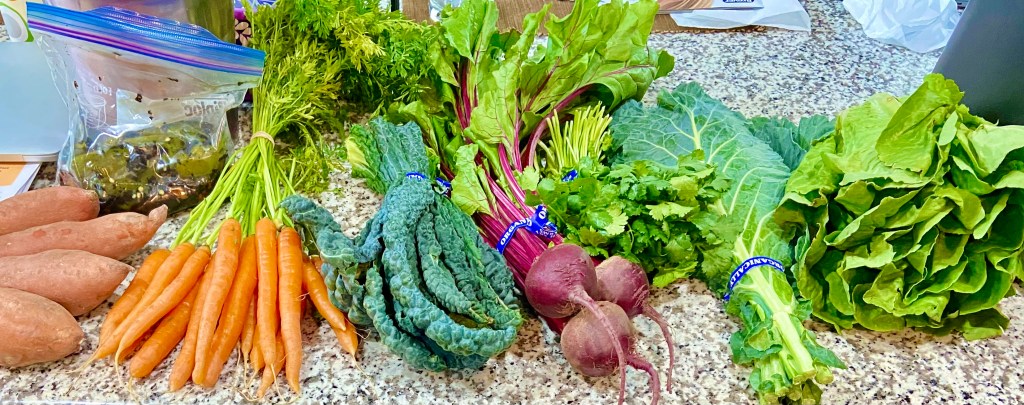
For years, we have purchased the majority of our produce from Community Supported Agriculture (CSA) programs, in both New York and Arizona. There are over 12,000 in the U.S. now, but I find that when I talk about my new favorite veggie from this week’s CSA haul, most people are unfamiliar with the concept. Because it’s such a win-win for farmer and consumer (as well as the planet!), I want to share the idea here.
CSAs have their origin in mid-1960s Japan, at a time when more & more farm land was being lost to development, farmers were moving to cities, and imported foods were becoming more common at local markets, according to Robyn Van En, co-founder of the CSA in this country. In an effort to change that trajectory, a group of Japanese women met with several farmers, and a plan was hatched: the farmers agreed to provide fresh produce weekly if a financial commitment could be made by multiple families. Today, this kind of partnership continues to benefit thousands in that country.

The idea didn’t catch on in this country until the 1980s, and since that time, there have been evolutions on the theme. For example, rather than going to participating farms each week, we have a CSA store in Northern Arizona where our goodies are delivered. When we pick up our box of fresh veggies, we can also shop for homemade soaps, local honey, locally-made jams & pickled items, and the like. (What a joy to shop there!) Another variation is the solitary farmer in upstate New York who allowed us to choose our weekly produce from the limited harvest picked from his fields. If we didn’t want garlic scapes, we didn’t have to take them. We were able to choose 8 items out of about a dozen.

While researching this article, I learned about another variation of the original CSA set-up. The work of the New York City Coalition Against Hunger includes a program involving a CSA that provides fresh food to underserved communities on a sliding scale. This is no doubt a welcomed solution to some living in the many food deserts (low-income areas with less access to food and transportation) in and around the city.
As mentioned before, the CSA concept benefits both farmer and consumer. I believe one of the most attractive advantages for farmers is the shared risk, meaning if crops don’t do well in a given season, the consumer receives the smaller bell peppers and the chard that doesn’t look so great while still paying the regular fee. And the steady income is certainly beneficial for the farmers.

For the consumer, the benefits are more than ample, well worth the shared risk. Locally grown foods, as you’ve no doubt read in my past blog posts, are much healthier than those grown elsewhere. Regional, seasonal microbes provide a huge boost to our immune system. Also, when produce is shipped from another state or country, it loses nutritional value, and many times is picked green & sprayed, or coated with wax or other additives to extend shelf life. Smaller, local farms often use sustainable growing methods to avoid chemicals, and many of them are organic, so better for the planet. Local produce keeps longer in the fridge if you don’t get around to using it right away. And the taste – you won’t believe how delicious local arugula, carrots, and fruits are!
If you are interested in purchasing healthier, yummier fruits and veggies (and maybe other locally-made goodies), check out the website local harvest. Your taste buds and gut bugs will be happy you did!
Locally-Grown Blessings,
Lisa
The content of this article is for educational and informational purposes only, and is not intended as medical advice. Please consult with a qualified health care professional before acting on any information presented herein. Any statements about the possible health benefits of any subject discussed have not been evaluated by medical professionals or the Food & Drug Administration and are not intended to diagnose, treat, cure or prevent any disease or illness.

 Micro of the Macro
ecoli was the threat
to jacks box 1984 carrots
and the quarter pounder
wash kush kosh
wait
turns out that too is just a waste of water!
LikeLiked by 1 person
Avoiding E. coli is another great reason to buy from smaller-scale farms. Thanks for your comment! ☀️
LikeLike
perhaps. but buying local is a rip off. just a tip off the old shoulder.
LikeLike
We will have to agree to disagree on this point.
LikeLike
of course. i like cheap red meat. lmao
LikeLike
best thing about cold weather are those hot showers . like a sauna! i finally have a really good hot water heater. lmao
LikeLike
Thanks for the reminder Lisa. I’ve seen a few CSAs here over the years, but not recently. Our farmers market has good local food but very expensive. Twice the store price doesn’t make sense to me.
LikeLiked by 2 people
Hey, Brad, our Farmers Markets have gotten super expensive, as well. But the CSA box price is reasonable, in my opinion. Hope you’re preparing for joyful holidays! ☀️
LikeLiked by 1 person
Thanks Lisa. You too!
LikeLiked by 1 person
What a brilliant idea, Lisa. I’ll have to research if we have similar programs in Canada.
LikeLike
Hi, Michelle, I hope you can find a CSA nearby. It’s a godsend!☀️
LikeLiked by 1 person
Awesome
LikeLiked by 1 person
Deacon G! Thanks for popping by. Happy Thanksgiving! ☀️
LikeLiked by 1 person
Happy Thanksgiving 🦃
LikeLiked by 1 person
I’ve been using our local CSA for about a decade and love it… except when they kohlrabi, which I’ve yet to find a palatable recipe for haha. Blue Sky Organic partners with a farm in Northern AZ and your produce looks (freshness, vividness of colors, organic labels) look Blue Sky, so I’m curious now if it is. 😊
LikeLiked by 1 person
Hi, thanks for your comment. Yes, Blue Sky is one of the farms that delivers to our CSA store. As for kohlrabi, it’s delicious peeled & cubed & put into soups. We didn’t know what to do with it at first, either!☀️
LikeLiked by 1 person
That’s awesome!! I love Blue Sky! I’ll need to try kohlrabi in soup next time, then. Thanks for the rec. ☀️
LikeLiked by 1 person
I like the concept, wonder if it could be applied to sugar markets! I had to chuckle at the “you won’t believe how delicious local arugula, carrots, and fruits are” prompt. I bet you can guess my immediate response was to that challenge hehehe. No I have to go do some searches for a CSD(esserts).
LikeLiked by 2 people
You are too funny, Brian. I hope you and the Mrs. are getting ready for a joyful holiday! ☀️
LikeLike
How wonderful! Anything that is a win win for farmers and consumers has to be good. During our nearly four months in Cooktown we bought regularly and mostly from local producers. Great post Lisa!
LikeLiked by 1 person
Miriam, hi! So you know first hand how tasty local fruits & veggies can be! I appreciate your comment! ☀️
LikeLiked by 1 person
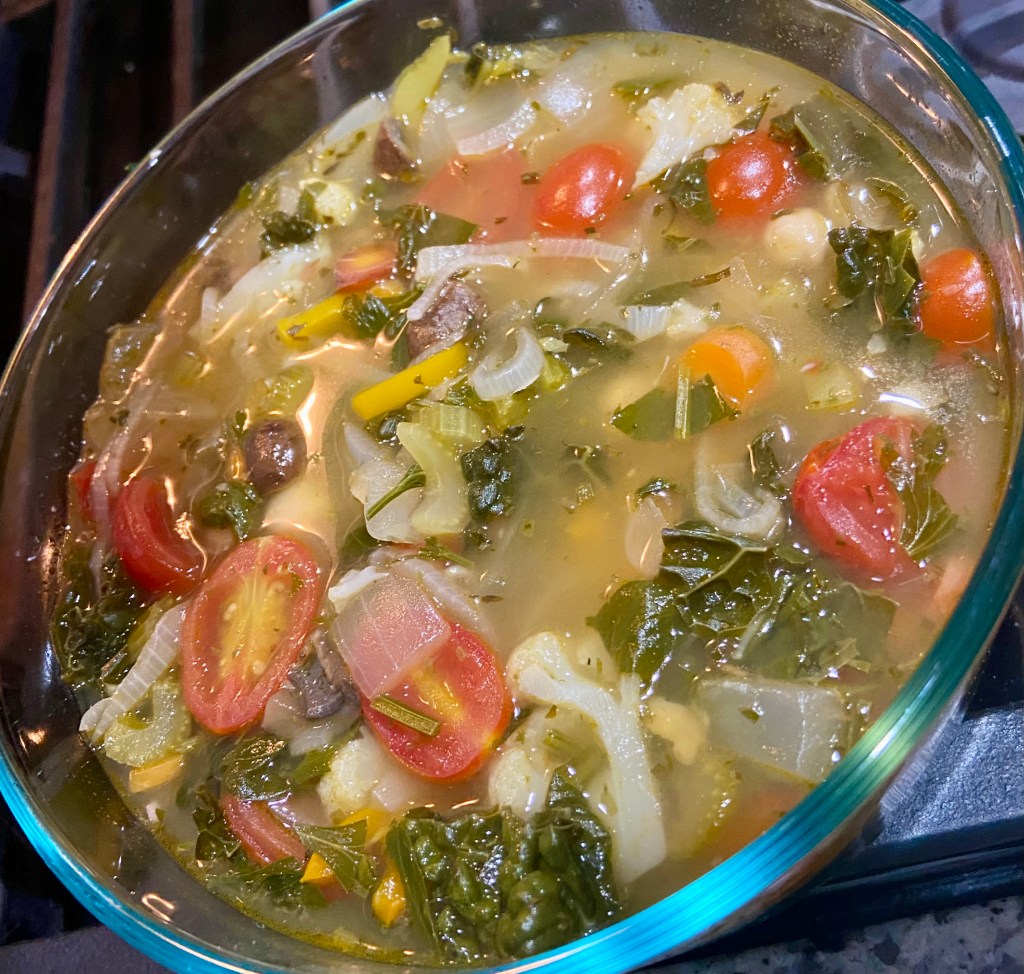
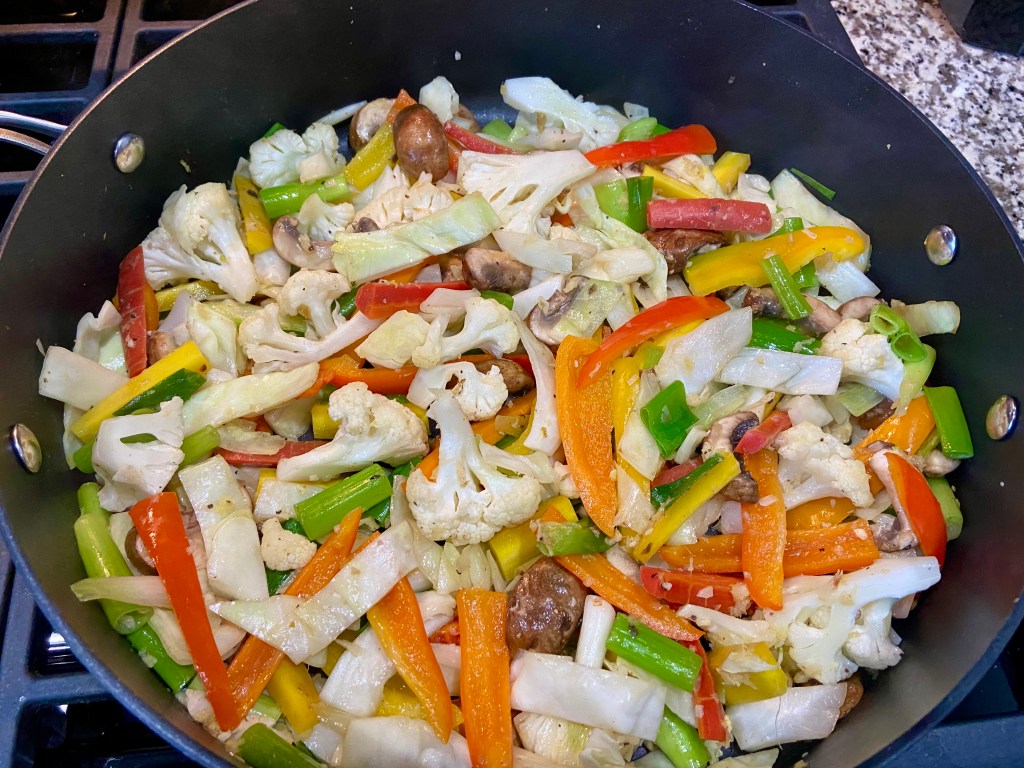
A worthy PSA, Lisa. Cheers to CSA and local farmer’s markets. Your dishes look wonderful!
LikeLiked by 1 person
Thanks for stopping by, Frank! And thank you for your appreciation of the look of my dishes!☀️
LikeLike
Your dishes look like works of art. So many shining colour’s and shapes. Certainly beats imported plastic wrapped vegetables. We have some farmers markets once a week.
miriam
LikeLiked by 2 people
Hi, Miriam, and welcome! Thanks for your kind compliment. Agreed, home cooked meals are a whole lot better than the imported & plastic-covered.☀️
LikeLike
Your recipe is looking tasty! Well shared 💐
LikeLiked by 1 person
Thank you for stopping by! ☀️
LikeLiked by 1 person
My pleasure.❄️
LikeLiked by 1 person
Great post, Lisa! I learned something new today.
LikeLiked by 1 person
Hi, Ritish! I am pleased to be the source of that learning! Hope your week is going well. ☀️
LikeLike
This is wonderful and helpful information, Lisa. Thank you, as always. I’ll check out the website. It is so important to support local farms for the many reasons you have cited.
LikeLiked by 1 person
Hi, LaDonna, thank you for visiting & commenting. I hope you can find a local CSA! ☀️
LikeLiked by 1 person
This is good information to know, thank you for sharing this!
LikeLiked by 2 people
Hi, Allie, thanks for reading! ☀️
LikeLiked by 1 person
Thanks, Lisa.. I’m salivating now.. hugs my friend❣️
LikeLiked by 1 person
LOL! Hugs to you too! ☀️
LikeLiked by 1 person
❤️
LikeLiked by 1 person