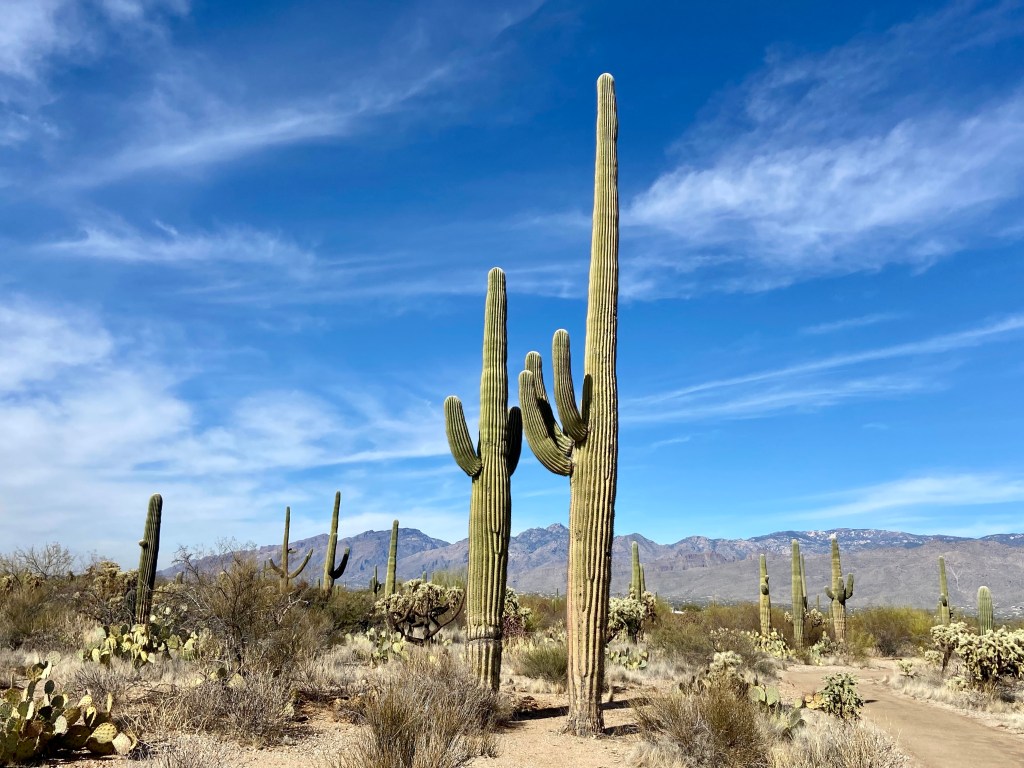
We recently vacationed in southern Arizona. The weather was warm and dry, and we enjoyed hiking, biking, and riding horses through the desert. Saguaro cactus plants were plentiful and huge. Visiting Saguaro National Park, we saw some that towered over us.
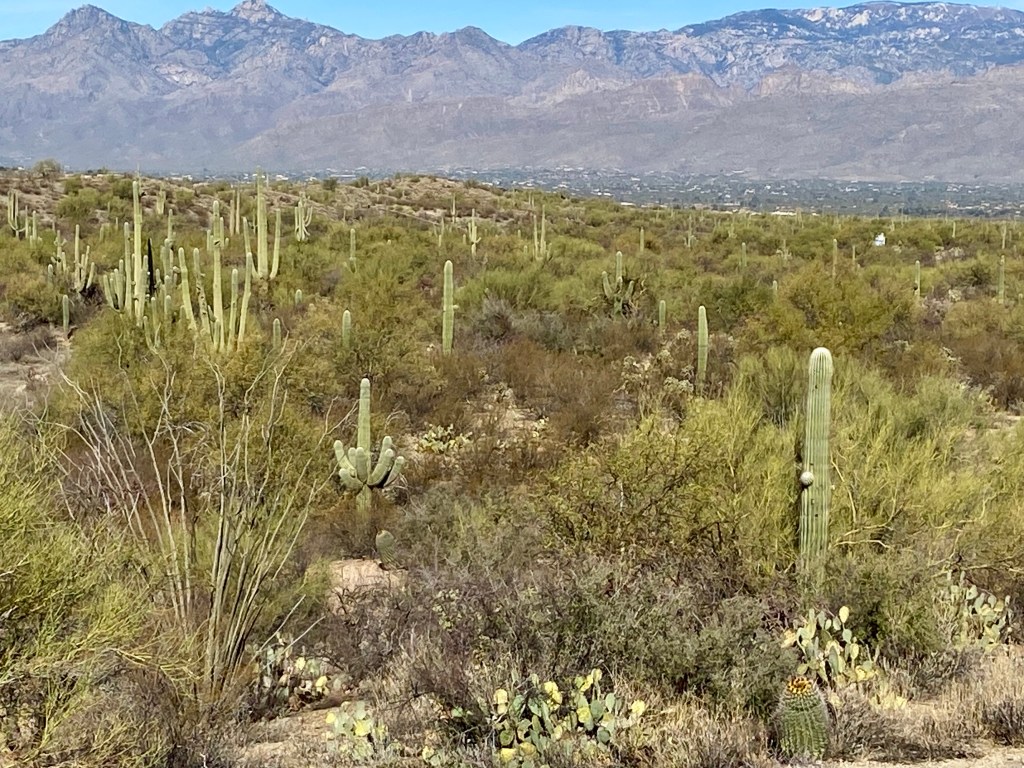
I’ve learned a lot about the growth of saguaros. I was surprised to find that they grow only 1 – 1.5 inches total during their first 8 years. At about age 35, white flowers may appear on the plant, and continue throughout their lifetime. Just before the white blooms close, green buds may emerge that eventually turn red and reveal sweet red fruit, to the delight of desert animals and humans alike. Branches, or arms, form once the cactus has reached 50 – 100 years of age, depending on precipitation in the area. Adult saguaros, those that are 125 years or older, can reach heights of 50 feet and weigh more than 6 tons. Their average lifespan is 150 – 175 years, although it is believed some live over 200 years.
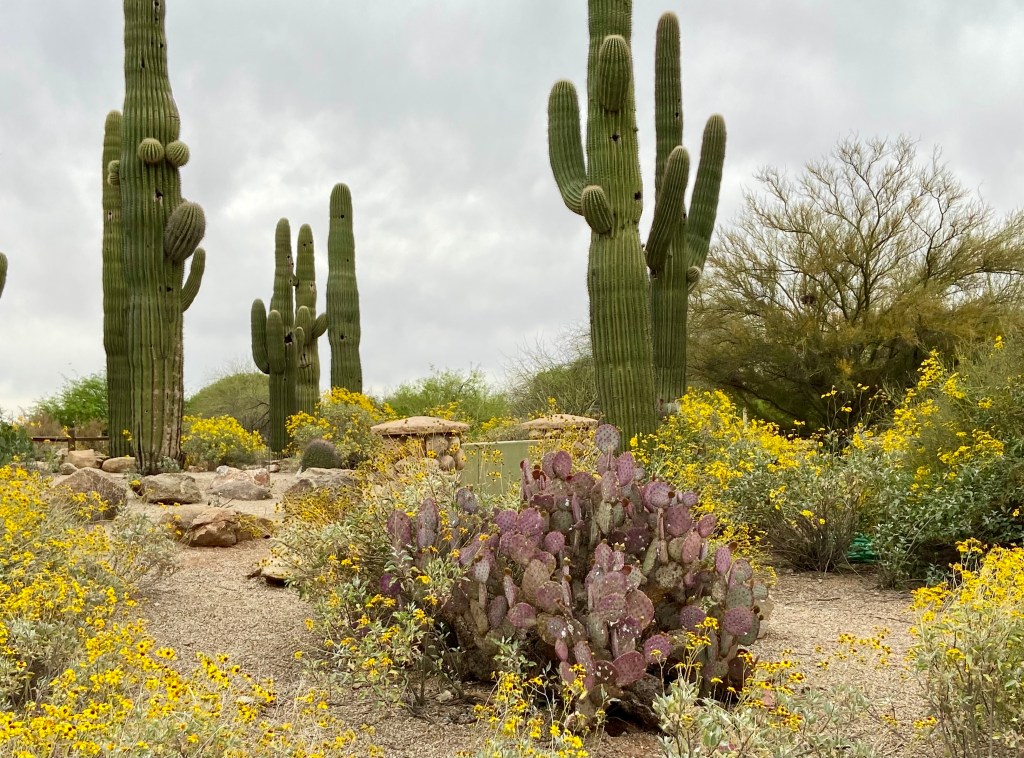
I first witnessed birds nesting inside saguaros at the Riparian Preserve at Water Ranch in Gilbert, AZ, with my friend Janet from This, That, and the Other Thing. I’ve read that these nests are actually created by gila woodpeckers and gilded flickers, who eventually abandon them. Other winged creatures, such as elf owls, house finches, and purple martins, are happy to take them over.
According to Wikipedia, the saguaro provides voluminous amounts of pollen, nectar, and fruits. Its fruits are eaten by ants and white-winged doves. These doves are important pollinators, visiting blooms more often than any other bird species. For white-winged doves making their homes in or near the desert, 60% or more of their diet is saguaro-based, and the blooming of the saguaros coincides with their breeding cycle.
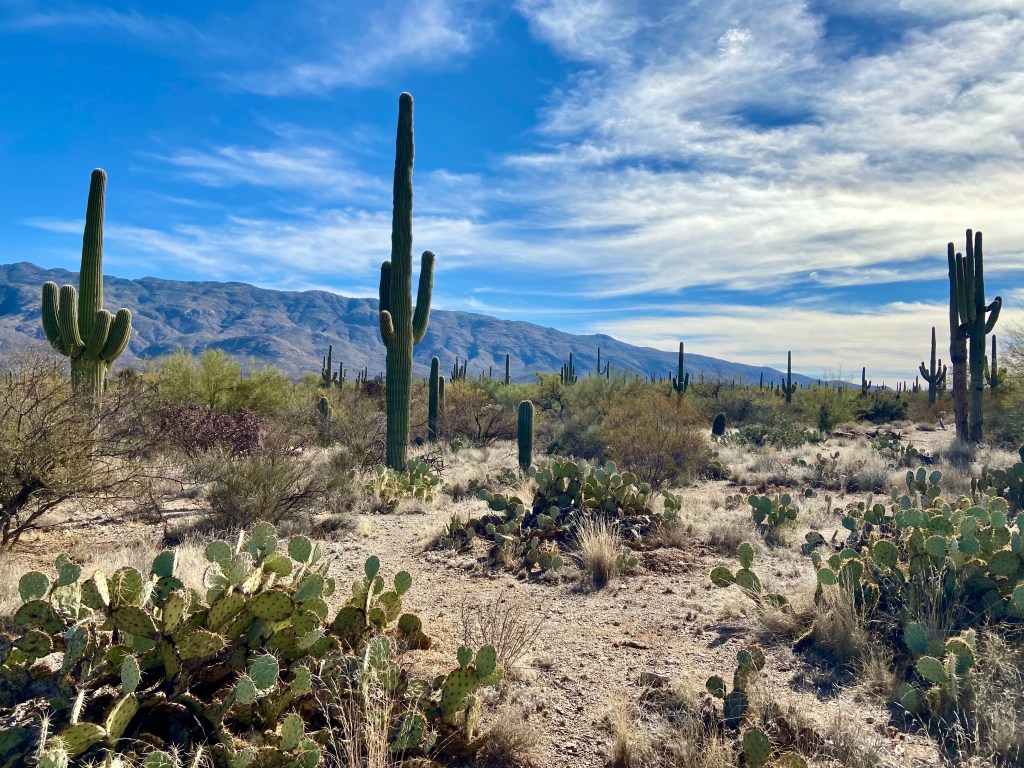
For ages, every part of the saguaro, living or dead, has been used by Native Americans. The fruits are carefully harvested and made into wine, jams, and syrup. Seeds are eaten raw, ground into meal, pressed for oils, or used for chicken feed. Once the plant dies, its ribs are used for building furniture or fences. Even the old bird nests found inside are used as storage vessels.
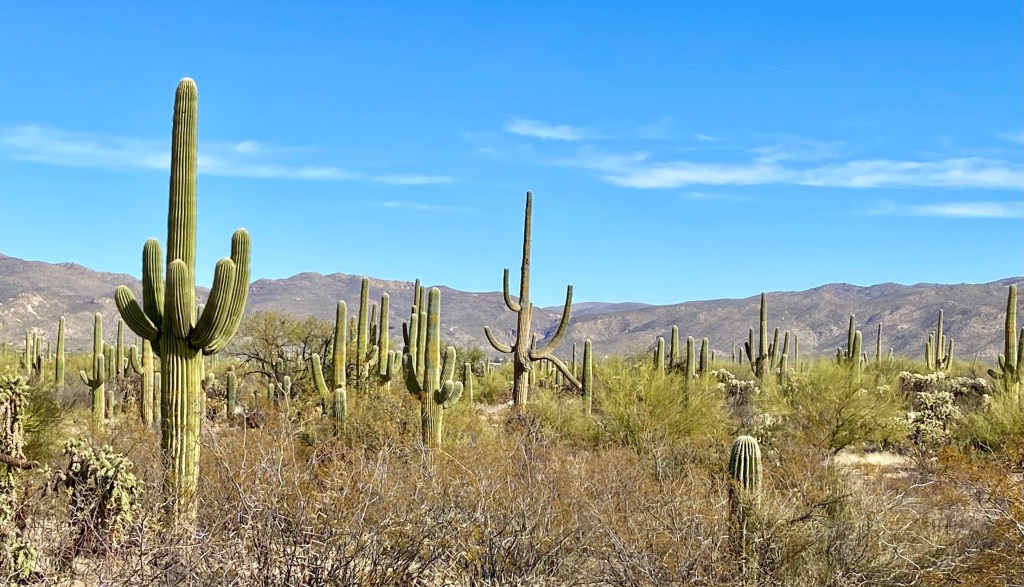
The declining status of the saguaro cactus has resulted in protection initiatives. On federal lands, it is now illegal to harm or remove them, and in other areas, a permit is needed to relocate them. Additional requirements have been established in various municipalities. Even when a saguaro dies, a permit is necessary to remove its dried ribs.

These desert grandfathers sparked joy and reverence in our hearts. Saguaro National Park is a treasure that shouldn’t be missed when you’re near the Tucson, Arizona area.
Blessings for a Long, Productive Life,
Lisa
The content of this article is for educational and informational purposes only, and is not intended as medical advice. Please consult with a qualified health care professional before acting on any information presented herein. Any statements about the possible health benefits of any subject discussed have not been evaluated by medical professionals or the Food & Drug Administration and are not intended to diagnose, treat, cure or prevent any disease or illness.

 Micro of the Macro
Amazing!
LikeLiked by 2 people
Deacon G, hi! Thanks for checking out my post! I hope your 2024 is healthy & happy!☀️
LikeLiked by 2 people
One day I’ll Camino there. This year Appalachian Trail section walk.
LikeLiked by 2 people
Love your post of the desert and these amazing shots you got of the saguaro cactus. Fun facts and its such a place of beauty where I soak up their gifts. Glad their is an initiative out for them. Long live the Saguaro Catus! Hugs and love!❣️
LikeLiked by 2 people
Cindy G! I am so happy to see you! I hope your new year is blessed, dear one. I’m glad you enjoyed my post, and I so appreciate your comment!☀️
LikeLiked by 2 people
Awww thanks Lisa. I so appreciate that and i wish you the same. Big hugs and lots of love. I did love your post and all you put into your sharing bringing us along. Big hugs and more love for a great new year!!!!!❤️❤️
LikeLiked by 2 people
i love your blog its best . please think about visiting mine
I will follow and give a like! My Blog is about Lake Garda in Italy Check it here http://www.lakegardatourist.com
LikeLiked by 2 people
Thanks, Eugenio. I will check out your blog.☀️
LikeLike
Lovely to see a post from you Lisa. You have had an amazing experience on horse back too. Those views are spectacular with such exotic plant life taking ages to mature. Thank you for so much information. Sandy.
LikeLiked by 2 people
Hi, SRB&B, I’m thrilled you enjoyed my post! Your kind comment means a lot. Wishing you a new year filled with goodness!☀️
LikeLiked by 2 people
Yours too, Lisa. You have lots of positive things to share. Keep enjoying and share when you can.
LikeLiked by 2 people
Wow! I learned so much reading this… Your pictures are amazing and the details about the Saguaro Cactus are fascinating. I am glad that they are protected. Thank you for sharing this beautiful corner of the world with us!!!
LikeLiked by 2 people
Hi, Linda, always great to see you here! I’m pleased to hear you appreciated the info and photos. Thank you for your lovely comment. Wishing you many blessings for the new year!☀️
LikeLiked by 2 people
Wishing you blessings as well! 🙂
LikeLiked by 2 people
I didn’t know any of this. We need to protect everything that supports life.
BettyJean
LikeLiked by 2 people
Hi, BJ, I agree! Everything that is alive and supports life should be highly valued. I so appreciate your stopping by and commenting today!☀️
LikeLiked by 1 person
Interesting Lisa I didn’t know any of this. Maggie
LikeLiked by 2 people
Hi, Maggie, what a treat to see you here! I’m always happy to share what I learn. Hoping yours is a lovely new year!☀️
LikeLiked by 2 people
Thanks Lisa, have a wonderful 2024.
LikeLiked by 2 people
Years ago, my wife and I hiked a trail there. The Saguaro are amazing. Thanks for the detailed information about these long-lived plants.
LikeLiked by 2 people
Robert, hi, it’s good to see you! It’s a place unlike any other, huh?! I appreciate your reading & commenting! All the best!☀️
LikeLiked by 1 person
They are fascinating plants that I hope to see in person one day.
LikeLiked by 2 people
Good to see you, Brad! Fascinating is right. I hope you can see them one day as well. Wishing you a year of goodness!☀️
LikeLiked by 2 people
Thank you Lisa. May it be a year of goodness and thriving. 🌟
LikeLiked by 2 people
impressive. they can draw the water from the air. oh boy!
LikeLiked by 2 people
Hi, John, they are most impressive! Thanks for reading & commenting! Hoping your 2024 is blessed!☀️
LikeLiked by 1 person
and for you as well
LikeLiked by 2 people
Those are magnificent plants. It’s amazing that they grow to such great heights and live for as long as they do.
LikeLiked by 2 people
Hi, Neil, yes, agreed, they are magnificent! Unlike any other I’ve seen. I appreciate your comment. Hoping your winter hasn’t dampened your creative spirit!☀️
LikeLiked by 2 people
Beautiful photos, Lisa. What amazing plants! Life finds a way to flourish.
LikeLiked by 2 people
Hi, Rosaliene, good to see you! Yes, they are amazing! Thank you for reading and commenting – it means a lot!☀️
LikeLiked by 2 people
Lisa, it’s always a pleasure to hear from you 🙂
LikeLiked by 2 people
Always enjoyed the saguaros when visiting Arizona. Thanks for sharing their story as they are amazing desert plants.
LikeLiked by 2 people
Hi, Bev, nice to see you here! I agree, they are amazing. They even seem welcoming to me! May your new year be blessed! ☀️
LikeLiked by 1 person
The real guardians of the dessert and with lots of use for animals (like birds) and all those who love the delicious fruits.
LikeLiked by 2 people
Rudi, hi! Guardians, yes indeed! Great to see you today & I appreciate your comment. Hope your 2024 is happy & healthy! ☀️
LikeLiked by 1 person
Rudi, I commented on one of your posts, but I don’t see what I wrote. Maybe it is waiting to be approved? I hope you get it. 🙂
LikeLiked by 1 person
Meanwhile, your reaction is aproved Lisa and it should be visible now 🙂
Also my best wishes for 2024 (it still can as it is still january).
Greets,
Rudi
LikeLiked by 2 people
Amazing photos 🌹🙏😍👌 so beautiful desert 🌵 and the cactus so wonderful, earth wonders 👌🌵🏞
Thank you so much for sharing and happy weekend dear friend 🌹💕👏
LikeLiked by 2 people
So good to see you, Thattamma! I’m pleased you enjoyed my post & photos! Thank you for your kindness. I hope your new year is filled with all good things. ☀️
LikeLiked by 2 people
Yes, I really enjoyed 😍👌because in Malaysia cannot view cactus 🌵 Desert Some places we can see like Cameron Highlands, Genting Highlands ⛰
Thank you dear friend 🌹🙏💗🌹
LikeLiked by 2 people
Thanks for sharing, my friend! ☀️
LikeLiked by 1 person
Imagine my surprise to see my name! ❤️. That was a good day but too long ago. I think it’s my turn to visit. Saguaro is such a wonderful place although I just read about the bobcat with rabies. Now might not be the best time to visit. But I’m glad you were able to enjoy the beauty.
LikeLiked by 2 people
Hi, Janet, I wasn’t sure if the link I used from your site would show in your reader. But I’m glad you popped by! That was a great day at the preserve. I’d love for you to pay me another visit. I’m sorry to say we’re not getting much snow so far this season. More rain than anything. I’m grateful, but it’s not the same as snow, for those of us who love the white stuff! Wishing you & hubby a new year filled with beauty! ☀️
LikeLiked by 2 people
Gorgeous photos, Lisa. What a fascinating post! ❤ Glad the "Grandfathers" are receiving protection!
LikeLiked by 2 people
Thanks so much for your kind comment, Cheryl. Always a pleasure to see you here! I hope your 2024 is filled with good health & joy! ☀️
LikeLiked by 2 people
Hope 2024 is of to a good start for you, Lisa! ❤
LikeLiked by 2 people
How timely, we just recently left that area. Also our first time seeing these incredible cacti – best of all they are a magnet for the Gila Woodpecker and the Gilden Flicker – both lifers for me and both exactly where they said they would be … on top of those cacti ha. We had a lot of fun in the Benson, Tucson, Phoenix area before heading up to Vegas – almost back home now …heavy coats and gloves already out.
LikeLiked by 2 people
Oh wow! We enjoyed our time around Tucson as well. Good to hear you got shots of lifers! Yup, we came back to snow showers, with more expected over the next few days. Quite the contrast. Good to see you, Brian, and I wish you a great week ahead. ☀️
LikeLiked by 1 person
Very Interesting. Thanks for sharing. 🤣🙃😎
LikeLiked by 2 people
Thanks for popping by! ☀️
LikeLiked by 2 people
Thanks for sharing
LikeLiked by 1 person
Thanks for reading!☀️
LikeLiked by 1 person
You’re welcome
LikeLiked by 1 person
The saguaro cactus is so magnificent, and thank you for sharing information about it! It is amazing the history that they have had, and the impact on the native communities!
LikeLiked by 1 person
Allie, hi, happy 2024! I am pleased to see you here & to know you enjoyed the post. ☀️
LikeLiked by 1 person
Hello, Lisa! How are you? Great post. The pictures are beautiful. So glad you had a good time on your vacation. Continue to have an amazing year.
LikeLiked by 1 person
Hi Shaunelius, I appreciate your kind words. I hope your year is packed with blessings too! ☀️
LikeLiked by 1 person
It’s alright, but not perfect. My whole year started off wrong.
LikeLiked by 1 person
Sorry to hear that, my friend. Our started with several challenges as well. Let’s plan for goodness the rest of the year! ☀️
LikeLiked by 1 person
Absolutely 👍
LikeLiked by 1 person
Those pictures of the cactus are amazing
LikeLiked by 1 person
Thank you for reading & commenting!☀️
LikeLiked by 1 person
Such a nice showcase of our saguaro, with great info Lisa.
LikeLiked by 1 person
I appreciate your saying so, Donna! ☀️
LikeLiked by 1 person
These snippets of information are wonderful and enlightening! I knew very VERY little of these plants before reading this post of yours. So much that we can learn we take the time to look, to be curious and ask questions, and listen to those who have knowledge.
Thank you for sharing. 🧡
LikeLiked by 1 person
Hi Hamish, thank you for stopping by to read & comment! I find the saguaro fascinating. Glad you enjoyed learning about them! ☀️
LikeLiked by 1 person